7 Common Cat Owner Mistakes (And How to Fix Them)
Declawing, skipping vet visits, kibble-only diets, neglecting dental care, hugging cats, ignoring enrichment, and using punishment all harm your cat. Learn the science behind why and how to fix each mistake.

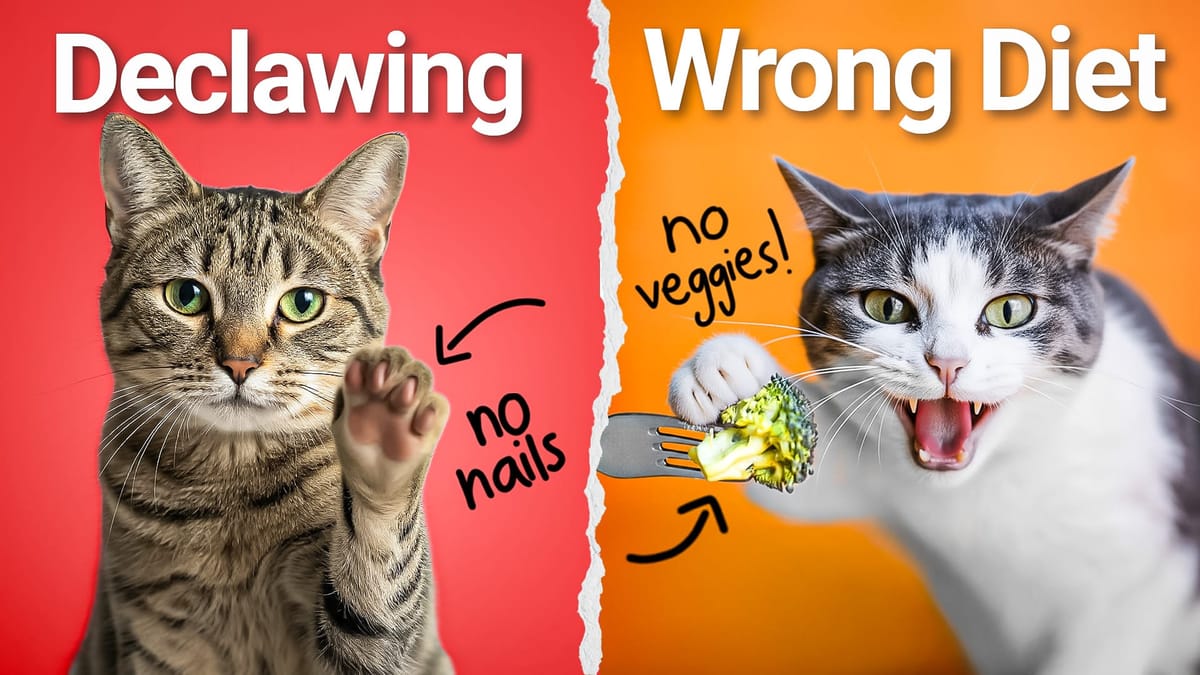
The seven most damaging cat care mistakes are: declawing, skipping veterinary visits, feeding only dry food, neglecting dental care, hugging/restraining against the cat's will, ignoring enrichment needs, and using punishment like water spray bottles. Each mistake creates a mismatch between a cat's evolved biology and their living environment. These errors cause measurable harm ranging from chronic pain and organ damage to broken trust and behavioral problems.
Table of Contents
- Why These Seven Mistakes Damage Your Cat's Health and Wellbeing
- Why Is Declawing Harmful to Cats?
- How Often Should Cats Visit the Veterinarian?
- Why Is Kibble-Only Diet Bad for Cats?
- Why Is Dental Disease So Common in Cats?
- Why Do Cats Hate Being Hugged?
- Why Do Indoor Cats Need Environmental Enrichment?
- Why Water Spray Punishment Backfires
- Key Takeaways
- Frequently Asked Questions
Why These Seven Mistakes Damage Your Cat's Health and Wellbeing
These seven mistakes cause measurable harm because they create an evolutionary mismatch between what cats evolved to require and what modern homes provide. Research by Dr. Tony Buffington at Ohio State University demonstrates that a cat's level of comfort with its environment is intrinsically linked to physical health and behavior. Indoor cats live longer than outdoor cats, but as Dr. John Bradshaw of the University of Bristol notes, they are also at greater risk for behavioral problems when their needs go unmet.
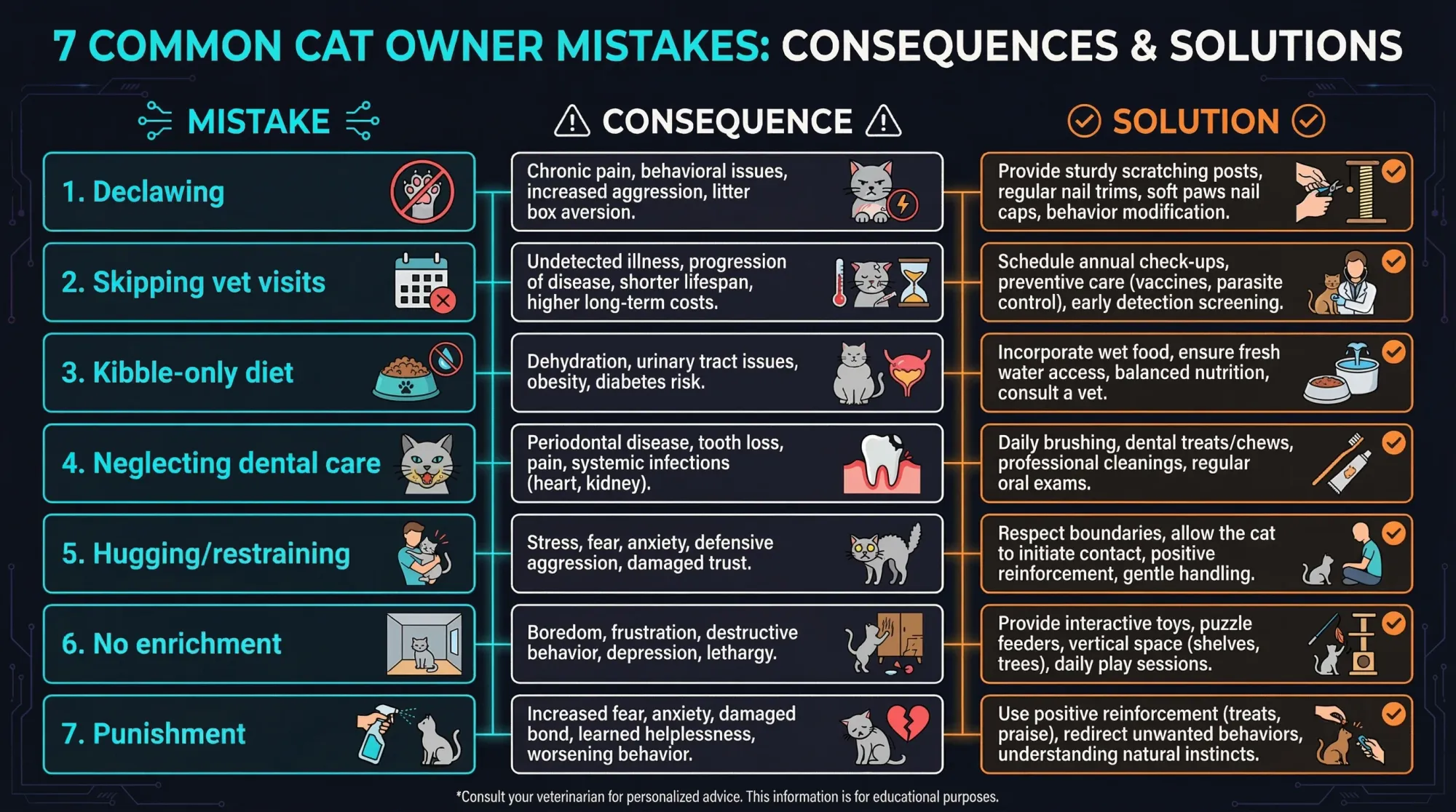
Each mistake has measurable consequences documented in peer-reviewed research—from chronic pain and organ damage to broken trust and behavioral problems. Understanding the "why" behind these errors helps cat owners make better decisions based on feline biology rather than human assumptions. For a complete guide to feline wellbeing, see our Cat Care resource hub.

Why Is Declawing Harmful to Cats?
Declawing (onychectomy) is the amputation of the distal phalanx bone from each toe, causing permanent structural damage that increases back pain risk by 2.9 times and inappropriate elimination by 7.2 times according to peer-reviewed research. This procedure removes not just the claw, but bone, tendon, ligaments, and nerves from every toe.
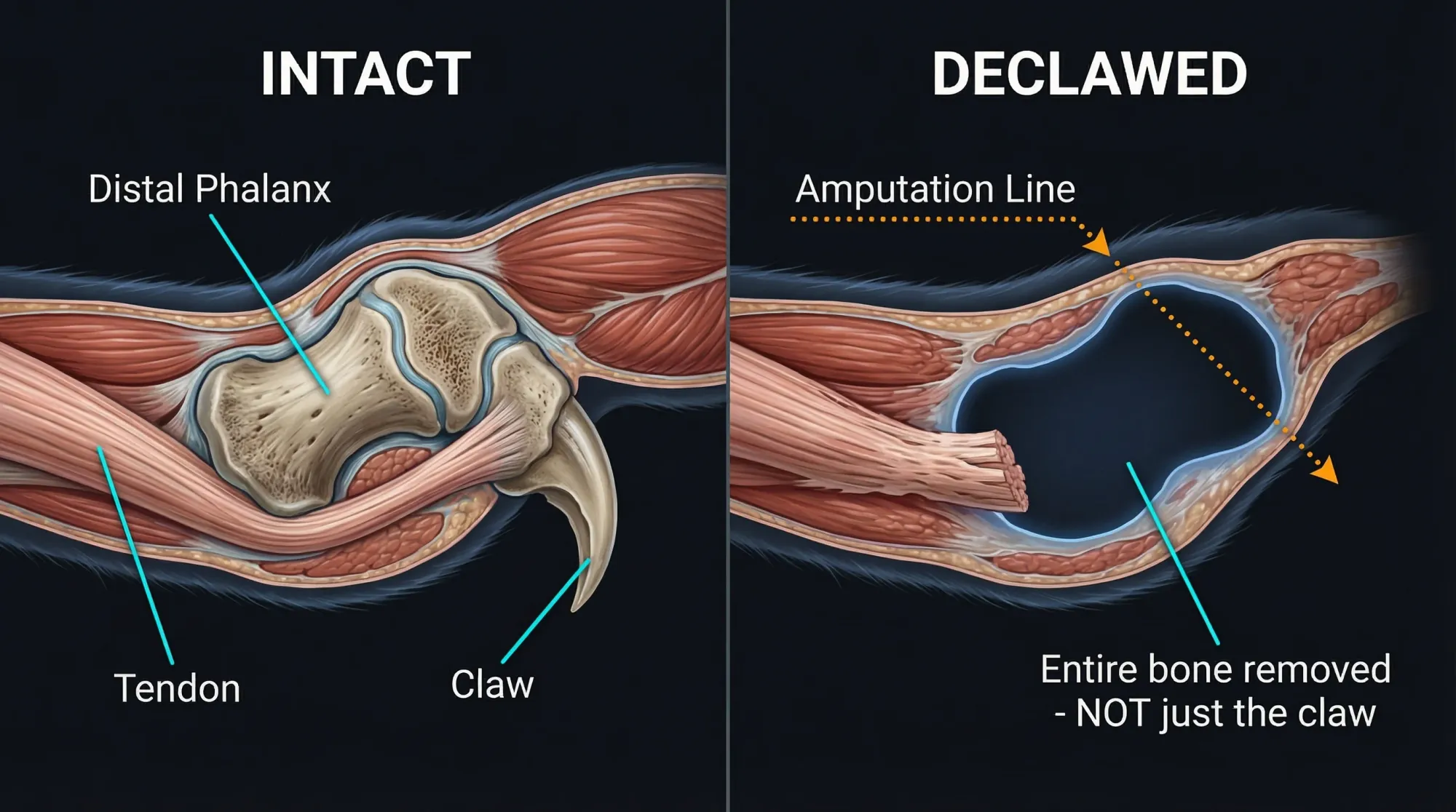
The Evidence:
"Declawed cats have 2.9 times higher odds of developing back pain than cats with intact claws."
A 2023 study published in Animals found that declawed cats' deep digital flexor muscles become 73% lighter and 46-66% less powerful than non-declawed cats. This muscle atrophy occurs because removing the bone changes the entire biomechanics of how a cat walks and uses its paws.
Fifty percent of cats have complications immediately after declawing surgery. Research confirms that declawing bans do not increase cat shelter relinquishment rates, debunking the common claim that declawing prevents abandonment. Effective alternatives include providing appropriate scratching surfaces, regular nail trimming every 2-3 weeks, and nail caps.
How Often Should Cats Visit the Veterinarian?
Healthy adult cats require minimum annual veterinary examinations, while senior cats aged seven and older need checkups at least every six months because 21% of apparently healthy older cats have undiagnosed diseases detectable only through screening. Cats are masters at hiding illness, an evolutionary adaptation that makes regular veterinary care essential.
A 2024 study in the Journal of Feline Medicine and Surgery found that 7.7% of healthy-appearing cats have undiagnosed chronic kidney disease and 4.6% have undiagnosed hyperthyroidism. These conditions progress silently until they become advanced and more difficult to treat.
The Evidence:
"Twenty-one percent of apparently healthy older cats have undiagnosed diseases detectable only through screening."
Cats are seen less frequently for preventive health care than dogs despite their superior ability to mask weakness. This creates a paradox where the animals most skilled at hiding illness receive the least preventive care.
Why Is Kibble-Only Diet Bad for Cats?
Dry cat food contains only 6-10% moisture compared to wet food's 70-80%, causing cats on kibble-only diets to consume significantly less total daily water intake than cats eating wet food. Cats evolved from desert ancestors and lack the strong thirst drive of other mammals.
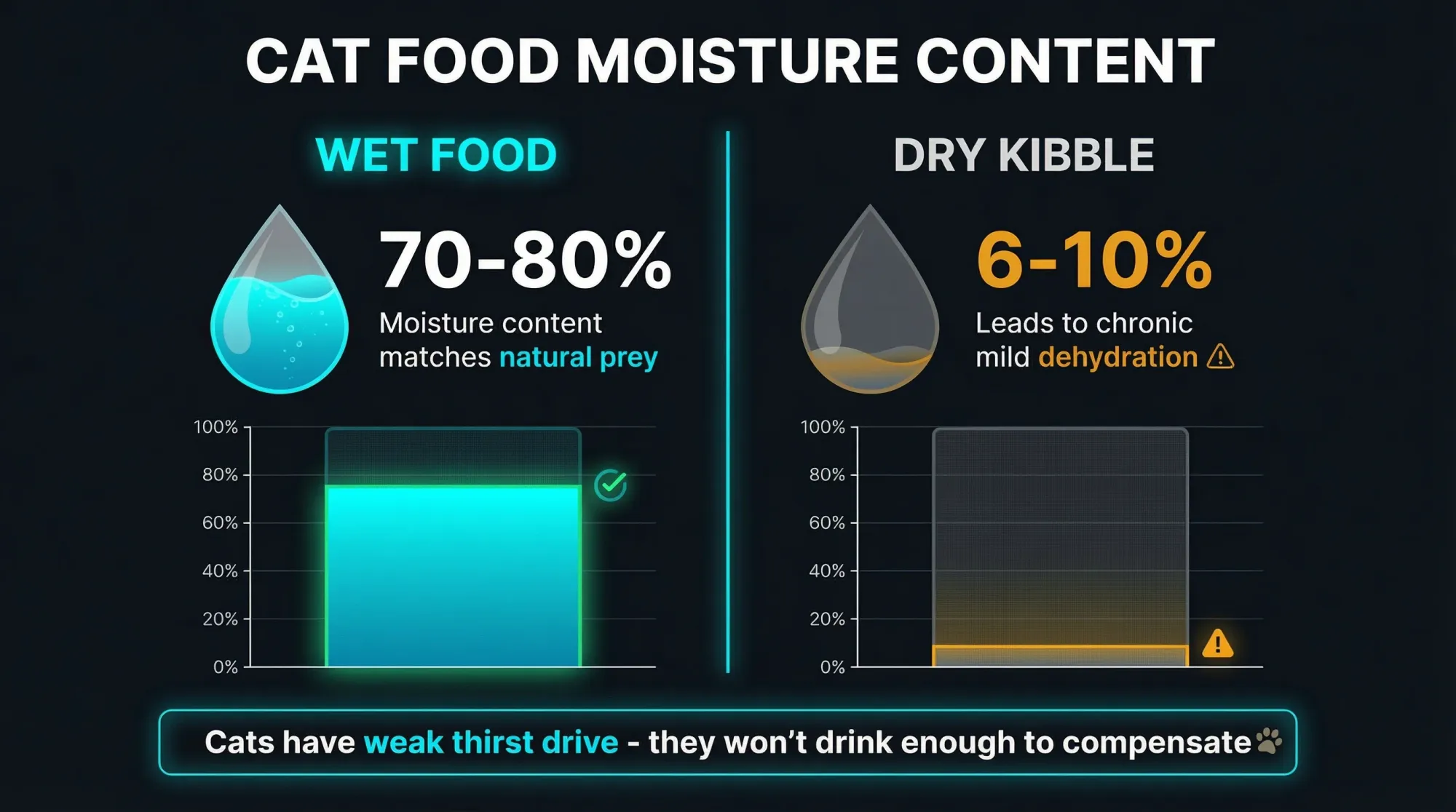
According to the Cornell Feline Health Center, cats have a weak thirst drive and can become significantly dehydrated before responding to their thirst stimulus. This means cats eating only dry food exist in a state of chronic mild dehydration that their bodies do not signal them to correct.
The Evidence:
"Cats eating kibble consume significantly less water daily than cats eating wet food diets."
Chronic dehydration can cause multi-organ dysfunction, cardiac arrhythmias, and neurologic dysfunction. The urinary system is particularly vulnerable, with dehydrated cats at higher risk for urinary crystals, blockages, and chronic kidney disease over time. This relates directly to why cats are obligate carnivores—their bodies evolved to obtain moisture from prey, not from drinking water.
Why Is Dental Disease So Common in Cats?
Periodontal disease affects 50-90% of cats over age four, making it the most prevalent health condition in domestic cats yet one of the most neglected by owners. The vast majority of cats experience some form of dental disease during their lifetime.
The scientific consensus, established by the WSAVA Global Dental Guidelines and confirmed by Cornell Feline Health Center data, indicates that periodontal disease is not simply a localized oral problem. Periodontitis causes bacteremia—bacteria entering the bloodstream—that circulates to affect the heart, kidneys, and liver.
The Evidence: "Between 50-90% of cats over age four have periodontal disease according to veterinary research."
Cat bad breath is NOT normal—it is the most common sign of periodontal disease, which affects 50-90% of cats over age four. Request a dental examination at every veterinary visit and discuss professional cleaning when recommended. Dental disease causes systemic health problems beyond the mouth.
Why Do Cats Hate Being Hugged?
Physical restraint causes cortisol elevation in cats within 20 minutes, triggering a measurable stress response even when the cat appears to tolerate the handling. Research by Dr. Lauren Finka at Nottingham Trent University demonstrates that cats have a clear preference for a hands-off approach to petting.
Cats evolved as solitary predators who controlled their own territory and interactions. Being restrained by another animal signals danger in cat logic. The intention behind a hug—affection—does not change the cat's biological response to physical confinement.
The Evidence: "Physical restraint causes cortisol elevation in cats within 20 minutes of handling."
Dr. Finka's research introduced the 3-second rule: stroke for three seconds, pause, and observe the cat's response. Does the cat lean in (positive), stay neutral (tolerating), or move away (stressed)? Cats given control over their petting interactions are less likely to behave aggressively and form stronger bonds with their humans. This relates to the concept of overstimulation, where continued petting past a cat's threshold triggers defensive responses.
Why Do Indoor Cats Need Environmental Enrichment?
Cats in enriched environments have approximately 50% lower cortisol levels (0.059 vs 0.101 ng/mg) than cats in under-enriched homes, with environmental enrichment reducing interstitial cystitis symptoms by 75-80% according to Dr. Tony Buffington's Indoor Pet Initiative research at Ohio State University. Indoor cat safety is not the same as indoor cat wellbeing.
According to Dr. Mikel Delgado, certified applied animal behaviorist at Purdue University, most feline behavior cases are due to an under-stimulating environment. Cats deprived of appropriate outlets for natural behaviors—hunting, climbing, scratching, territory patrol—develop behavioral problems that owners often misinterpret as the cat being "difficult."
The Evidence:
"Environmental enrichment reduces interstitial cystitis symptoms by 75-80% in affected cats."
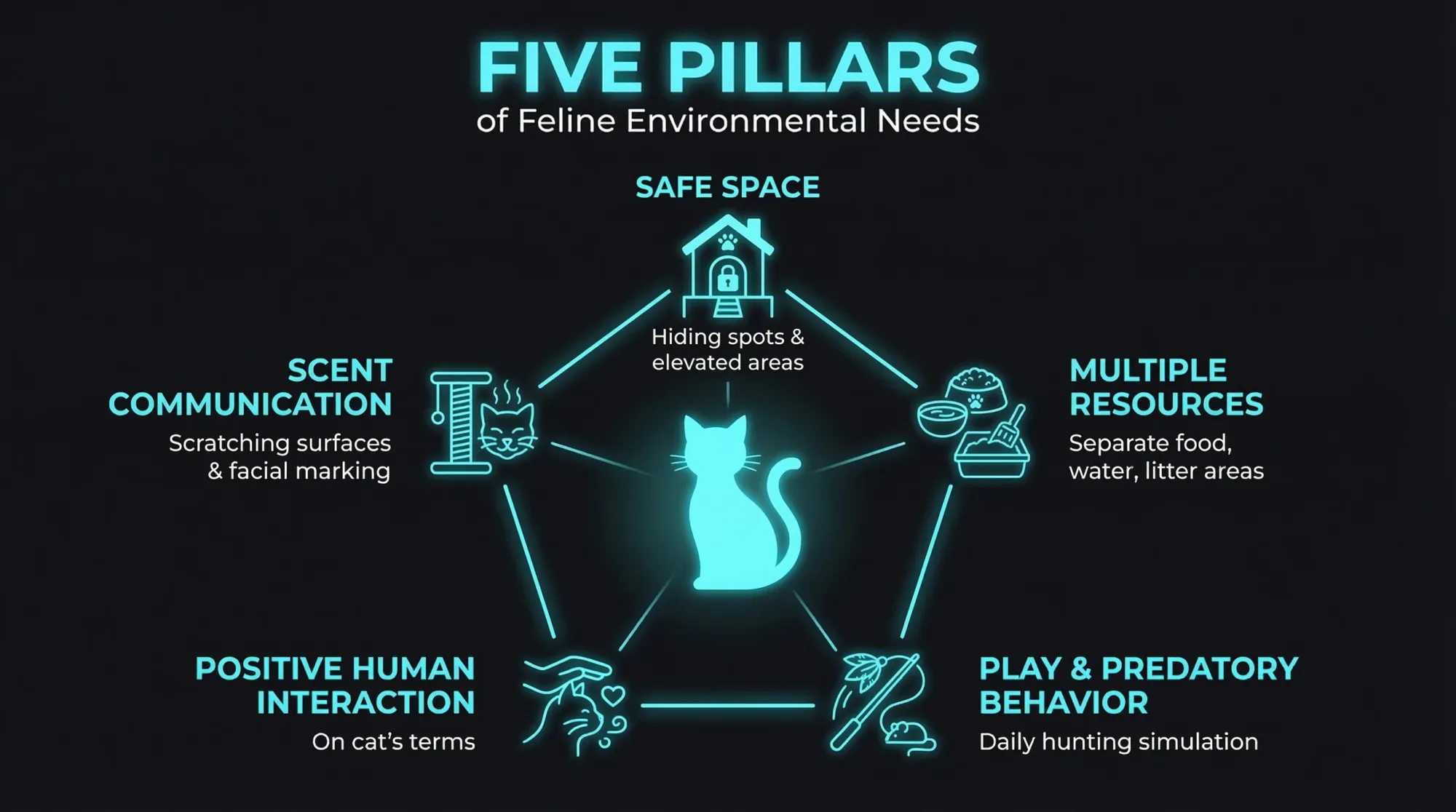
The Five Pillars framework from AAFP/ISFM provides a structure for feline environmental needs: safe space, multiple resources, opportunities for play and predatory behavior, positive human interaction, and respect for scent-based communication. Implementing these elements addresses the root cause of most indoor cat behavior problems.
Why Water Spray Punishment Backfires
Cats in homes using punishment are significantly more likely to eliminate outside the litter box than cats in punishment-free homes, according to research from the University of Prince Edward Island. The American Association of Feline Practitioners recommends against punishment as a behavior modification tool.
Punishment may suppress a behavior in the moment while damaging the human-cat bond and creating fear-based associations. The cat learns to fear the owner rather than understanding which behavior is unwanted. This often causes the original problem behavior to shift to new contexts or creates new behavioral issues.
The Evidence:
"Cats in homes using punishment are significantly more likely to eliminate outside the litter box."
Cats learn best through positive reinforcement including treats, catnip, play, and petting. When a cat exhibits an unwanted behavior, the most effective response addresses the environmental cause rather than punishing the symptom. Scratching furniture, for example, indicates a need for appropriate scratching surfaces, not a need for discipline.
Key Takeaways
| Mistake | Consequence | Solution |
|---|---|---|
| Declawing | Chronic pain, 2.9x back pain risk | Scratching posts, nail trimming, nail caps |
| Skipping vet visits | 21% hidden disease rate | Annual exams; twice yearly for cats 7+ |
| Kibble-only diet | Significantly less water intake | At least 50% wet food daily |
| Neglecting dental care | 50-90% periodontal disease rate | Regular dental exams, professional cleaning |
| Hugging/restraining | Cortisol stress response | 3-second rule, let cat control interaction |
| No enrichment | Behavioral problems, stress | Five Pillars framework, daily play |
| Punishment | Increased litter box avoidance risk | Positive reinforcement, address root cause |
Key Terms Used
- Onychectomy: The medical term for declawing; surgical amputation of the distal phalanx (last bone) of each toe.
- Distal phalanx: The terminal bone in each toe to which the claw attaches; removed entirely during declawing.
- Periodontitis: Inflammation and infection of the gum and bone supporting teeth; leads to tooth loss and systemic disease.
- Bacteremia: The presence of bacteria in the bloodstream; occurs when oral bacteria enter circulation through inflamed gums.
- Cortisol: The primary stress hormone; elevated levels indicate physiological stress response activation.
- Five Pillars: The AAFP/ISFM framework for feline environmental needs: safe space, resources, play, social interaction, scent respect.
- Obligate carnivore: An animal that must eat animal tissue to obtain essential nutrients; cats cannot synthesize taurine from plants.
See the full Cat Cognition Glossary ->
Frequently Asked Questions
Is declawing the same as trimming nails?
No. Declawing (onychectomy) amputates the entire distal phalanx bone from each toe—equivalent to removing each human finger at the last knuckle. Nail trimming is a painless maintenance procedure that removes only the sharp tip of the claw.
How often should my cat see a vet?
AAHA/AAFP guidelines recommend minimum annual examinations for all cats. Senior cats (age 7+) should be examined at least every six months. Cats with chronic conditions may need more frequent visits.
Can I just add water to kibble instead of buying wet food?
Adding water helps but does not replicate wet food's benefits. Wet food provides consistent moisture intake with every meal. A combination of wet food (at least 50% of diet) and fresh water sources like fountains is most effective for hydration.
Is bad breath normal in cats?
No. Bad breath is the most common sign of periodontal disease, which affects 50-90% of cats over age four. Persistent bad breath warrants a veterinary dental examination.
Why does my cat bite me when I pet them?
This is typically overstimulation, not aggression. Cats have a threshold for tactile stimulation, and continued petting past this threshold triggers a defensive response. Use the 3-second rule: pet briefly, pause, and wait for the cat to signal they want more.
What alternatives exist to declawing for protecting furniture?
Effective alternatives include providing appropriate scratching surfaces (both vertical and horizontal), regular nail trimming every 2-3 weeks, nail caps (soft plastic covers), deterrent sprays on furniture, and environmental enrichment that reduces stress-related scratching.
How do I stop my cat from doing something bad without punishment?
Identify the underlying need the behavior addresses, then provide an appropriate outlet. Scratching furniture means the cat needs scratching posts. Jumping on counters often means the cat wants vertical space or is seeking food. Redirect rather than punish.
Why do cats hide illness so well?
Cats evolved as both predator and prey. Showing weakness in the wild attracts predators and signals vulnerability to competitors. This instinct persists in domestic cats, making regular veterinary screening essential since cats will not display obvious symptoms until disease is advanced.
Sources
- Pain and adverse behavior in declawed cats - Martell-Moran et al., Journal of Feline Medicine and Surgery, 2017 (PubMed)
- Flexor tendon and muscle changes in declawed cats - Milella et al., Animals, 2023 (PubMed)
- Health screening in apparently healthy older cats - Journal of Feline Medicine and Surgery, 2024 (PubMed)
- Cat hydration and water content - Cornell Feline Health Center (Link)
- Feline dental disease - Cornell Feline Health Center (Link)
- Cortisol response to handling in cats - American Journal of Veterinary Research, 1993 (PubMed)
- Environmental enrichment and cortisol levels - Animals (MDPI), 2024 (PubMed)
- Punishment and elimination behavior - UPEI Veterinary Teaching Hospital, 2023 (Link)
- Indoor Pet Initiative and Interstitial Cystitis Research - Dr. Tony Buffington, Ohio State University (Indoor Pet Initiative, IC Study News Release)
- AVMA Declawing Policy - American Veterinary Medical Association (Link)
- AVSAB Position on Punishment - American Veterinary Society of Animal Behavior (Link)