
How a Cat Survived 650 Miles in an Amazon Box: The Science Behind Galena's Miracle Journey
Galena the cat survived 6 days sealed in an Amazon return box shipped 650 miles. Her desert-evolved physiology, concentrated urine production, and a lucky split seam saved her life. Here's the science.


Galena the cat survived 650 miles in a sealed Amazon return box due to her desert-evolved physiology. Domestic cats descend from North African wildcats that evolved extraordinary water conservation abilities. Combined with a split seam providing oxygen and ideal ambient temperatures, Galena's body activated survival mechanisms that kept her alive without food or water for nearly a week.
Table of Contents
- Why Did Galena Climb Into a Shipping Box?
- How Can Cats Survive Without Water for Days?
- What Is Hepatic Lipidosis and Why Didn't Galena Develop It?
- How Did Galena Get Found 650 Miles Away?
- Are There Other Documented Cases of Cat Survival?
- How Can You Prevent Your Cat From Getting Trapped?
- What Should You Do If Your Cat Is Found After Being Trapped?
- Key Takeaways
- Key Terms Used
- Frequently Asked Questions
- Sources
In April 2024, a Utah family's routine Amazon return became international news when their cat Galena was discovered six days later at a California warehouse - 650 miles from home. The tabby had climbed into a 3-foot cardboard box containing five pairs of work boots, was sealed inside without anyone noticing, and survived the entire journey with no lasting health effects.
Galena's story isn't just heartwarming - it's a masterclass in feline evolutionary biology. Here's the science behind how she survived, and what every cat owner should know to prevent similar accidents.
Why Did Galena Climb Into a Shipping Box?
Box-seeking in cats is an evolutionary security response where enclosed spaces reduce stress and create defensible territory. This behavior, called thigmotaxis, originates from wildcats using confined spaces as protection from predators.
The Evidence:
"Box-seeking in cats is NOT random playfulness. Box-seeking represents an evolutionary security response where enclosed spaces provide protection from predators, reduce stress hormones, and create defensible territory."
As Dr. Tony Buffington of Ohio State's Indoor Pet Initiative explains, "Cats are more removed from their natural environment than we are, which means that when cats are exposed to threatening situations in the home, their underlying physical vulnerabilities are exposed." The same instincts that drove Galena's ancestors to seek shelter in rocky crevices made a cardboard box with soft work boots irresistible. This behavior is closely linked to Pandora Syndrome research, which demonstrates how environmental stress affects cats physically.
Carrie Clark, Galena's owner, described her cat as "curious and friendly" - traits that likely contributed to her exploration of the 3 ft x 3 ft x 3 ft return box. When the family sealed it without a final check, Galena was trapped inside.

How Can Cats Survive Without Water for Days?
Domestic cats survive extended water deprivation because their desert-evolved kidneys produce urine more concentrated than dogs or humans. This adaptation allows cats to survive 3-4 days without water under normal circumstances.
The Evidence:
"Cat kidneys produce urine more concentrated than dogs or humans, allowing cats to survive longer periods without water."
Galena's six-day survival pushed the limits of feline physiology. Three critical factors aligned in her favor:
1. Air Supply: The box developed a split seam during shipping, providing the ventilation necessary for survival. Without this lucky break, suffocation would have been inevitable.
2. Temperature Range: Ambient temperatures during Galena's journey remained moderate - no extreme heat or freezing cold that would have accelerated dehydration or caused hypothermia. Cats maintain strict thermoregulation requirements, with a thermoneutral zone of 86-100 degrees F.
3. Desert Adaptations: Each cat kidney contains approximately 200,000 nephrons - the functional filtering units that maximize water reclamation. During deprivation, these nephrons shift into conservation mode, producing highly concentrated waste while preserving precious body water.
| Desert Adaptation | Function | Survival Benefit |
|---|---|---|
| Concentrated urine | 200,000 nephrons per kidney | Maximizes water retention during deprivation |
| Low thirst drive | Evolved for moisture-rich prey diet | Tolerates water scarcity better than dogs |
| Metabolic flexibility | Fat mobilization for energy | Survives extended fasting periods |
| Thermoneutral zone | 86-100 degrees F optimal range | Reduces water loss from temperature regulation |
The Cornell Feline Health Center notes that a healthy 10-pound cat typically requires about one cup of water daily. Galena went six days without any water intake whatsoever - and her veterinary bloodwork came back completely normal.
What Is Hepatic Lipidosis and Why Didn't Galena Develop It?
Hepatic lipidosis (fatty liver syndrome) develops in cats after 2-7 days of fasting, with a 38% mortality rate even with treatment. Galena avoided this condition due to her healthy pre-confinement status.
The Evidence:
"Hepatic lipidosis, a potentially fatal liver condition, can develop in cats after 2-7 days without food as the body metabolizes fat reserves."
When cats stop eating, their bodies begin breaking down stored fat for energy. Unlike humans and dogs, cats' livers struggle to process this fat efficiently. The result: fat accumulates in liver cells, impairing function and potentially causing organ failure. This is a direct consequence of cats being obligate carnivores - their metabolic systems evolved for consistent protein intake, not extended fasting.
According to research published in the American Journal of Veterinary Research, clinical hepatic lipidosis typically develops after 5-7 weeks of complete fasting in experimental conditions. However, the danger zone begins much earlier - as few as 2-7 days in some cases.
CatCog Reality Check: Hepatic lipidosis requires immediate veterinary intervention. If your cat hasn't eaten for 48+ hours, contact your veterinarian. This article is educational - not a substitute for professional diagnosis.
So why did Galena escape unscathed? Likely factors include:
- Healthy baseline weight - Galena wasn't overweight, reducing the amount of fat available for dangerous mobilization
- Reduced metabolic demand - Confinement in a dark, enclosed space likely triggered a torpor-like state, reducing energy requirements
- The six-day timeline - While dangerous, Galena's confinement fell just short of the typical hepatic lipidosis development window
Adam's Lab Note:
Moon has an almost magnetic attraction to Amazon boxes. I've found him curled up in return boxes at least four times, always within 30 minutes of the box being set down. His favorite spot? Any box with soft items inside - shoes, blankets, or clothes. After reading about Galena, I now do a mandatory "Moon check" subconsciously.
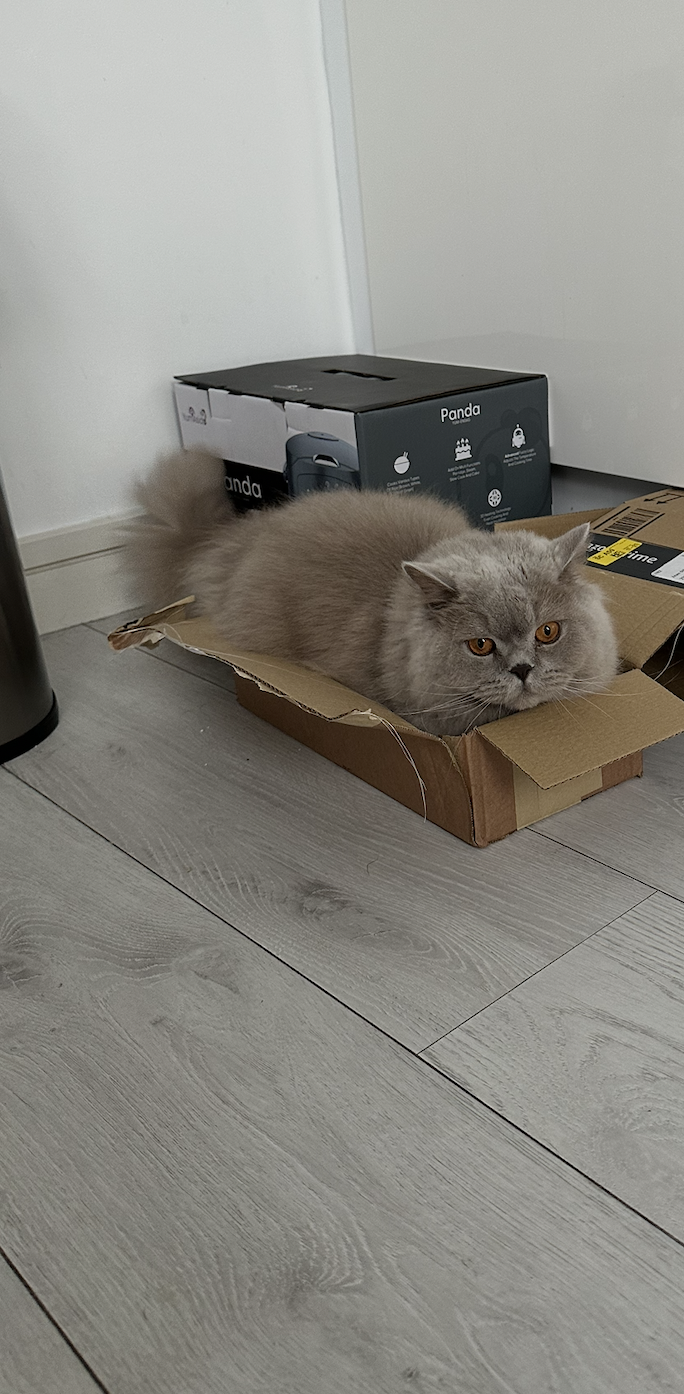
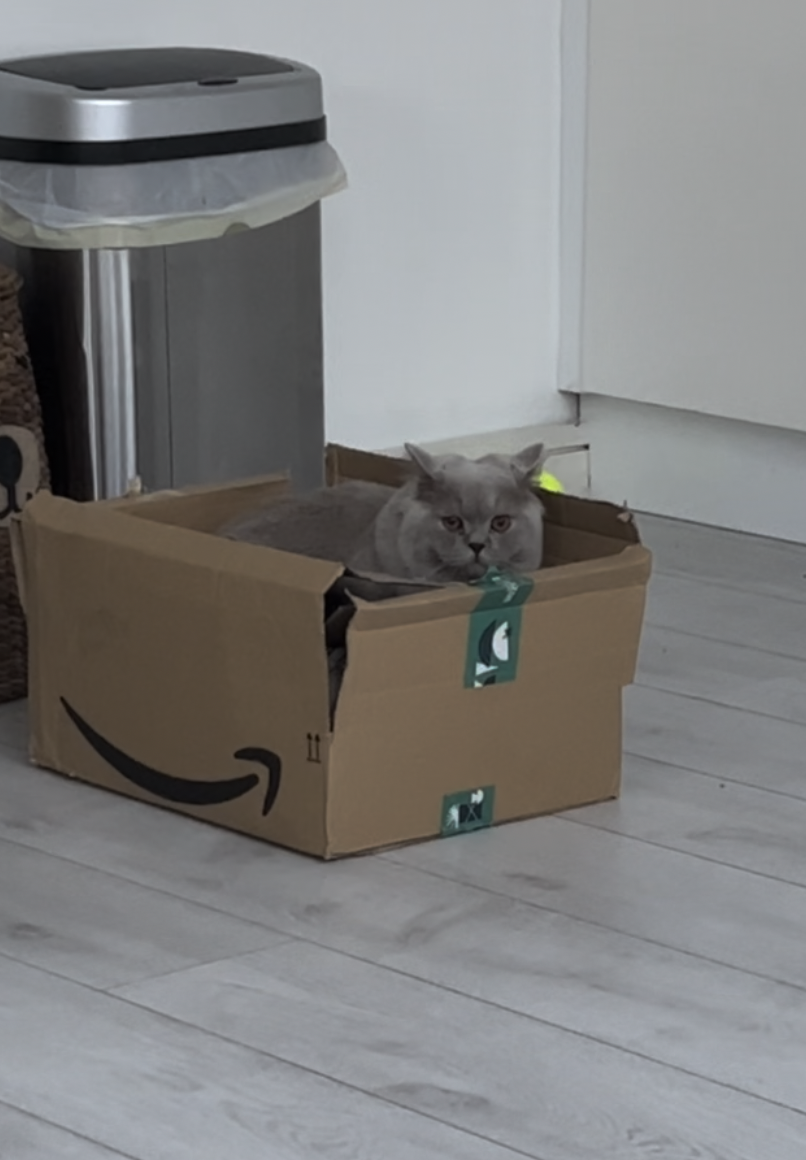
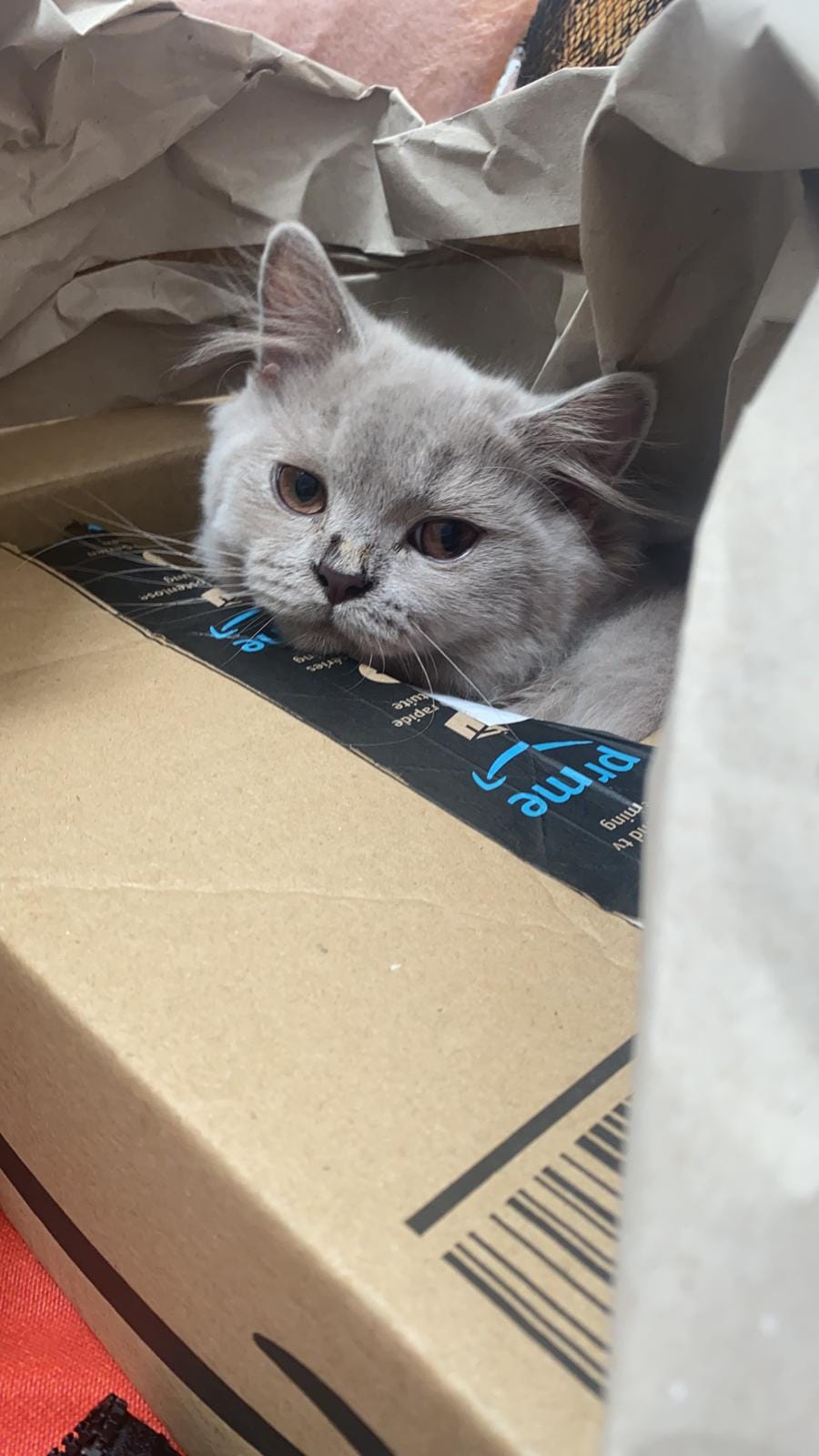
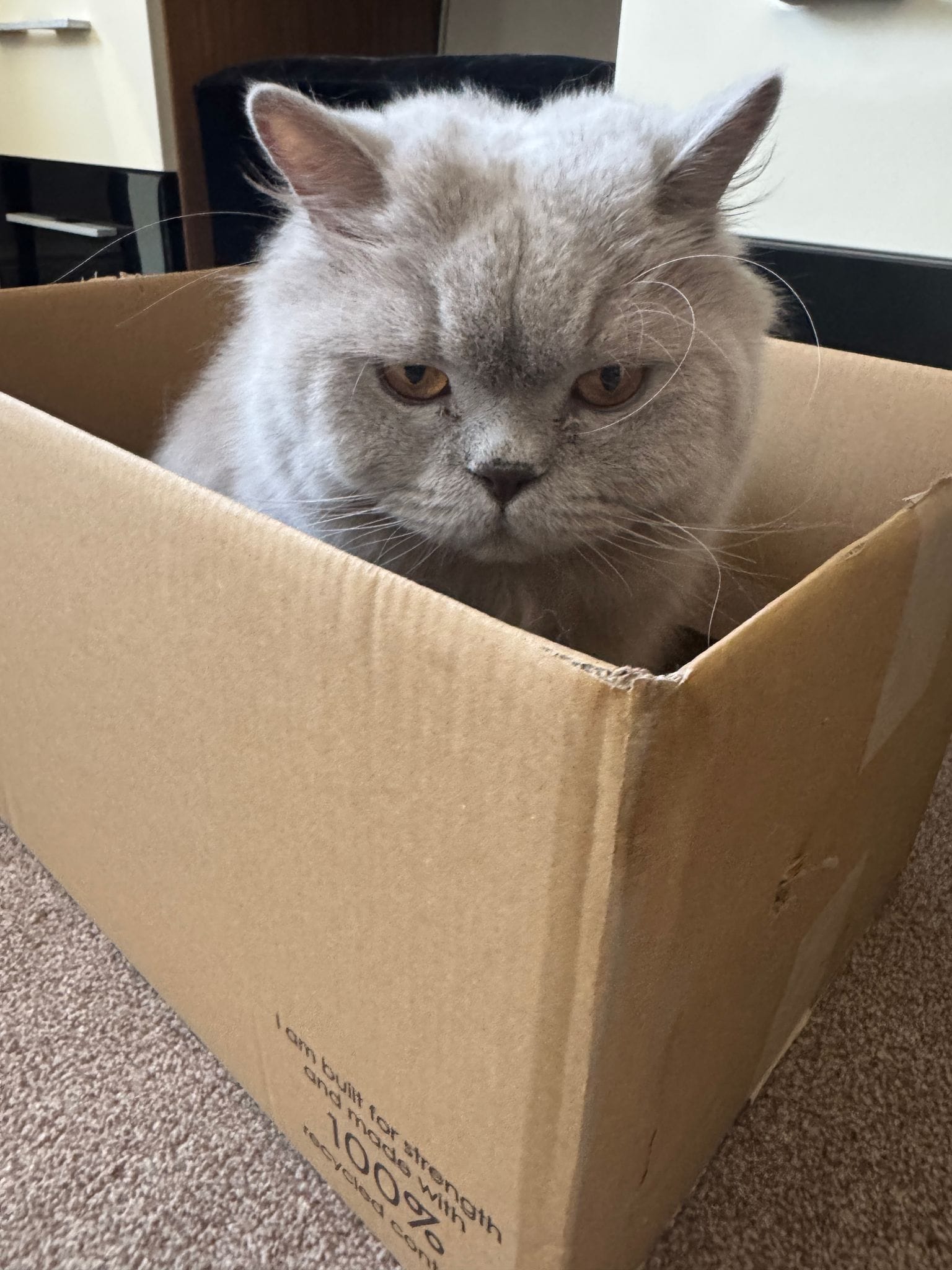
Moon loves his boxes, particulary the Amazon variety!
How Did Galena Get Found 650 Miles Away?
Galena's microchip triggered an automatic alert to her owners when Amazon warehouse staff in California scanned her, enabling a reunion impossible without this 11-13mm technology.
The Evidence:
"Microchipped cats are reunited with owners at a rate of 38.5% compared to just 1.8% for non-microchipped cats."
When Amazon employees discovered a cat inside a return shipment, standard protocol kicked in: scan for identification. Galena's microchip - a passive RFID device requiring no battery - immediately linked to her registration database, which contained Carrie Clark's current contact information.
The family received notification within hours. Within 24 hours, they had traveled 1,400 miles round-trip to retrieve their cat from California.
This 21x improvement in reunion rates (38.5% vs. 1.8%) represents one of the most significant pet safety interventions available. Yet according to AVMA data from a study of 7,700 stray animals, approximately 42% of microchipped pets are NOT registered in databases - rendering the chip useless for identification.
Are There Other Documented Cases of Cat Survival?
Galena's survival follows a documented pattern of feline resilience, with cats like Moosie (64 days in a moving box) and Drifter (8 weeks in a sewer) demonstrating extreme survival capabilities.
| Cat | Duration | Circumstances | Outcome |
|---|---|---|---|
| Moosie | 64 days | Moving box | Survived |
| Ukraine cat | 60 days | Destroyed building | Survived |
| Rayne Beau | 60 days | Lost in Yellowstone (14 to 8 lbs) | Survived |
| Drifter | 8 weeks | Sewer system | Survived |
| Ellie | 3 weeks | Trapped in wall | Survived |
| Galena | 6 days | Amazon shipping box | Survived, normal bloodwork |
These cases aren't examples of cats being "tough" - they demonstrate the extraordinary physiological adaptations inherited from desert ancestors. Genetic research published in Nature Ecology & Evolution confirms that the domestic cat lineage traces back approximately 9,500 years, when Near Eastern wildcats (Felis silvestris lybica) first began living alongside early farmers, retaining the survival mechanisms that allowed their ancestors to thrive in water-scarce environments.
How Can You Prevent Your Cat From Getting Trapped?
Preventing accidental confinement requires a systematic "cat check" before sealing any large container, plus up-to-date microchip registration for rapid identification.
The CatCog Box Safety Protocol:
- Before Sealing Any Box:
- Visually inspect the interior
- Call your cat's name and listen for response
- Shake the box gently to detect movement
- Wait 30 seconds - cats in deep sleep may not respond immediately
- Microchip Essentials:
- Ensure chip is registered (42% are not)
- Update contact information after any move or phone change
- Request annual chip scan at vet visits to confirm function
- Enable text/email alerts from your registry
- High-Risk Scenarios:
- Moving day (boxes everywhere, stress, routine disruption)
- Holiday shipping seasons
- Donation pickups
- Storing boxes in accessible areas
What Should You Do If Your Cat Is Found After Being Trapped?
Cats discovered after confinement require immediate veterinary evaluation even if they appear normal, with monitoring for hepatic lipidosis symptoms over 7-10 days.
Immediate Response Protocol:
- Do NOT overfeed - refeeding syndrome is a real risk
- Offer small amounts of water first
- Contact veterinarian immediately for assessment
- Request bloodwork to check liver function
Warning Signs to Watch (Days 1-10):
| Day | Warning Sign | Severity | Action Required |
|---|---|---|---|
| 1-2 | Extreme lethargy | Moderate | Monitor closely |
| 1-3 | Loss of appetite after initial eating | Moderate | Contact vet if persists |
| 2-5 | Vomiting | High | Veterinary visit same day |
| 3-7 | Jaundice (yellow eyes, gums, skin) | Critical | Emergency veterinary care |
| 1-10 | Excessive drooling | Moderate | Contact vet for assessment |
Galena's normal bloodwork was exceptional, not expected. Most cats in similar situations would show some degree of dehydration, electrolyte imbalance, or early liver stress.
Key Takeaways
- Desert Ancestry: Domestic cats inherit extraordinary water conservation abilities from North African wildcat ancestors, enabling survival periods that would be fatal for many other mammals.
- Box-Seeking Is Instinct: Cats don't climb into boxes for entertainment - enclosed spaces trigger deep security responses evolved for predator protection.
- Microchipping Works: The 21x improvement in reunion rates (38.5% vs 1.8%) makes microchipping one of the most effective pet safety interventions available.
- Registration Is Critical: A microchip is useless without current registration - update your information after any contact change.
- Always Check Boxes: A three-second "cat check" before sealing any container could prevent a 650-mile nightmare.
Key Terms Used
- Thigmotaxis: The instinctive preference for physical contact with walls or enclosed spaces, rooted in anti-predator behavior.
- Thermoregulation: The biological process by which cats maintain optimal internal body temperature through behavioral adjustments.
- Obligate Carnivore: An animal that must consume animal-source nutrients to survive, requiring pre-formed taurine, arachidonic acid, and vitamin A.
- Hepatic Lipidosis: A potentially fatal liver condition where fat accumulates in the liver, triggered when cats go without food for extended periods (2-7+ days). Also called "fatty liver syndrome."
- Felis silvestris lybica: The North African/Southwest Asian wildcat subspecies from which all domestic cats descended. These wildcats evolved in desert environments, giving modern cats their water-conservation abilities.
- Nephrons: The functional filtering units in kidneys. Cat kidneys contain approximately 200,000 nephrons each, which help produce highly concentrated urine.
- RFID (Radio Frequency Identification): The passive technology used in pet microchips. The chip has no battery and is only activated when a scanner sends electromagnetic energy.
See the full Cat Cognition Glossary ->
Frequently Asked Questions
How long can cats survive without food and water?
Healthy adult cats can theoretically survive up to 2 weeks without food if they have water access, though hepatic lipidosis can develop after just 2-7 days. Without water, cats typically survive only 3-4 days, though documented cases like Galena's 6-day survival suggest individual variation and environmental factors play significant roles.
Why did Galena's bloodwork come back completely normal after 6 days?
Three factors likely contributed: ideal ambient temperatures prevented additional metabolic stress, the split seam in the box provided adequate oxygen, and cats' desert-evolved physiology activates powerful water and energy conservation mechanisms during deprivation. Galena was also described as previously healthy, giving her better reserves.
Is microchipping painful for cats?
Microchip implantation is no more painful than a typical injection, though the needle is slightly larger. The chip (about the size of a grain of rice, 11-13 mm long) is injected under the skin between the shoulder blades during a routine vet visit. No anesthesia is required.
Why do cats love boxes so much?
Box-seeking represents an evolutionary security response where enclosed spaces provide protection from predators, reduce stress hormones, and create defensible territory. Research from the University of Utrecht found that shelter cats given boxes showed significantly lower stress levels than those without.
What's the longest a cat has survived being trapped?
The longest documented survival is Moosie, who survived 64 days trapped in a moving box. Other extreme cases include a Ukrainian cat surviving 60 days in a destroyed building and Rayne Beau, who survived 60 days lost after escaping in Yellowstone National Park.
Should I microchip an indoor-only cat?
Yes. Indoor cats escape more often than owners realize, and without outdoor experience, they're less equipped to survive or find their way home. Galena was an indoor cat who climbed into a box inside her own home - accidents happen regardless of lifestyle.
Can cats really produce more concentrated urine than dogs?
Yes. Cat kidneys are specifically adapted to conserve water, producing urine that's significantly more concentrated than both dogs and humans. This adaptation evolved in their desert-dwelling ancestors and remains functional in modern domestic cats.
What should I do if I find a cat that was trapped?
Do not overfeed the cat - refeeding syndrome is dangerous. Offer small amounts of water first, then contact a veterinarian immediately. Even if the cat appears healthy, bloodwork should be performed to check for liver stress and electrolyte imbalances.
Sources
- Microchip Effectiveness Study - AVMA, Journal of the American Veterinary Medical Association (n=7,700 animals) (Link)
- Cat Domestication Genetics - Ottoni et al. 2017, Nature Ecology & Evolution (Link)
- Feline Hydration Requirements - Cornell Feline Health Center (Link)
- Ohio State Indoor Pet Initiative - Dr. Tony Buffington (Link)
- Feline Hepatic Lipidosis - PubMed, American Journal of Veterinary Research (Link)
- Galena Incident Report - Veterinary Practice News (Link)
- Original News Coverage - Fox News (Link)