Clinical Lycanthropy: The Man Who Believed He Was a Cat for 13 Years
Clinical Lycanthropy is a rare psychiatric syndrome where patients believe they're transforming into animals. Only two well-documented cat cases exist in medical literature. The neuroscience reveals how identity itself can fracture.

Quick Answer: What is Clinical Lycanthropy?
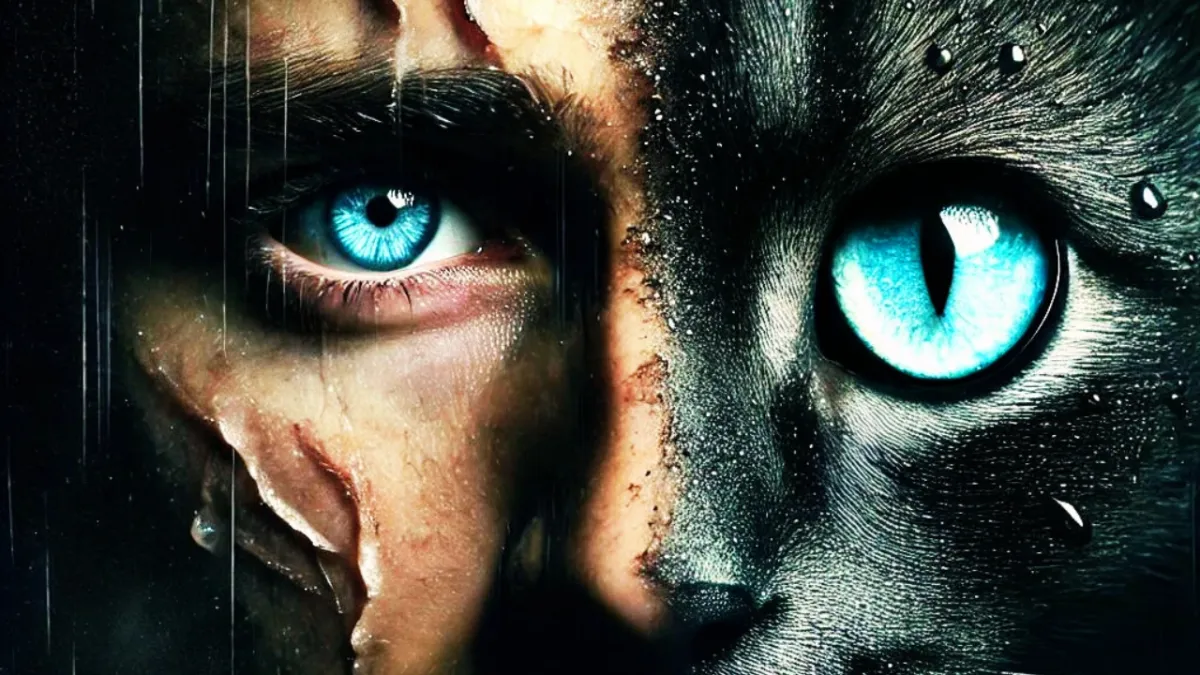
Clinical Lycanthropy is a rare psychiatric syndrome where patients hold delusional beliefs they are transforming into non-human animals. The condition involves disruption of the brain's body schema - the neural map that constructs physical self-identity. Clinical Lycanthropy is NOT a lifestyle choice or species identity - patients genuinely perceive involuntary physical transformation during psychotic episodes and typically respond to antipsychotic medication.
Table of Contents
- The 13-Year Cat Man Case
- What is Clinical Lycanthropy?
- The Neuroscience of Becoming an Animal
- Why Cats Are So Rare
- How Culture Shapes Transformation Delusions
- Treatment and Outcomes
- Key Takeaways
- Key Terms Used
- Frequently Asked Questions
- Sources
The 13-Year Cat Man Case
A 24-year-old man presented to McLean Hospital in Massachusetts believing he had been a cat for the past thirteen years. This case represents the longest documented duration of Clinical Lycanthropy in medical literature.
The patient reported living with cats, consuming cat food, and engaging in feline behaviors throughout his adolescence and early adulthood. He did not simply "identify" as a cat in a spiritual or philosophical sense - he experienced genuine perceptual distortions where his body felt like it was transforming into feline form.
As Dr. Paul Keck and colleagues at McLean Hospital documented in their landmark 1988 study, Clinical Lycanthropy can persist for remarkable periods. Their research identified 12 cases between 1974-1988, with duration ranging from a single day to over thirteen years.
The Evidence:
"Clinical Lycanthropy cases range in duration from one day to thirteen years, with the cat-transformation patient at McLean Hospital representing the longest documented case in psychiatric literature."

What is Clinical Lycanthropy?
Clinical Lycanthropy is a rare delusional syndrome classified under Delusional Misidentification Syndromes, where patients experience genuine perception that they are transforming into animals. Only 43 cases of clinical lycanthropy and kynanthropy (dog transformation) combined have been documented across 170 years of medical literature (1852-2020).
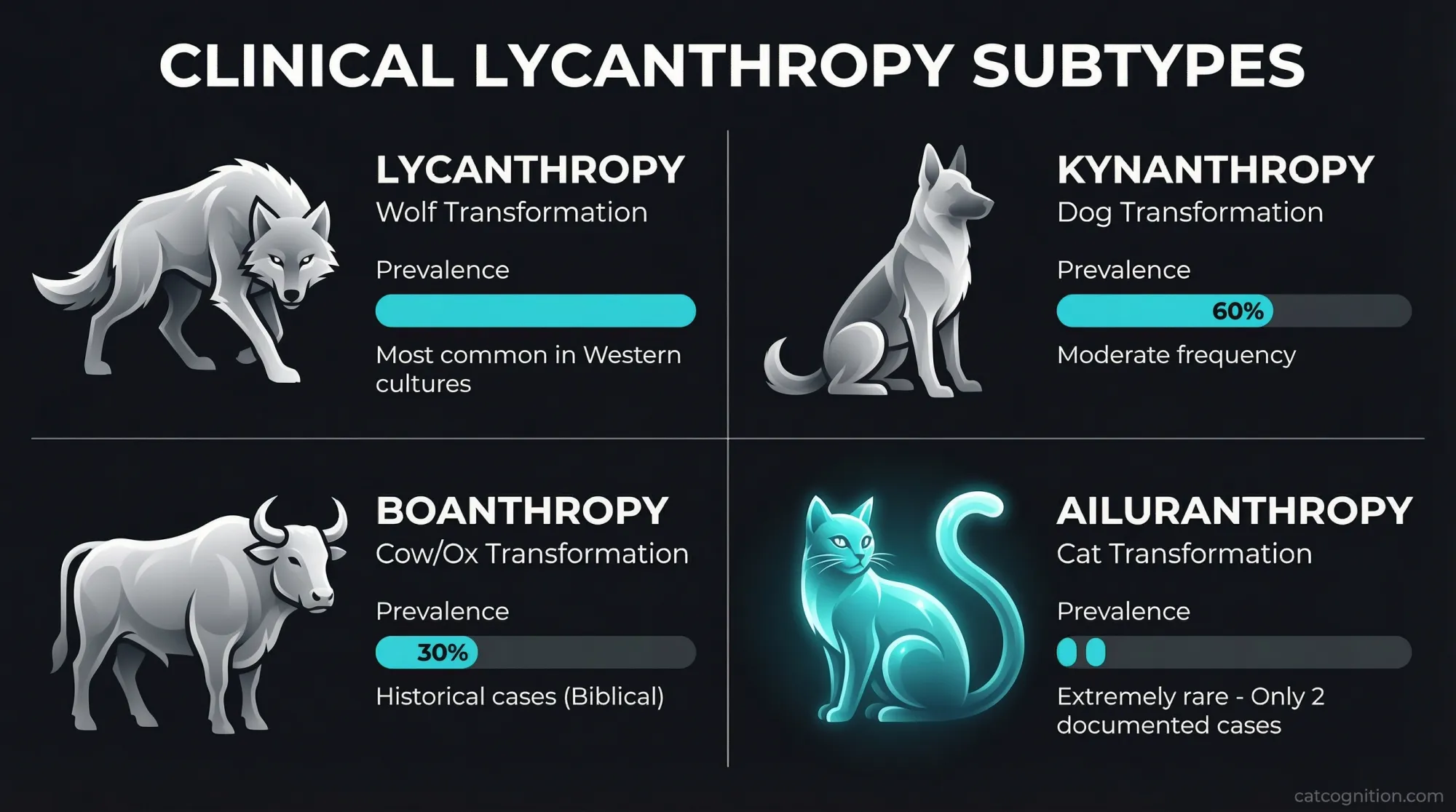
The name derives from Greek: "lykos" (wolf) + "anthropos" (human), though patients transform into many species beyond wolves. Specific subtypes include:
| Subtype | Animal | Prevalence |
|---|---|---|
| Lycanthropy | Wolf | Most common in Western cultures |
| Kynanthropy | Dog | Moderate frequency |
| Boanthropy | Cow/Ox | Historical cases (Biblical) |
| Ailuranthropy | Cat | Extremely rare (2 documented cases) |
According to the 2021 systematic review by Dr. Selim Benjamin Guessoum published in Frontiers in Psychiatry, the majority of Clinical Lycanthropy cases are associated with schizophrenia, psychotic depression, bipolar disorder, or other psychotic disorders. Additional cases appear alongside organic brain conditions, drug intoxication, or other neurological disorders.
CatCog Reality Check:
Clinical Lycanthropy is NOT the same as species dysphoria, otherkin identity, or therianthropy. Those represent belief systems or identity frameworks - Clinical Lycanthropy is a psychiatric symptom involving involuntary perceptual distortion. The key distinction: lycanthropy patients typically find the experience terrifying rather than affirming, and the condition responds to antipsychotic medication.
The Neuroscience of Becoming an Animal
The brain constructs physical self-identity through interconnected systems involving the right parietal lobe, frontal cortex, and temporal regions. Clinical Lycanthropy emerges when these systems malfunction in specific ways.
Body Schema is the brain's unconscious neural map of body position, shape, and movement in space. Located primarily in the right parietal lobe, this system normally provides stable awareness of physical form. In Clinical Lycanthropy patients, neuroimaging shows abnormal activation in regions responsible for body representation.
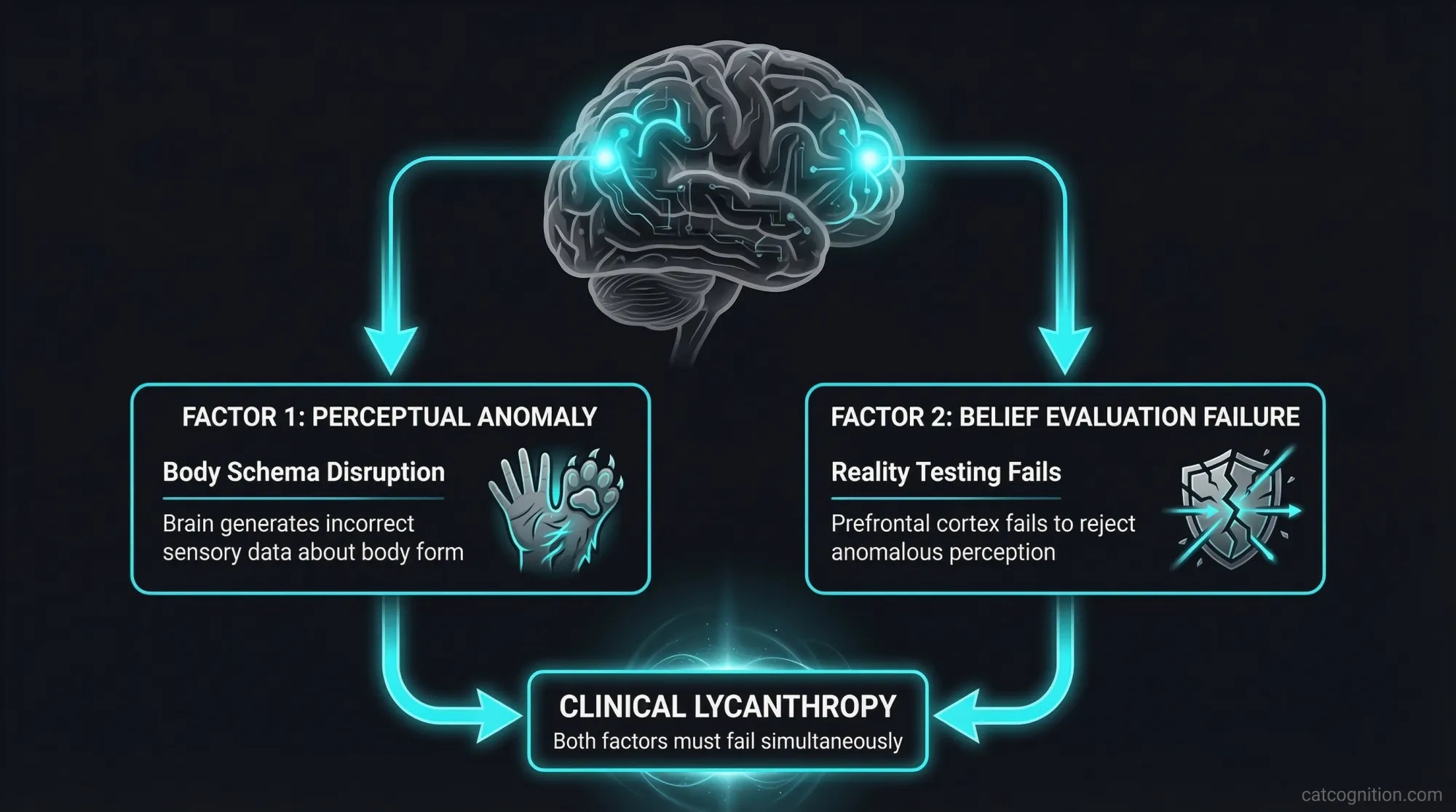
The Two-Factor Theory proposed by neurologists suggests Clinical Lycanthropy requires two simultaneous failures:
Factor 1 - Perceptual Anomaly:
The brain generates incorrect sensory data about body form. Patients may genuinely perceive their limbs changing shape, feel phantom fur or whiskers, or experience altered proprioception suggesting animal anatomy. Neuroimaging of two lycanthropy patients showed unusual activation in brain regions involved in representing body shape.
Factor 2 - Belief Evaluation Failure:
The frontal lobe's reality-testing function fails to reject the anomalous perception. Normally, if your brain briefly generated the sensation of growing a tail, your prefrontal cortex would immediately flag this as impossible. In Clinical Lycanthropy, this error-correction system is compromised.
The Evidence:
"The brain's body schema, located primarily in the right parietal lobe, constructs our physical sense of self and can malfunction in severe psychosis, generating genuine perceptions of non-human anatomy."
Research published in NCBI StatPearls consistently demonstrates right hemisphere involvement in delusional misidentification syndromes. Decreased cerebral blood flow in the right parietal area correlates with body schema disturbances.

Closest I'll come to believing I'm a cat
Why Cats Are So Rare
Only two well-documented cases of ailuranthropy (cat-transformation delusion) exist in psychiatric literature, making feline lycanthropy exceptionally rare compared to wolf or dog transformations.
Researchers speculate this reflects cultural mythology rather than neurobiology. The animal chosen in Clinical Lycanthropy tends to represent what Dr. Selim Benjamin Guessoum's systematic review calls the patient's "delusional depiction of evil" or threat. Predators dominate case reports:
| Animal Category | Frequency | Cultural Context |
|---|---|---|
| Wolves/Dogs | Most common | Western werewolf mythology |
| Hyenas | Common in Middle East | Associated with evil spirits |
| Tigers/Foxes | Common in Asia | Shape-shifting folklore |
| Cats | 2 documented cases | Associated with companionship, not threat |
The Evidence:
"Only two well-documented cases of ailuranthropy (cat-transformation delusion) exist in psychiatric literature, making feline lycanthropy exceptionally rare despite cats' prominence in human culture."
The positive cultural status of domestic cats may paradoxically "protect" them from selection as transformation targets. Werewolves represent menace in Western folklore; cats represent comfort. The 13-year cat man case is notable precisely because cat delusions are so uncommon.
How Culture Shapes Transformation Delusions
Clinical Lycanthropy is increasingly recognized as a culture-bound syndrome - a psychiatric condition whose expression is shaped by the patient's cultural context. The animal form is not random; culture provides the vocabulary for expressing transformation delusions.
The Werewolf of Bedburg (1589)
Peter Stumpp, a German farmer, was executed October 31, 1589 after confessing to 16 murders and werewolf transformation over 25 years. His confession was extracted under torture and claimed he possessed a "magic belt" enabling wolf transformation.
The case occurred during the Cologne War (1583-1588) - a period of religious and political chaos. Stumpp was a Protestant convert in a Catholic region. The execution was spectacularly brutal: flesh torn with hot pincers, limbs broken on the wheel, beheading, then burning.
This case demonstrates how delusions or accusations of animal transformation mapped onto existing werewolf mythology in medieval Europe.
Kitsune and Kitsunetsuki (Japan)
Japanese folklore features Kitsune - fox spirits capable of shape-shifting into human form. These spirits gain additional tails every 100 years, with nine-tailed foxes (kyuubi) representing peak power. Over 30,000 Inari shrines across Japan venerate these beings.
Kitsunetsuki (fox possession) describes the cultural belief that foxes can enter human bodies, typically affecting young women. This condition required exorcism by shrine maidens and is now classified as a culture-bound syndrome in psychiatric literature.
Japanese patients experiencing transformation delusions would naturally draw on kitsune mythology rather than werewolf legends.
Skinwalkers (Navajo Yee Naaldlooshii)
In Navajo tradition, Skinwalkers are witches who gain animal transformation ability through taboo acts - typically murder of a close family member. They can become coyotes, wolves, foxes, cougars, or bears by wearing animal skins.
Unlike European werewolves (cursed victims), Skinwalkers choose their path. The concept represents the antithesis of Navajo cultural values - community healers corrupted by power.
The Evidence:
"Culture shapes the animal form of lycanthropy delusions: Western patients become wolves; Middle Eastern patients become hyenas; Asian patients become tigers or foxes. The animal represents culturally available symbols of transformation."
Treatment and Outcomes
Clinical Lycanthropy is not a primary diagnosis - the transformation delusion is a symptom of underlying psychiatric conditions including schizophrenia, bipolar disorder with psychotic features, or severe depression.
Antipsychotic medications are highly effective. The 2021 systematic review reports complete remission of transformation delusions in the majority of documented cases, though the underlying condition requires ongoing management.
Two remarkable cases resolved after treating obstructive sleep apnea, suggesting respiratory disruption may contribute to delusion formation in some patients. This finding highlights the complex relationship between physical health and psychiatric symptoms.
| Treatment | Mechanism | Outcome |
|---|---|---|
| Antipsychotics | Dopamine receptor modulation | Remission in majority of cases |
| Mood Stabilizers | For bipolar-associated cases | Variable effectiveness |
| Sleep Apnea Treatment | Oxygen restoration during sleep | Complete resolution (2 cases) |
| Hospitalization | Safety and medication titration | Required for acute episodes |
The prognosis depends on the underlying condition. Patients with isolated psychotic episodes may achieve full recovery. Those with schizophrenia require lifelong management, though the specific transformation delusion typically resolves.
Key Takeaways
- Clinical Lycanthropy: A rare psychiatric syndrome where patients experience genuine perception of transforming into animals, with only 43 documented cases of lycanthropy and kynanthropy combined across 170 years of medical literature (1852-2020).
- The Cat Case: The longest documented case involved a man who believed he was a cat for 13 years, treated at McLean Hospital - one of only two well-documented ailuranthropy cases ever recorded.
- Neuroscience: The condition involves disruption of body schema (the brain's physical self-map) combined with failed reality-testing in the frontal lobe - two factors that must fail simultaneously.
- Cultural Influence: The animal chosen reflects available cultural mythology - wolves in Western cultures, foxes in Japan, hyenas in the Middle East.
- Treatment: Antipsychotic medications are highly effective, with most patients achieving remission. Two cases even resolved after treating obstructive sleep apnea.
Key Terms Used
- Clinical Lycanthropy: A rare psychiatric syndrome where patients hold delusional beliefs of transforming into non-human animals, named from Greek "lykos" (wolf) + "anthropos" (human).
- Body Schema: The brain's unconscious neural representation of body position, shape, and movement in space, located primarily in the right parietal lobe.
- Ailuranthropy: The specific delusion of transforming into a cat, from Greek "ailouros" (cat) - with only two well-documented cases in medical literature.
- Delusional Misidentification Syndrome: A category of delusions involving altered identity of self, others, or places, including Clinical Lycanthropy.
- Culture-Bound Syndrome: Psychiatric conditions whose expression is shaped by specific cultural contexts, such as kitsunetsuki (fox possession) in Japan.
See the full Cat Cognition Glossary ->
Frequently Asked Questions
What is Clinical Lycanthropy?
Clinical Lycanthropy is a rare psychiatric syndrome where patients experience genuine delusional beliefs that they are transforming into non-human animals. The condition involves disruption of the brain's body schema and failed reality-testing, typically occurring during psychotic episodes associated with schizophrenia or severe mood disorders.
How long did the cat man believe he was a cat?
The patient at McLean Hospital believed he was a cat for thirteen years, representing the longest documented duration of Clinical Lycanthropy in medical literature. He presented at age 24 after living with cats, consuming cat food, and engaging in feline behaviors throughout his adolescence.
Why are cat transformation cases so rare?
Only two well-documented cases of ailuranthropy (cat delusion) exist in medical literature. Researchers believe this reflects cultural mythology - transformation delusions typically involve animals representing threat or evil in the patient's culture. Wolves dominate Western cases, while cats are culturally associated with companionship rather than menace.
Is Clinical Lycanthropy the same as identifying as an animal?
No. Clinical Lycanthropy is a psychiatric symptom involving involuntary perceptual distortion during psychotic episodes. Patients typically find the experience terrifying. This differs fundamentally from species dysphoria, otherkin identity, or therianthropy, which are belief systems or identity frameworks that don't involve delusion.
Can Clinical Lycanthropy be cured?
Most patients achieve remission with antipsychotic medication. The 2021 systematic review reports that the majority of documented cases resolved with treatment. Two cases even resolved after treating obstructive sleep apnea. The underlying psychiatric condition requires ongoing management.
What causes Clinical Lycanthropy?
The condition appears to require two neurological failures: an anomaly in the brain's body schema generating incorrect perceptions of physical form, and failure of the frontal lobe's reality-testing function to reject these perceptions. Most cases are associated with schizophrenia, bipolar disorder, or severe depression.
Is Clinical Lycanthropy dangerous?
Clinical Lycanthropy itself rarely leads to violence. Patients are typically more distressed and confused than aggressive. However, the underlying psychotic disorders can pose risks, and patients generally require psychiatric hospitalization for their own safety during acute episodes.
How does culture affect transformation delusions?
Culture provides the "vocabulary" for expressing delusions. Western patients typically become wolves (werewolf mythology), Middle Eastern patients become hyenas, Japanese patients become foxes (kitsune mythology), and Native American cases may involve culturally significant predators. The animal form is not random - it reflects available cultural symbols.
Sources
- Clinical Lycanthropy, Neurobiology, Culture: A Systematic Review - Guessoum SB et al., Frontiers in Psychiatry (2021)
- Lycanthropy: Alive and Well in the Twentieth Century - Keck et al., McLean Hospital/Psychological Medicine (1988)
- Delusional Misidentification Syndrome - StatPearls, NCBI (2024)
- An Overview of the Body Schema and Body Image - Sattin et al., PMC (2023)