Why Are Orange Cats Almost Always Male? Cat Coat Color Genetics Explained
Why are 81% of orange cats male? All cat coat colors come from just two pigments—and the 2025 ARHGAP36 gene discovery finally explains why orange, calico, and tabby patterns work the way they do.

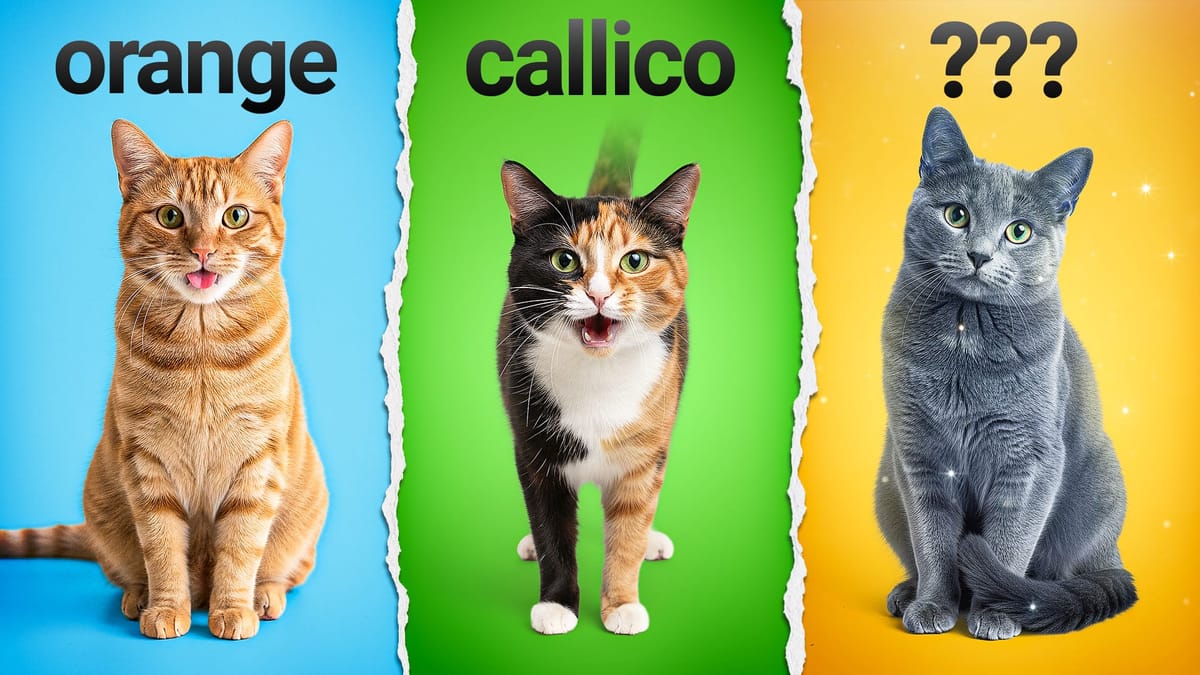
All cat coat colors—orange, tabby, calico, black, and white—derive from just two pigments: eumelanin (black/brown) and pheomelanin (red/orange). The orange gene sits on the X chromosome, which is why 81% of orange cats are male and nearly all calico cats are female. These base pigments pass through 10-15 modifier genes that act as switches and dimmers, controlling intensity, distribution, and pattern. The May 2025 discovery of the ARHGAP36 gene mutation finally solved why orange coloration works through a mechanism unique to cats.
Table of Contents
- Why Did Scientists Spend a Century Studying Orange Cats?
- What Are the Two Base Pigments in Cat Coats?
- How Do Modifier Genes Change Coat Color?
- When Are Tabby Patterns Established in Cats?
- Why Are 81% of Orange Cats Male?
- What Causes the Colorpoint Pattern in Siamese Cats?
- Why Does White Spotting Occur in Cats?
- How Does Cat Coat Color Genetics Differ From Other Mammals?
- Key Takeaways
- Key Terms Used
- Frequently Asked Questions
- Sources
Why Did Scientists Spend a Century Studying Orange Cats?
Orange coloration remained genetics' greatest feline mystery for over 100 years because the orange gene operates through a mechanism found in no other mammal on Earth. In May 2025, two independent research teams - Dr. Hiro Sasaki at Kyushu University and Dr. Christopher Kaelin at Stanford - simultaneously discovered that a 5.1-kilobase deletion in the ARHGAP36 gene causes orange coat color, explaining why calico dogs, mice, and hamsters cannot exist.
As Dr. Christopher Kaelin of Stanford University explains, the orange mutation "turns on Arhgap36 expression in a cell type, the pigment cell, where it's not normally expressed." Molecular analysis showed Arhgap36 expression increases 13-fold in orange melanocytes. This ectopic expression degrades PKAC, an enzyme that normally drives eumelanin production, allowing pheomelanin to dominate. For more on feline genetics and health, see our Cat Care resource hub.

What Are the Two Base Pigments in Cat Coats?
Every cat coat color originates from just two melanin pigments working through the tyrosinase enzyme cascade. Eumelanin produces black and brown tones, while pheomelanin produces red, orange, and cream colors. All variations - from jet black to pale lilac to deep ginger - result from these two pigments being modified, diluted, or distributed differently.
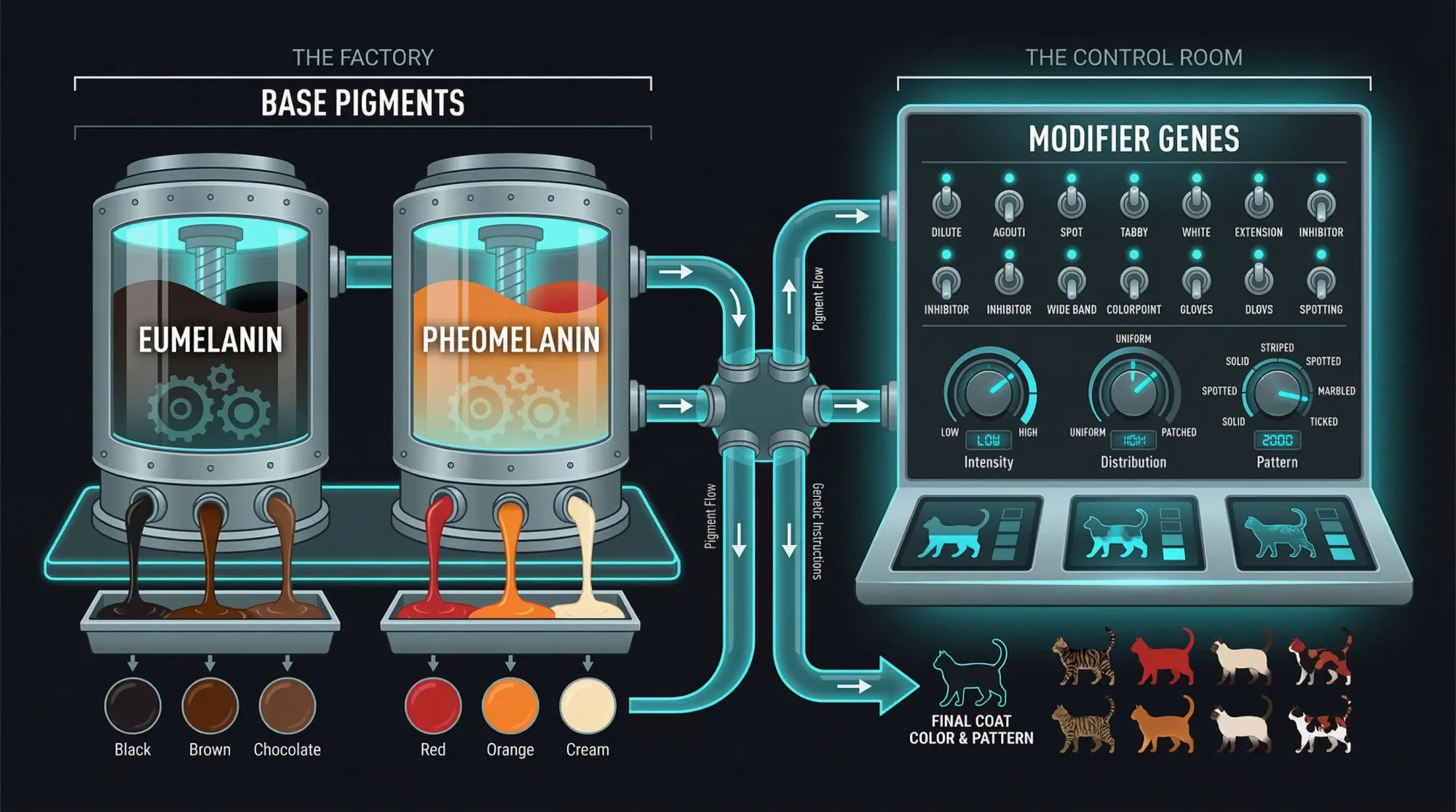
Think of cat coat color genetics like a paint-mixing factory with a master control room: the factory only produces two base paints, but the control room has dozens of switches and dials determining which paint to use, how much to dilute it, and where to spray it on each hair.
The Evidence:
"Geneticists estimate that 10-15 genes work together to determine a cat's final coat appearance, each acting like a dial on that genetic control panel."
How Do Modifier Genes Change Coat Color?
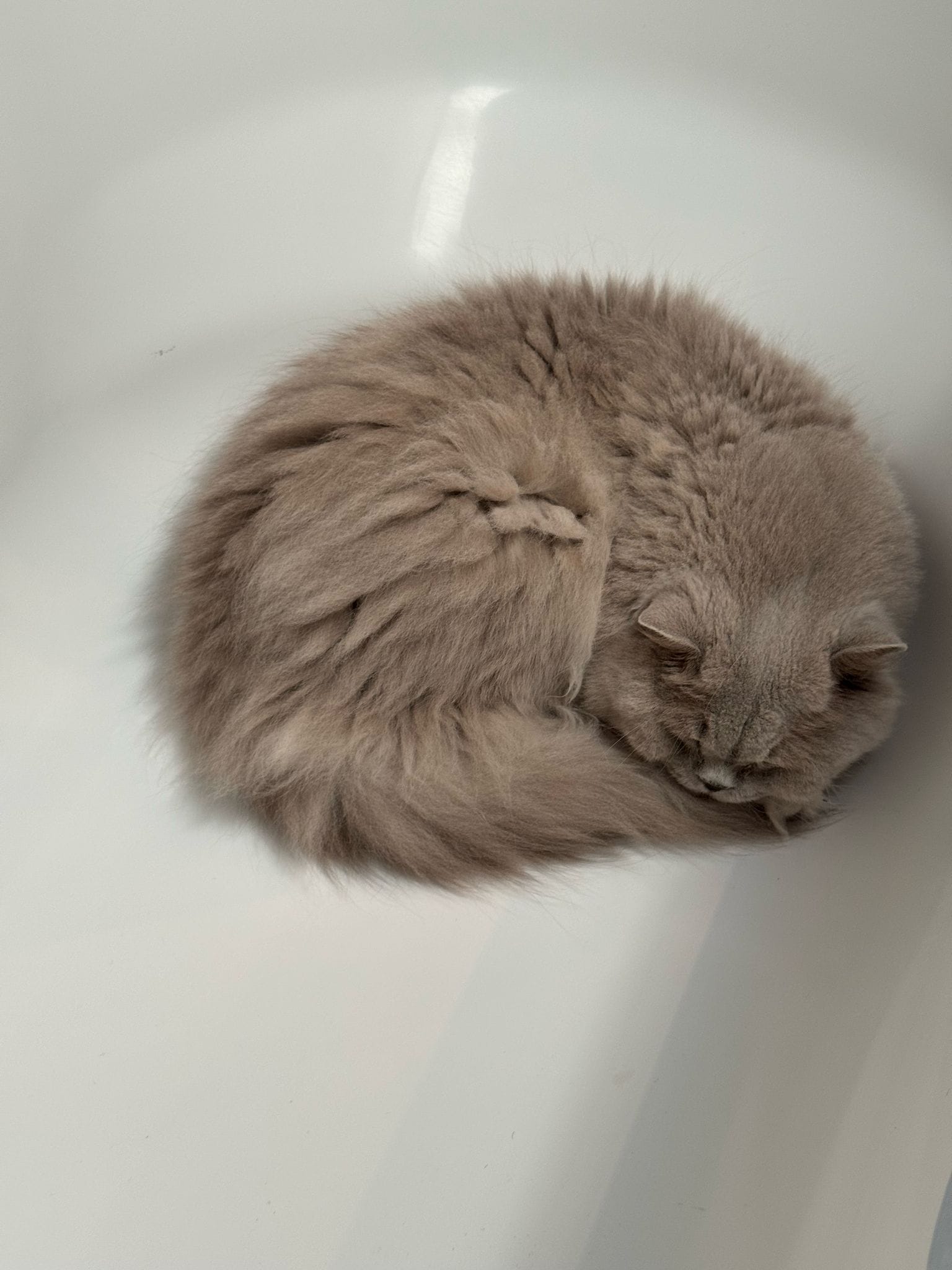
Modifier genes transform the two base pigments into the full spectrum of cat coat colors by controlling pigment intensity, distribution, and expression. The dilute gene softens intense black to grey ("blue") and deep orange to cream by affecting how pigment granules clump within hair shafts. A cat must inherit two copies of the dilute allele for this softening to appear.
The agouti gene determines solid coloring versus tabby patterns. When active, pigment production alternates as each hair grows, creating distinctive banded tabby hairs. When inactive, pigment deposits continuously, producing solid-colored coats.
When Are Tabby Patterns Established in Cats?
Cat tabby patterns are established in the embryo before hair follicles even develop, pre-programmed into the skin through molecular signaling. A 2021 study by Dr. Christopher Kaelin discovered that DKK4 signaling creates the pattern template in fetal skin cells. The stripes, spots, and swirls exist as a chemical blueprint before melanocytes even migrate into position.
The Evidence:
"Cat tabby patterns are established in the embryo before hair follicles even develop - the pattern is pre-programmed in the skin itself through DKK4 signaling."
Research across 115 cat breeds (n=353 cats) demonstrated that DKK4 variants consistently predict tabby pattern type. The pattern exists before the fur exists - melanocytes simply fill in a template drawn weeks earlier in fetal development.

Why Are 81% of Orange Cats Male?
81% of orange cats are male because the orange gene sits on the X chromosome, following the same inheritance pattern as human colorblindness. Male cats have one X chromosome (XY), while females have two (XX). For a male to be orange, he needs only one copy from his mother. For a female to be orange, she needs two copies - one from each parent - making orange females statistically rarer.
This sex-linkage explains the mathematics of orange cat populations. When an orange male mates with a non-orange female, his daughters receive his orange X chromosome but also receive their mother's non-orange X chromosome - making them tortoiseshell carriers rather than solid orange. Only when a female inherits the orange allele from both parents does she display solid orange coloring.
The Evidence:
"Only 1 in 3,000 tortoiseshell cats are male, and approximately 64% of those males have XXY chromosomes - the feline equivalent of Klinefelter syndrome."
A male cat normally cannot be tortoiseshell because he has only one X chromosome - he either expresses orange or non-orange, not both. Rare male tortoiseshells typically have chromosomal abnormalities like XXY, though these males are usually sterile. Interestingly, Syrian hamsters also display X-linked orange inheritance producing tortoiseshell patterns - but through an entirely different gene mechanism, demonstrating convergent evolution.
What Causes the Colorpoint Pattern in Siamese Cats?
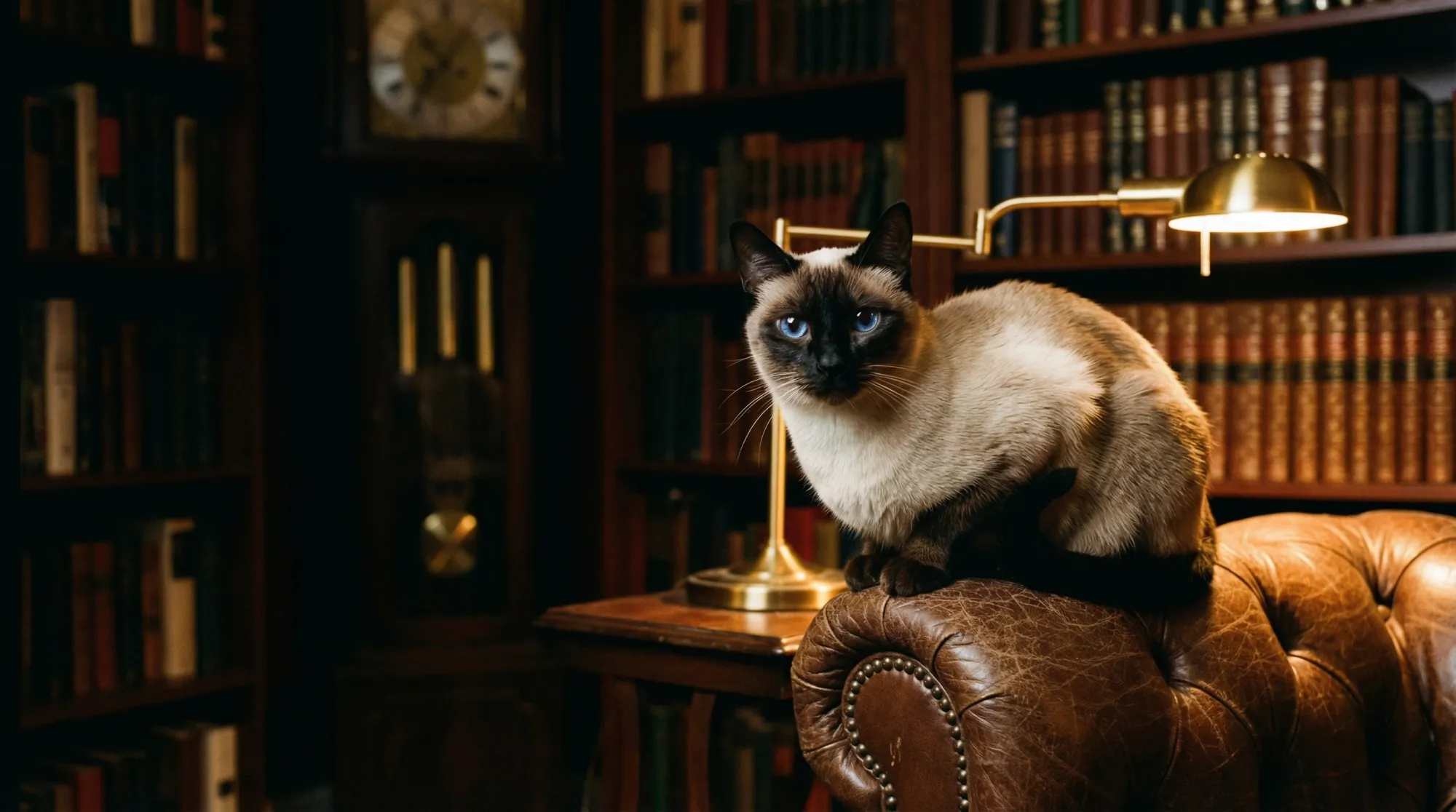
The tyrosinase enzyme in colorpoint cats only functions below 36-37 degrees Celsius, causing pigment to appear only on cooler body extremities like the face, ears, paws, and tail. This temperature-sensitive TYR gene mutation explains the distinctive "masked" appearance of Siamese, Himalayans, and Birmans.
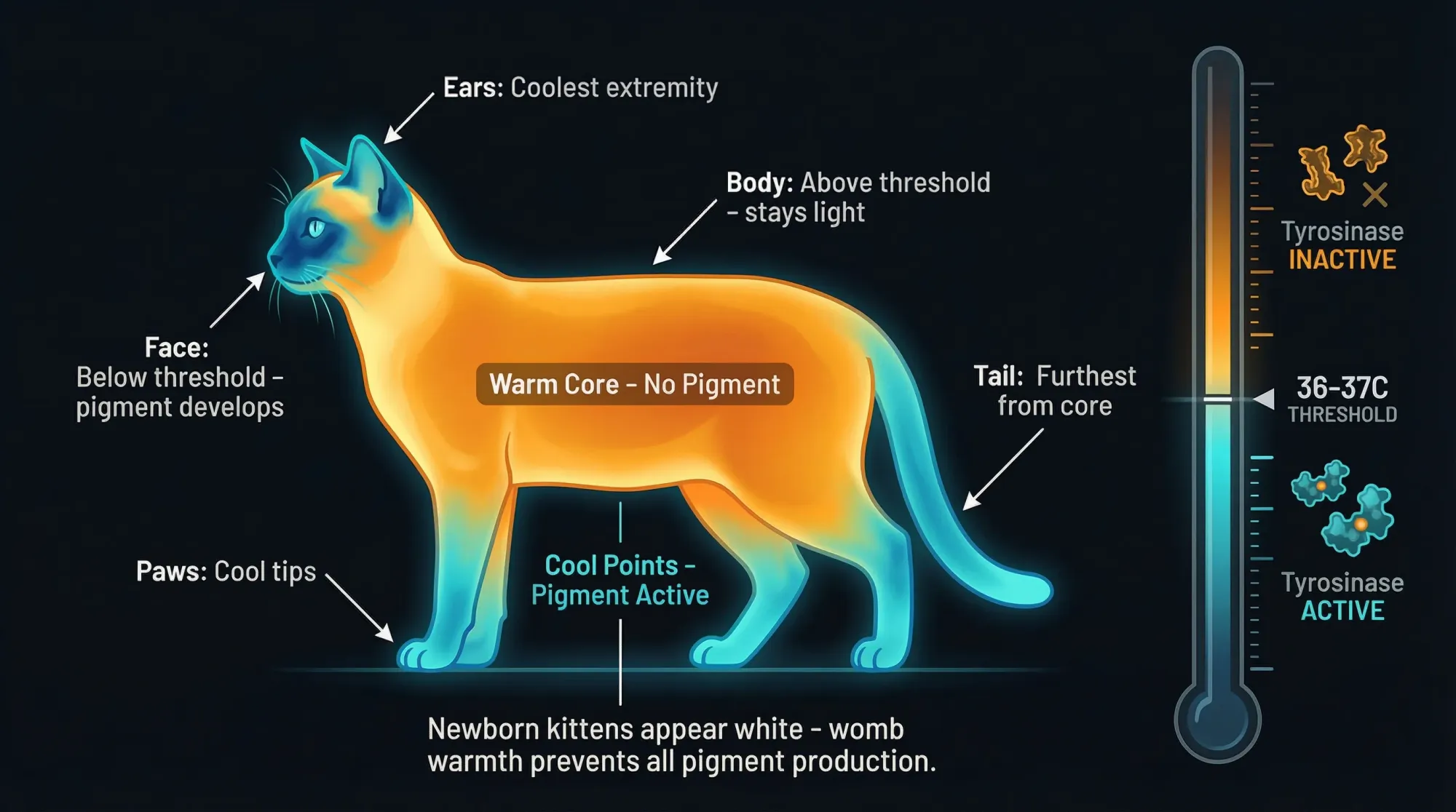
Newborn colorpoint kittens appear almost entirely white because the womb's constant warmth prevented pigment production. As extremities cool, characteristic points develop over several weeks. Colorpoint cats may darken in winter or after surgery where shaved areas experience lower temperatures - this is purely cosmetic.
The Evidence:
"The tyrosinase enzyme in colorpoint cats only functions below 36-37 degrees Celsius, causing pigment to appear only on cooler body extremities."

Why Does White Spotting Occur in Cats?
White spotting in cats is primarily caused by a 7,125 base pair retrovirus insertion in the KIT gene - an ancient viral infection called FERV1 preserved in feline DNA millions of years ago. This insertion disrupts melanocyte migration during embryonic development, creating patches where no pigment cells arrived.
The Evidence:
"White spotting in cats is primarily caused by a 7,125 base pair retrovirus insertion in the KIT gene - an ancient viral infection preserved in feline DNA."
Melanocytes serve functions beyond coloring fur - they're also required in the cochlea of the inner ear.
How Does Cat Coat Color Genetics Differ From Other Mammals?
The ARHGAP36 mechanism producing orange coloration exists in no other mammal species, representing a unique evolutionary development. Dr. Leslie A. Lyons of the University of Missouri, whose laboratory has discovered approximately 50 mutations across 20+ genes, notes that "coat color and disease studies really all go hand in hand as often a gene that controls a simple coat color in cats may have a slightly different mutation in humans and cause a more devastating disease."
Dogs have 9 coat color loci with mouse and human homologs, while cats have only 7 - yet cats produce seemingly greater visual diversity through the unique X-linked orange system that dogs lack. The absence of calico dogs demonstrates how specifically this mechanism evolved within cats.
| Species | Coat Color Loci | Calico/Tortoiseshell Possible | Orange Mechanism |
|---|---|---|---|
| Domestic Cat | 7 | Yes | ARHGAP36 (unique) |
| Dog | 9 | No | N/A |
| Mouse | Multiple | No | N/A |
| Syrian Hamster | Multiple | Yes | Different gene (convergent evolution) |
Key Takeaways
- Two Pigments: All cat coat colors derive from just two pigments - eumelanin (black/brown) and pheomelanin (red/orange) - modified by 10-15 genes.
- Orange Uniqueness: The 2025 ARHGAP36 discovery revealed orange coloration works through a mechanism found in no other mammal.
- Sex-Linked Inheritance: 81% of orange cats are male because the orange gene sits on the X chromosome.
- Embryonic Patterning: Tabby patterns are established before hair follicles develop, through DKK4 signaling.
- White Cat Health: 65-85% of white cats with two blue eyes are deaf - all white cats should receive hearing testing.
Key Terms Used
- Eumelanin: The melanin pigment responsible for black and brown colors in cat coats.
- Pheomelanin: The melanin pigment responsible for red, orange, and cream colors in cat coats.
- Melanocyte: Pigment-producing cells that migrate through the embryo to skin, hair follicles, and inner ear.
- Agouti Gene: Controls whether pigment production alternates (tabby) or remains constant (solid).
- Colorpoint: Temperature-sensitive coat pattern where pigment appears only on cooler extremities.
See the full Cat Cognition Glossary ->
Frequently Asked Questions
Why did scientists spend 100 years trying to understand orange cats?
Orange coloration operates through a unique X-linked mechanism that exists in no other mammal. The May 2025 discovery of the ARHGAP36 deletion finally solved this century-old puzzle by revealing ectopic gene expression in melanocytes.
Can two non-orange cats produce orange kittens?
Yes, if the mother carries the recessive orange allele. A female needs the orange allele from both parents to be solid orange, while a male only needs one copy from his mother.
Why does my Siamese cat get darker in winter?
Colorpoint cats have temperature-sensitive tyrosinase enzymes that only function below 36-37 degrees Celsius. In colder weather, more body area drops below this threshold, allowing increased pigment production.
Are all white cats deaf?
No, but they have elevated deafness rates: 65-85% with two blue eyes, 40% with one blue eye, and 17-22% with non-blue eyes. Melanocytes are required in the inner ear for hearing development.
Why are male calico cats so rare?
Male calico cats occur in approximately 1 in 3,000 births because normal males have only one X chromosome. About 64% of male calicos have XXY chromosomes, which typically renders them sterile.
Does coat color affect a cat's personality?
No scientific evidence supports personality differences based on coat color. Coat color genes affect melanocyte function, not brain development or behavior.
Is the silver or smoke gene the same as white?
No, silver/smoke and white are completely different mechanisms. White results from KIT gene mutations affecting melanocyte migration. Silver/smoke comes from a melanin inhibitor that suppresses pigment at the hair base while allowing tips to retain color, creating cats that appear one color until their fur parts to reveal a lighter undercoat.
What is the rarest cat coat color?
Truly rare colors include albino (complete absence of tyrosinase function), chinchilla (silver gene with minimal color), and certain color combinations like chocolate tortoiseshell or cinnamon. Rarity varies by breed and region, but any color requiring multiple recessive genes from both parents will be statistically uncommon.
Sources
- Sex-Linked Orange Color in Cats Is Due to Increased Expression of the ARHGAP36 Gene - Kaelin et al. 2025, Current Biology (Link)
- ARHGAP36 Gene Study (Japanese Team) - Sasaki et al. 2025, Current Biology (Link)
- Endogenous Retrovirus Insertion in the KIT Oncogene - David VA et al. 2014, NIH (Link)
- Developmental Genetics of Color Pattern Establishment in Cats - Kaelin et al. 2021, Nature Communications (Link)
- White Cats and Deafness - Cornell Feline Health Center (Link)
- Cat Coat Color Genetics - UC Davis Veterinary Genetics Laboratory (Link)
- Feline Genetics Laboratory - University of Missouri (Link)