Everything Your Cat Expects From You, Explained
Cats require five environmental pillars: safe places, separated resources, predatory play, consistent interaction, and sensory respect. The AAFP framework reduces stress-related illness by 75-80%.

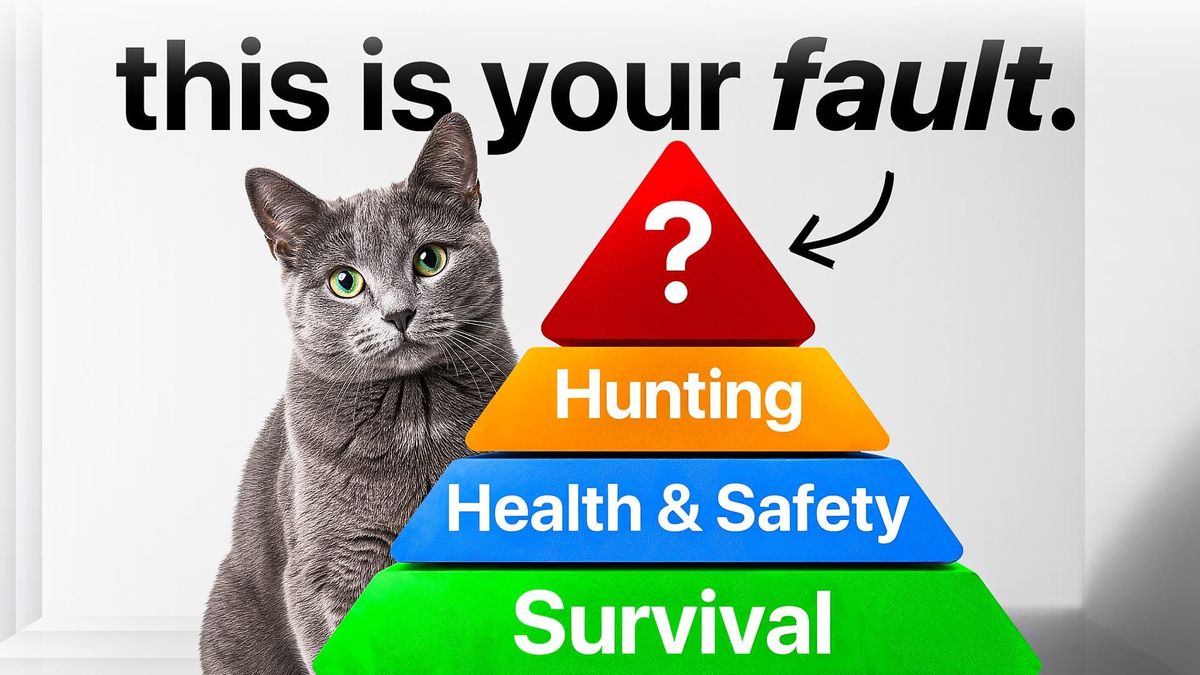
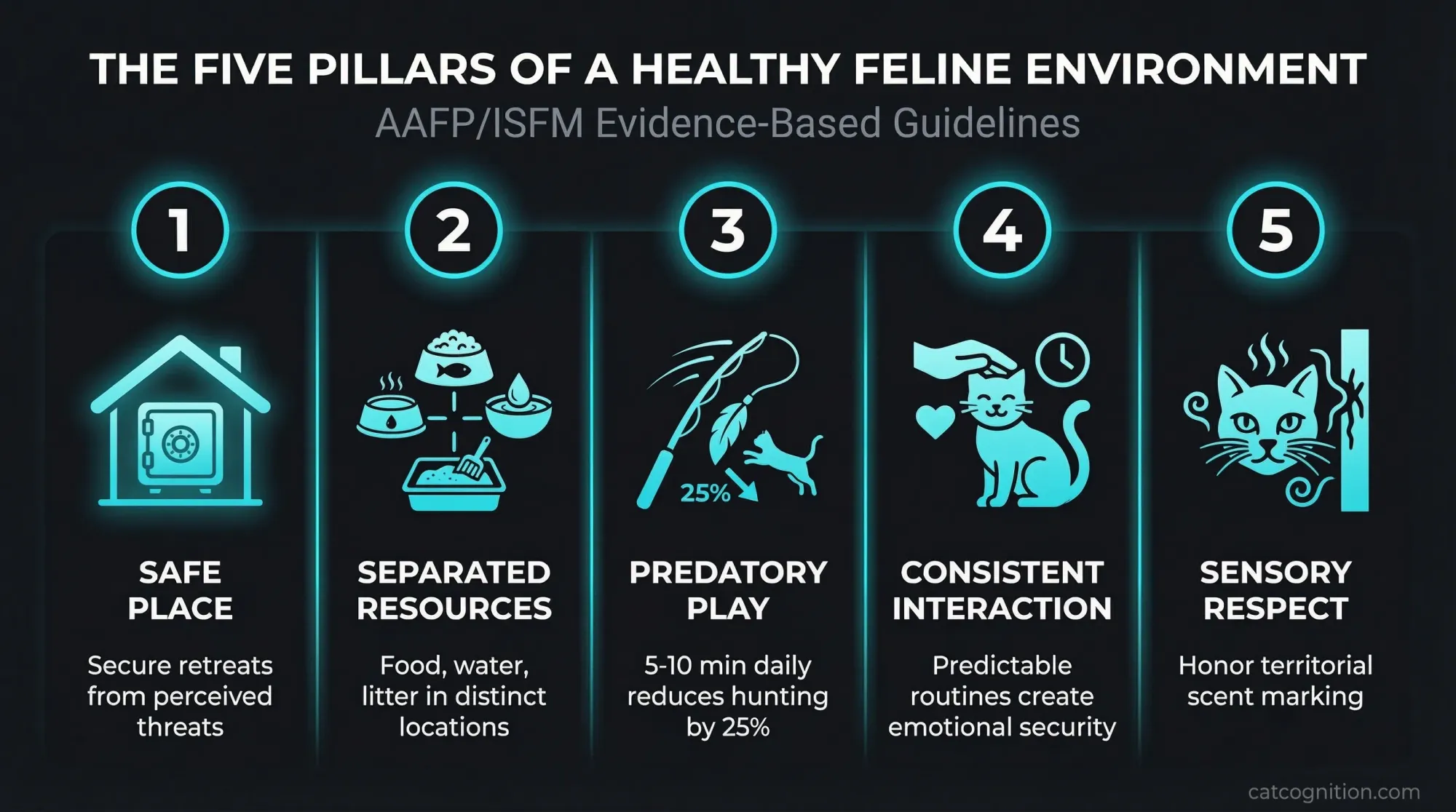
Cats require five fundamental environmental pillars: a safe place, separated resources, opportunities for predatory play, consistent human interaction, and respect for their sensory world. These evidence-based guidelines from the American Association of Feline Practitioners ensure cats feel secure, stimulated, and in control of their environment. Meeting these needs prevents stress-related health issues and creates confident, well-adjusted cats.
Table of Contents
- What Is Meowslow's Hierarchy of Cat Needs?
- Why Is Territory So Important to Cats?
- What Are the Five Pillars of a Healthy Feline Environment?
- Why Doesn't Maslow's Pyramid Work for Cats?
- How Do Cats Show They Feel Safe?
- What Happens When Cat Environmental Needs Go Unmet?
- How Much Daily Play Do Cats Actually Need?
- Key Takeaways
- Key Terms Used
- Frequently Asked Questions
- Sources
What Is Meowslow's Hierarchy of Cat Needs?
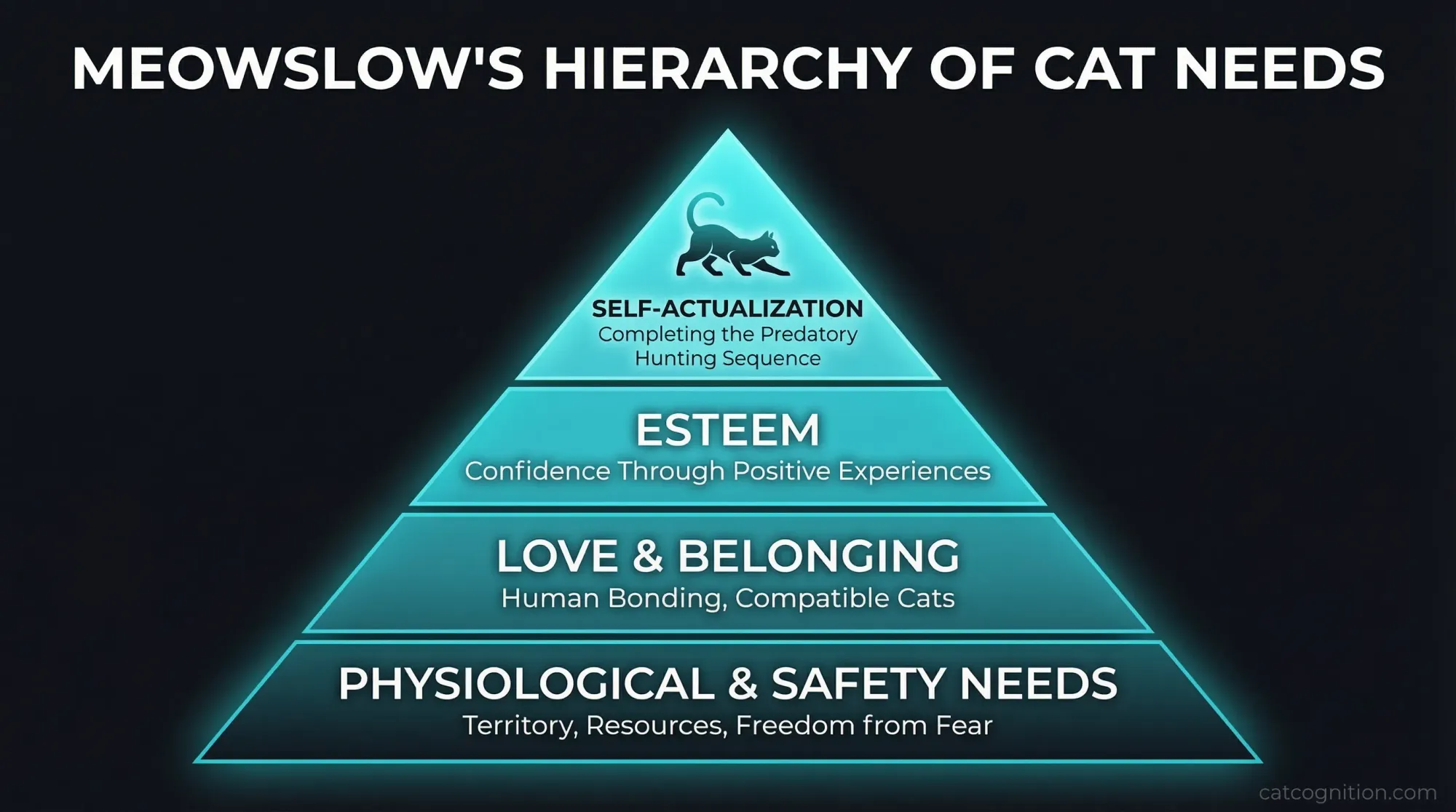
Meowslow's Hierarchy of Needs adapts Abraham Maslow's 1943 human motivation pyramid to feline psychology, organizing cat welfare into four progressive tiers. Dr. Elizabeth Colleran, a board-certified feline specialist (ABVP Diplomate), proposed this framework to help cat owners understand their pet's fundamental requirements from survival basics to self-actualization through hunting behavior.
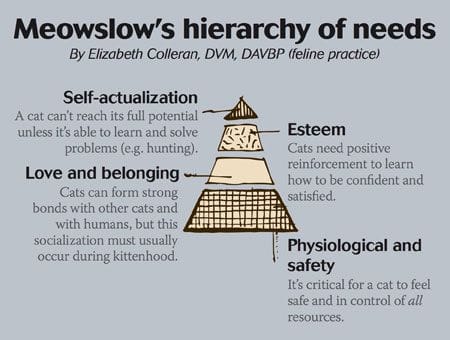
The pyramid structure suggests cats must satisfy lower-level needs before higher ones become relevant. At the base sits physiological and safety needs—territory, resources, and freedom from fear. Above that, love and belonging needs encompass bonding with humans and compatible cats. Esteem needs involve building confidence through positive experiences. At the peak, self-actualization represents the ultimate cat experience: completing the full predatory hunting sequence.
This framework provides an accessible teaching tool for understanding cat psychology. However, as we'll explore, the hierarchical model has significant limitations when applied to feline welfare science.

Why Is Territory So Important to Cats?
After 10,000 years of domestication, indoor cats retain the same hardwired territorial instincts as their wild ancestors who controlled specific geographic ranges for survival. Territory represents the cornerstone of feline psychological security because cats evolved as solitary hunters requiring familiar, predictable environments they can patrol and defend. Dr. John Bradshaw of the University of Bristol notes that cats still have "three out of four paws firmly planted in the wild" despite millennia of living alongside humans.
A cat's territory provides more than physical space—it delivers emotional stability. Cats mark their environment through facial pheromones and scratching, creating a scent map that communicates "this belongs to me." When this territorial integrity gets disrupted through moves, new pets, or rearranged furniture, cats experience genuine stress responses including elevated cortisol levels.

Essential territorial resources include food stations, water sources, litter boxes, scratching posts, elevated perches, hiding spots, and comfortable rest areas. Each cat in a household requires uncontested access to these resources without competition from feline housemates.
What Are the Five Pillars of a Healthy Feline Environment?
The Five Pillars of a Healthy Feline Environment represent the evidence-based veterinary standard for cat welfare, established by the American Association of Feline Practitioners (AAFP) and International Society of Feline Medicine (ISFM) in their 2013 Feline Environmental Needs Guidelines. Research by Dr. Tony Buffington at Ohio State University's Indoor Pet Initiative demonstrates that implementing these pillars reduces stress-related health conditions by 75-80% in indoor cats.
| Pillar | Purpose | Implementation |
|---|---|---|
| 1. Safe Place | Secure retreats from perceived threats | Boxes, carriers, cat trees, wall-mounted perches; in multi-cat homes, provide at least as many safe spaces as cats with multiple entry points |
| 2. Separated Resources | Prevent competition and reduce stress | Position food, water, litter in distinct locations; food bowls never near litter boxes; minimum two options per resource type per cat |
| 3. Predatory Play | Satisfy hunting instincts | Interactive toys, food puzzles, wand toys; 5-10 minutes daily play reduces hunting behavior by 25% (Cecchetti et al., 2021) |
| 4. Consistent Interaction | Create emotional security | Predictable feeding times, consistent approach patterns, regular gentle handling; supports healthy attachment |
| 5. Sensory Respect | Honor territorial scent marking | Allow facial pheromone deposits and scratching; provide quiet zones, outdoor visual access, control over social interactions |
Why Doesn't Maslow's Pyramid Work for Cats?
Maslow's hierarchical pyramid fails as a feline welfare model because cats do not experience needs in rigid, progressive stages—they require simultaneous satisfaction of multiple need categories. A 2019 study by Dr. Kristyn Vitale at Oregon State University found that 65% of cats display secure attachment styles, demonstrating that social-emotional needs remain active even when physical resources are abundant.
The original human hierarchy assumed people must fully satisfy lower needs before pursuing higher ones. Feline behavior research contradicts this sequential model. A cat with abundant food and water still experiences distress without safe hiding spots. A cat with premium territory still requires social bonding and predatory enrichment simultaneously.
The AAFP/ISFM Five Pillars framework acknowledges this integrated reality. Veterinary behaviorists and feline specialists use these guidelines as the evidence-based standard for creating calm, confident, and well-adjusted cats. While Meowslow's Hierarchy provides a memorable teaching tool, the Five Pillars deliver the clinical framework for actual implementation.

How Do Cats Show They Feel Safe?
Cats demonstrate environmental security through specific behavioral markers including the slow blink, exposed belly positions, vertical tail postures during greetings, and extended play sessions. Dr. Tasmin Humphrey's 2020 research at the University of Sussex confirmed that slow blinking functions as positive emotional communication—cats who receive slow blinks from humans are significantly more likely to approach them.
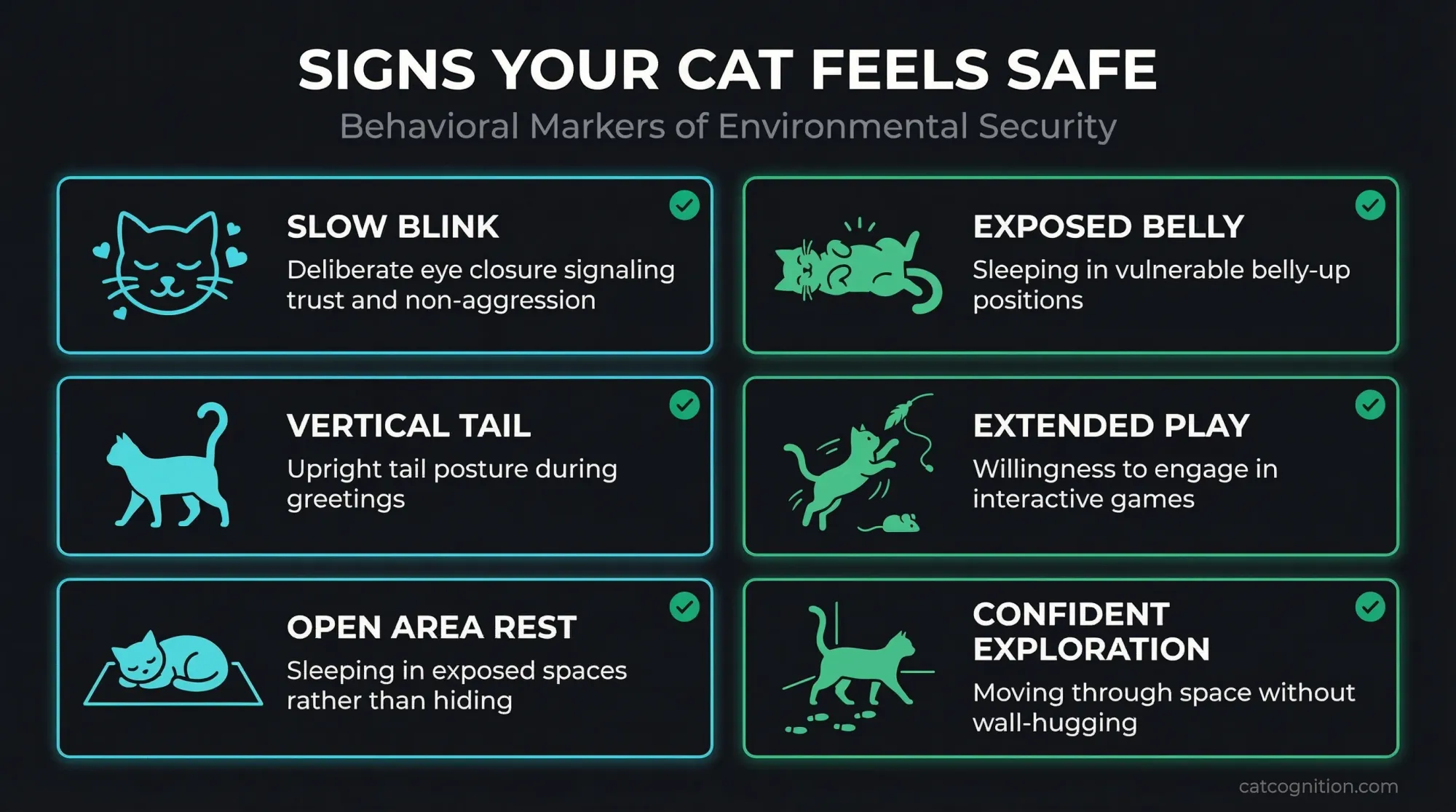
A secure cat explores its environment confidently rather than skulking along walls. Secure cats will sleep in open areas, stretch out fully, and groom leisurely rather than in hypervigilant bursts. They approach food and litter resources without hesitation and maintain predictable daily routines.
When the Five Pillars are properly implemented, cats display reduced startle responses, decreased hiding behavior, and increased willingness to engage in interactive play. These behavioral shifts indicate the cat perceives its environment as controllable and predictable—the foundation of feline psychological wellbeing.
What Happens When Cat Environmental Needs Go Unmet?
Chronic unmet environmental needs trigger measurable stress responses that compromise feline immune function and organ health. Veterinary research links environmental stress to Feline Lower Urinary Tract Disease (FLUTD), psychogenic alopecia from excessive grooming, house-soiling behavior, inter-cat aggression, and chronic hiding or anxiety responses.
Dr. Tony Buffington's research on Pandora Syndrome demonstrates that cats experiencing chronic environmental stress develop multi-system health problems that resolve when environmental conditions improve. This bidirectional relationship between environment and health makes proper Five Pillars implementation a medical intervention, not merely an enrichment suggestion.
The economic and emotional costs of untreated environmental stress compound over time. Veterinary visits, medications, property damage, and deteriorating human-cat relationships all trace back to preventable environmental deficiencies.

How Much Daily Play Do Cats Actually Need?
Research shows just 5-10 minutes of daily prey-simulation play reduces actual hunting behavior by 25% (Cecchetti et al., Current Biology, 2021). Cats require a minimum of 15-30 minutes of interactive play daily to satisfy predatory behavior needs, ideally split into multiple shorter sessions that mimic natural hunting patterns.
The predatory sequence cats need to complete includes orient, stalk, chase, grab-bite, kill-bite, and dissect phases. Laser pointers fail as complete enrichment because cats cannot physically capture the "prey." Fishing rod-style toys and feather wands allow full sequence completion, ending with a tangible object the cat can "kill."
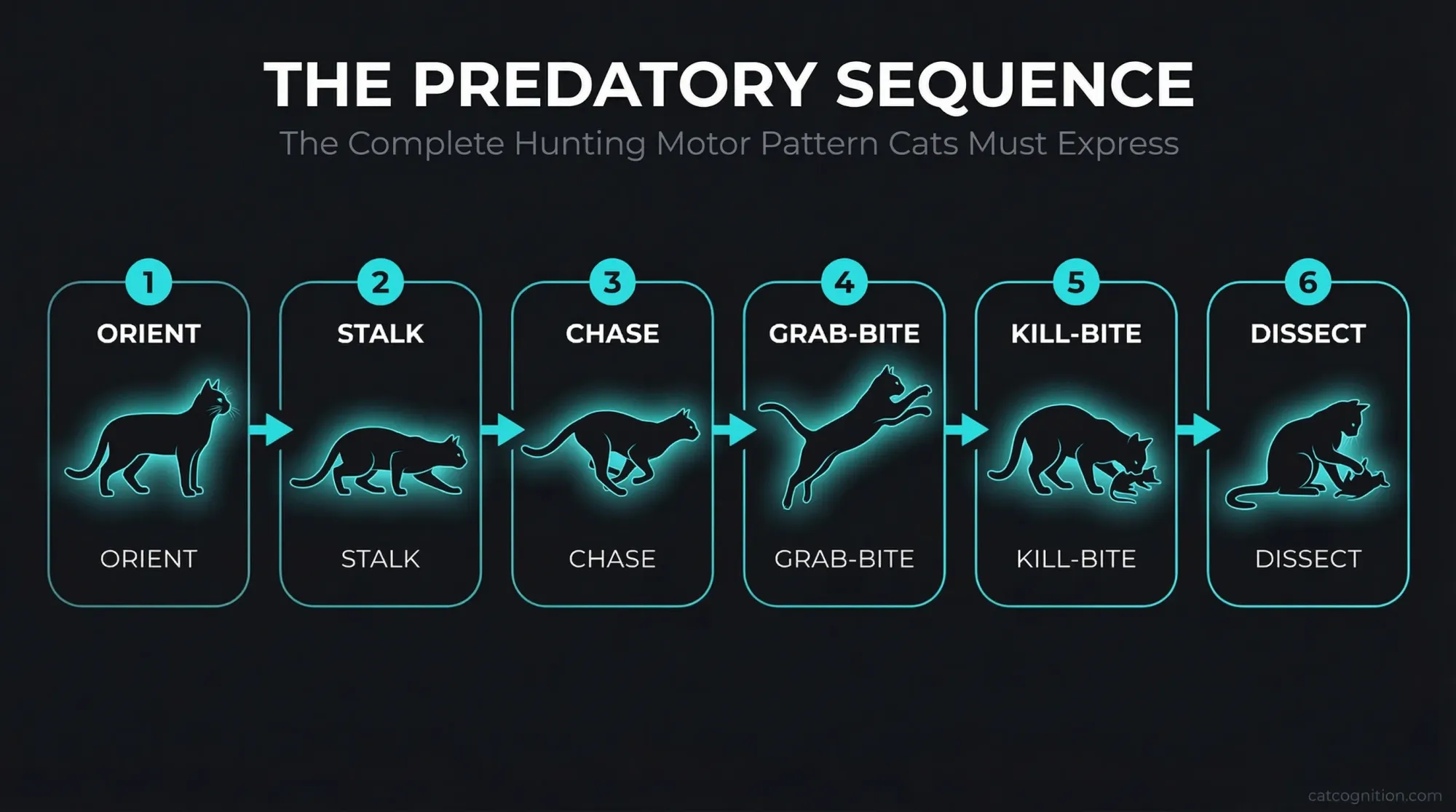
Food puzzles extend predatory engagement throughout the day by requiring cats to "hunt" for their meals. These devices increase exploratory behavior and reduce stereotypic behaviors like pacing, particularly in indoor cats with limited environmental stimulation.
🔑 Key Takeaways
- The Five Pillars Standard: The AAFP/ISFM Five Pillars of a Healthy Feline Environment represent veterinary consensus for cat welfare—safe places, separated resources, predatory play opportunities, consistent human interaction, and sensory respect.
- Territory Is Identity: Cats require uncontested access to resources because territorial security directly impacts psychological wellbeing—10,000 years of domestication hasn't changed this hardwired need.
- Hierarchy Limitations: Meowslow's pyramid provides a teaching framework, but cats experience needs simultaneously rather than progressively, making the Five Pillars more clinically accurate.
- Play Is Medicine: Just 5-10 minutes of daily prey-simulation play reduces hunting behavior by 25% and satisfies critical predatory instincts that affect both mental and physical health.
- Environment Equals Health: Environmental stress directly causes conditions like FLUTD and psychogenic alopecia—implementing the Five Pillars is a medical intervention, not optional enrichment.
Key Terms Used
- Predatory Sequence: The complete hunting motor pattern cats must express: orient, stalk, chase, grab-bite, kill-bite, dissect.
- Environmental Enrichment: Modifications to increase natural behavior expression in domestic settings.
- Secure Attachment: A bonding pattern where a cat uses their human as a "safe base," seeking proximity during stress and showing reduced anxiety in the owner's presence.
- Slow Blink: A deliberate, prolonged eye closure lasting 0.5-1 second that signals non-aggression and trust between cats or from cat to human.
- Psychogenic Alopecia: Hair loss resulting from excessive self-grooming behavior driven by anxiety or stress rather than dermatological disease.
- Pandora Syndrome: A stress-related multisystem disorder in cats characterized by chronic lower urinary tract signs that resolve when environmental stressors are addressed.
See the full Cat Cognition Glossary ->
Frequently Asked Questions
What is Meowslow's Hierarchy of Needs for cats?
Meowslow's Hierarchy adapts Abraham Maslow's human motivation pyramid to feline psychology, organizing cat needs into four tiers: physiological/safety needs, love/belonging needs, esteem needs, and self-actualization through hunting behavior. While useful as a teaching tool, veterinary behaviorists prefer the evidence-based Five Pillars framework.
How many litter boxes should I have for multiple cats?
The standard recommendation is one litter box per cat plus one extra, placed in separate locations throughout the home. This follows Pillar 2 of the Five Pillars framework—multiple and separated resources prevent competition and reduce territorial stress between cats.
Why does my cat still hunt when well-fed?
Hunting behavior operates independently from hunger in cats. Research by Leyhausen (1979) shows cats will interrupt eating to catch prey before returning to their food bowl. This demonstrates that predatory behavior satisfies instinctual needs separate from nutritional requirements—which is why daily play remains essential even for well-fed indoor cats.
How do I know if my cat feels safe in my home?
Secure cats display specific behavioral markers: slow blinking, belly-up resting positions, vertical tail greetings, extended grooming sessions in open areas, and confident exploration rather than wall-hugging movement. Reduced hiding and willingness to engage in play also indicate environmental security.
Can cats live happily in small apartments?
Yes, when the Five Pillars are properly implemented. Vertical space through cat trees and wall shelves compensates for limited floor space. Separated resources, multiple safe retreats, daily interactive play, and sensory enrichment allow cats to thrive in compact environments. Square footage matters less than environmental design quality.
What causes house-soiling in cats?
House-soiling typically signals either medical conditions (urinary tract infections, kidney disease) or environmental stress. After veterinary examination rules out health issues, the cause usually traces to inadequate resources, improper litter box placement, territorial conflict with other cats, or disruption to the cat's established routines and safe spaces.
Sources
- AAFP and ISFM Feline Environmental Needs Guidelines - Journal of Feline Medicine and Surgery (Link)
- 2022 ISFM/AAFP Cat Friendly Veterinary Environment Guidelines - Taylor S, St Denis K, Collins S, et al. (Link)
- Provision of High Meat Content Food and Object Play Reduce Predation of Wild Animals by Domestic Cats - Cecchetti M, et al., Current Biology, 2021 (Link)
- Attachment bonds between domestic cats and humans - Vitale KR, et al., Current Biology, 2019 (Link)
- The role of cat eye narrowing movements in cat-human communication - Humphrey T, et al., Scientific Reports, 2020 (Link)
- Ohio State Indoor Pet Initiative - Dr. Tony Buffington (Link)
- Meowslow's Hierarchy of Needs - Dr. Elizabeth Colleran, dvm360, 2017 (Link)
- Cat Behavior: The Predatory and Social Behavior of Domestic and Wild Cats - Leyhausen P, 1979 (Garland STPM Press)