Walter Chandoha: The Godfather of Cat Photography Who Invented How We See Cats
Walter Chandoha photographed 90,000+ cats over 70 years, creating the visual language of modern cat portraits. His rim lighting and eye-level techniques defined pet photography from Life Magazine to internet memes.


Quick Answer: Who Invented Cat Photography?
Walter Chandoha (1920-2019) established cat photography as a dedicated profession and art form. While earlier photographers captured cats, Chandoha created the visual vocabulary that defines modern cat imagery—rim lighting, eye-level angles, and personality-driven portraits. His 90,000+ cat photographs shaped everything from pet food packaging to internet memes.
Table of Contents
- Who Was Walter Chandoha?
- How Did Chandoha Discover His Muse?
- What Lighting Technique Made His Photos Famous?
- What is "The Mob" Photograph?
- How Did Chandoha Change Cat Media?
- Why Are His Portraits So Expressive?
- How Did He Dominate Cat Advertising?
- Is Walter Chandoha the Father of Cat Memes?
- Key Takeaways
- Frequently Asked Questions
Who Was Walter Chandoha?
Walter Chandoha was an American photographer who dedicated 70 years to capturing cats, building an archive of over 90,000 feline images that established the visual language of modern pet photography. Born November 30, 1920, in Bayonne, New Jersey, to Ukrainian immigrant parents, Chandoha served as a combat photographer in the Pacific during World War II before discovering his true calling in a New York City alley in 1949.
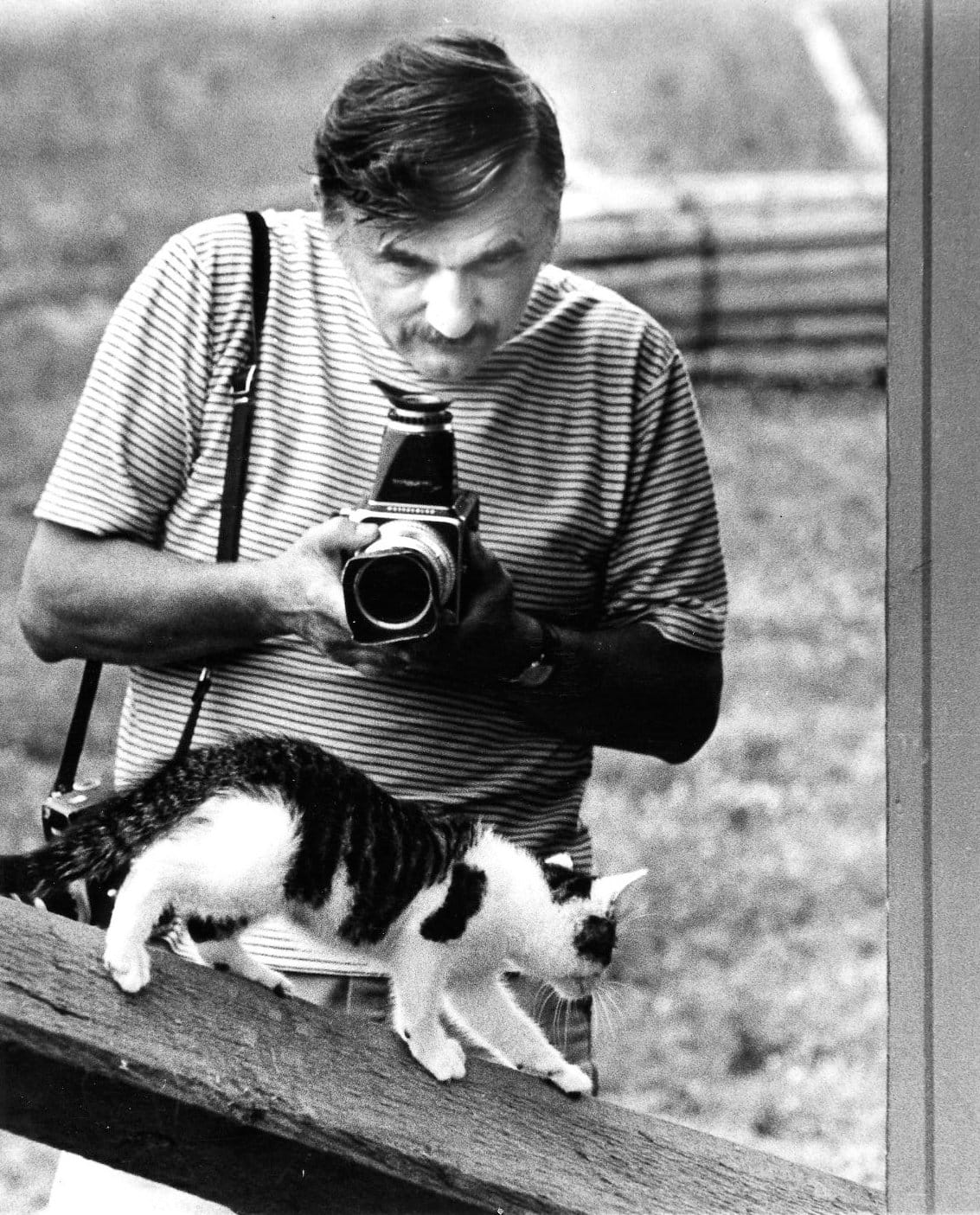
Chandoha's work appeared on more than 300 magazine covers, including Life, Look, and National Geographic. His photographs dominated pet food packaging throughout the 1960s and 1970s to such an extent that he once claimed: "If you went into a supermarket when I was doing all these packages, there would be dog food on one side and cat on the other. Almost all of the photographs were mine!"
The photography world recognized Chandoha as the "Godfather of Cat Photography"—a title earned not through chronology but through cultural impact. His technical innovations and artistic approach transformed how mass media depicted cats, elevating them from utilitarian mousers to charismatic individuals worthy of artistic attention.
The Evidence:
"Walter Chandoha photographed over 90,000 cats across a seven-decade career, establishing the visual language of modern cat portraits."
How Did Chandoha Discover His Muse?
Walter Chandoha discovered his lifelong subject on a winter night in 1949 when he found a tiny gray kitten shivering in the snow in a New York City alley. Returning to his apartment in Astoria, Queens, as a marketing student at NYU, Chandoha wrapped the stray in his coat and brought it home to his wife Maria, who was expecting their first child.
That night, the kitten "charged around each room like a demon possessed." Maria exclaimed: "That cat is loco!"—and the name stuck. Loco would become the catalyst for one of the most influential careers in animal photography.
The pivotal moment came when Loco discovered a mirror left on the floor during cleaning. The kitten staged a fierce "battle" with his own reflection, and Chandoha grabbed his camera. Those black-and-white images of Loco fighting his mirror image were published in newspapers and magazines across America and Europe, launching what would become a seven-decade career.
Adam's Lab Note:
I've tried photographing Moon during his own mirror encounters. The challenge Chandoha faced in 1949—capturing that split-second expression before the cat moves—remains exactly the same today, even with modern autofocus. The only difference is he had one shot; I can take hundreds. He still got better images.
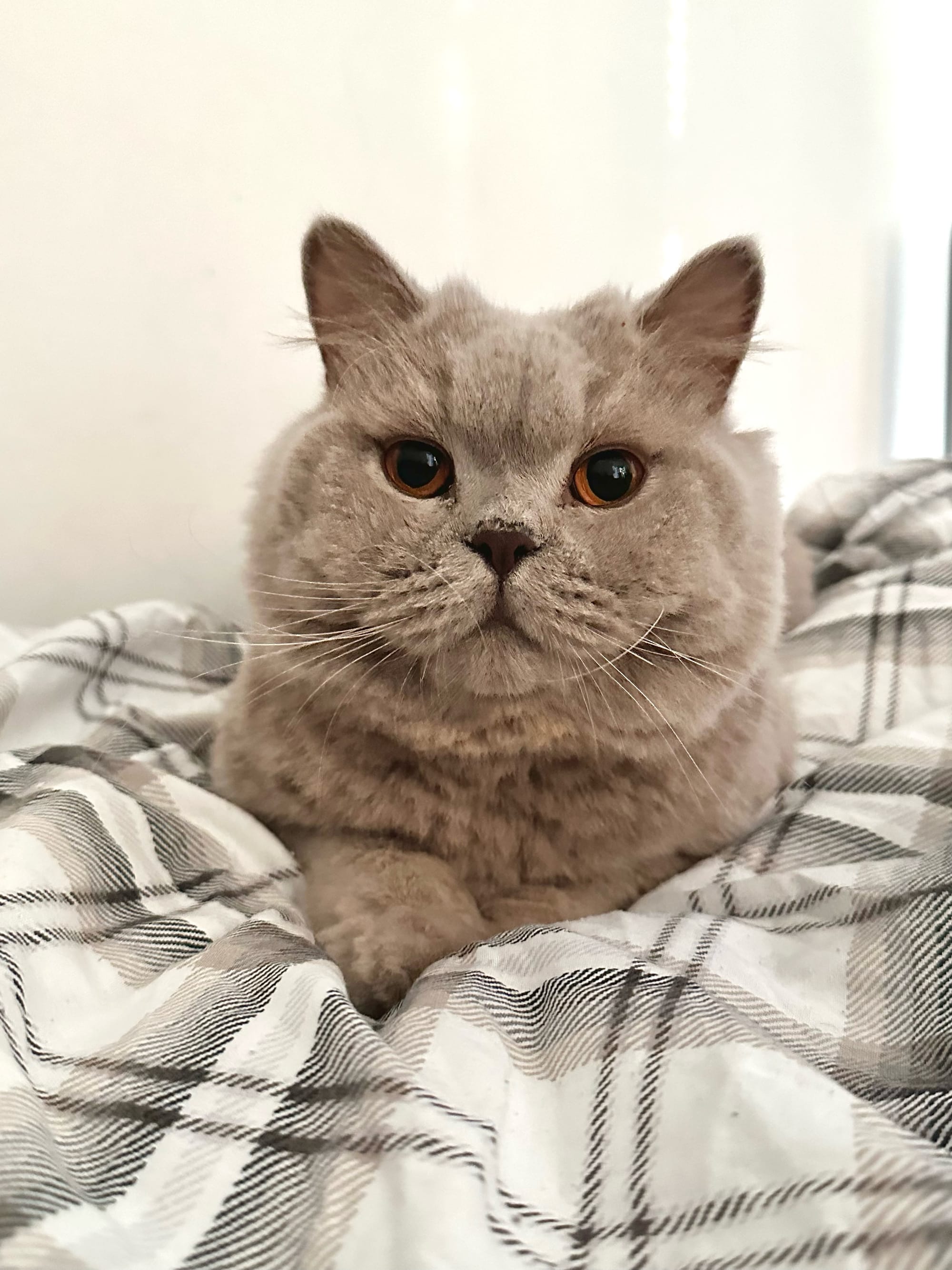

The best photograph I've taken of Moon. I ended up framing it.
What Lighting Technique Made His Photos Famous?
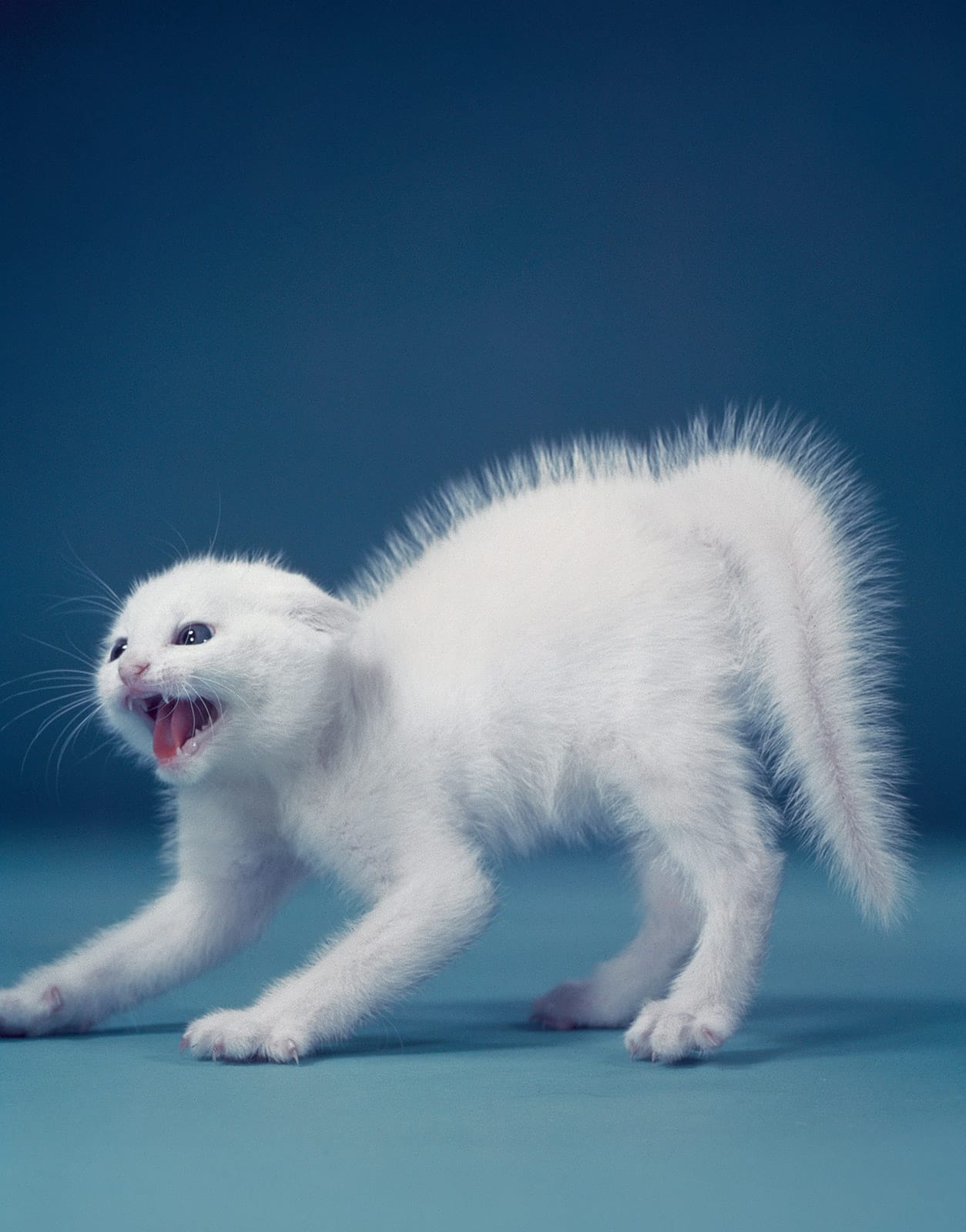
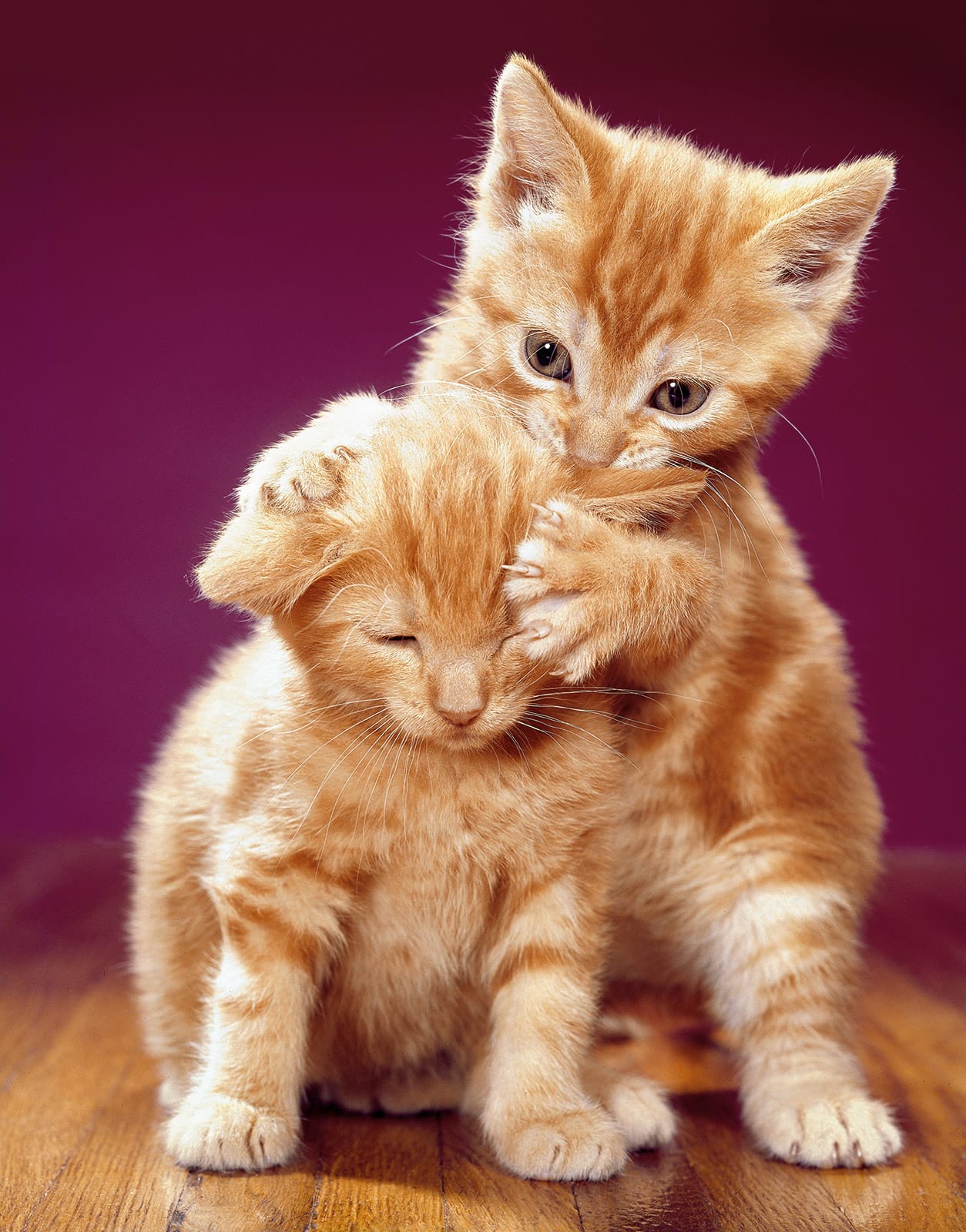
Walter Chandoha's signature rim lighting technique used six different lights positioned to create a luminous halo effect around the cat's fur, emphasizing texture and defining the feline form against clean, brightly colored backdrops. This high-key glamour backlighting became the template for professional pet photography.
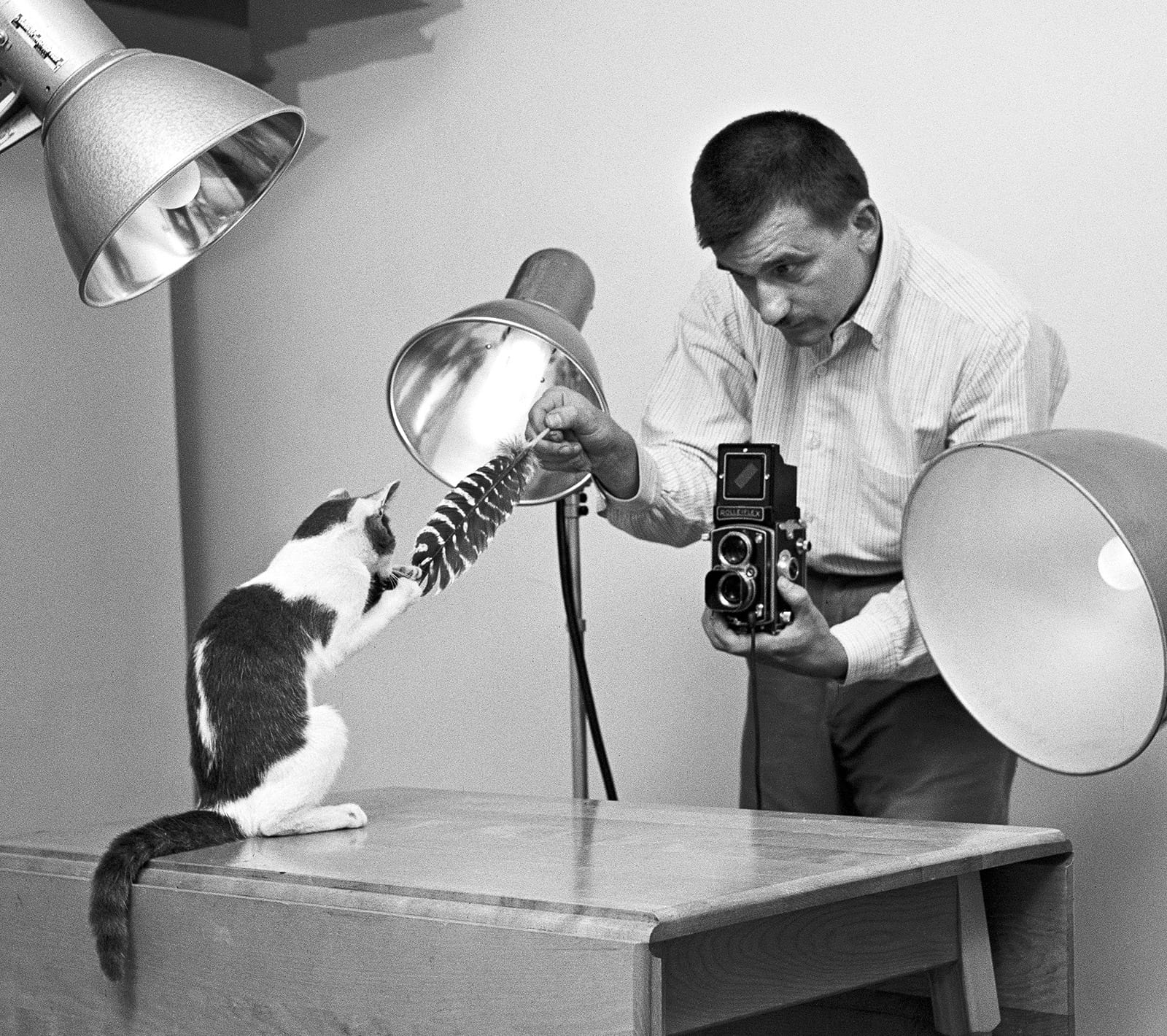
Chandoha explained his approach: "You'll see there's always a nice rim light around my photos; it enhances the roundness of the figures, and just makes for a more beautiful picture."
The technique drew inspiration from an unexpected source: the Dutch master painter Johannes Vermeer. Chandoha stated: "The way he presented his subjects with back light and shadows is something I use in all my pictures." He also credited the Japanese-French artist Foujita, known for cat paintings, as an influence on his aesthetic sensibility.
The Evidence:
"Chandoha's signature rim lighting technique, inspired by the Dutch painter Vermeer, defined animal portrait photography for generations."
In Chandoha's studio setup, he stood opposite the cat with a toy in one hand and camera in the other, while three spotlights aligned perfectly to capture every whisker and glint of fur. His wife Maria—and later his daughter Chiara—managed the cats with treats and toys, creating what Chandoha called "the secret to his success."
What is "The Mob" Photograph?
"The Mob" is one of the most iconic cat photographs ever taken—a black-and-white image of five determined-looking cats walking directly toward the camera on a country road, captured in the early 1960s outside Chandoha's studio on his farm in Annandale, New Jersey.
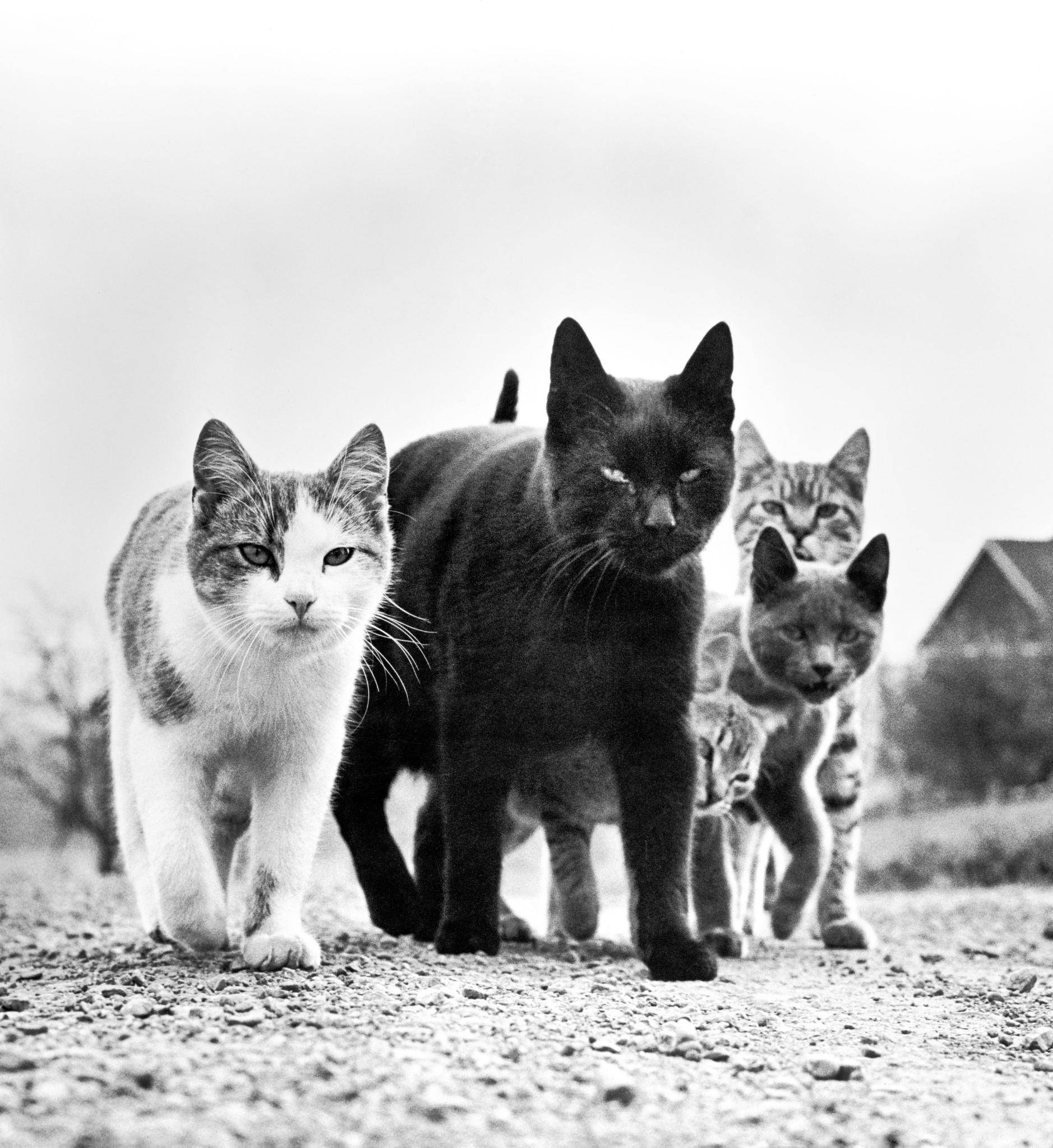
The image happened spontaneously. Many cats lived at the Chandoha farm because he fed them, and they developed a habit of following him around the property. One day, walking with his camera, Chandoha noticed the gang of cats tailing him.
"It was about time for dinner, and I called 'Kitty, kitty, kitty,' and all the cats came running," Chandoha recalled. When they slowed down, he dropped to his stomach on the road and captured their fleeting "tough-cats-in-the-countryside" moment.
The photograph demonstrates Chandoha's eye-level philosophy in action. By positioning himself at cat height rather than shooting down from human perspective, he captured the cats as confident individuals with distinct personalities rather than small creatures beneath human notice.
"The Mob" is said to "adorn every cat lover's Facebook page" and remains one of the most recognizable cat images in popular culture, demonstrating how a single photograph can shape public perception of feline character.
How Did Chandoha Change Cat Media?
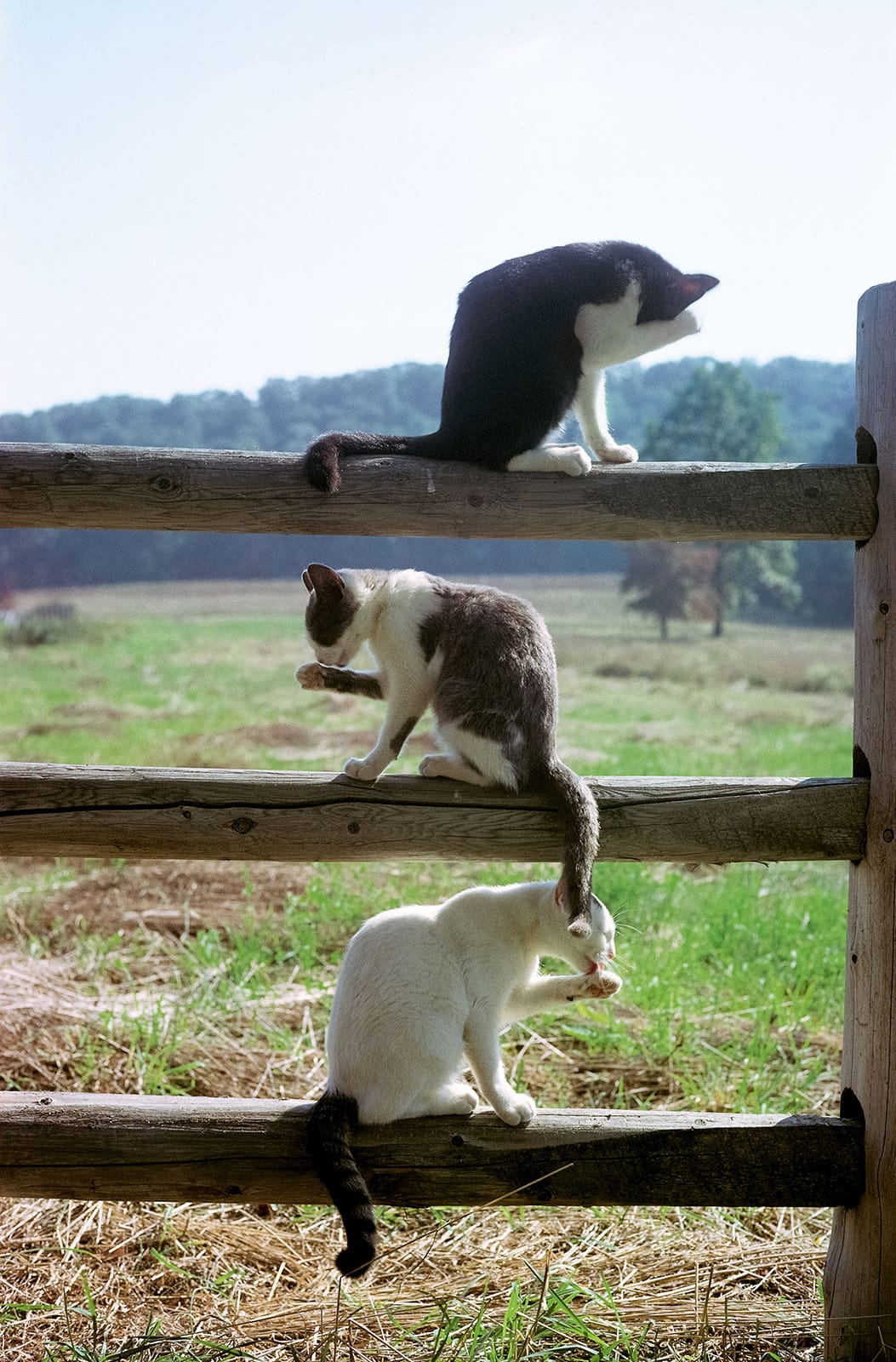
Walter Chandoha transformed cat representation in mass media during a pivotal moment in American cultural history, when cats were transitioning from utilitarian mousers to beloved family members. His work both reflected and accelerated this shift in how society viewed feline companions.
Before Chandoha, cat photography presented challenges that discouraged most professionals. A 1900 Pearson's Magazine article noted: "Cats are notoriously the most difficult of all living creatures to photograph satisfactorily." Cats were typically depicted as decorative elements or secondary figures in images.
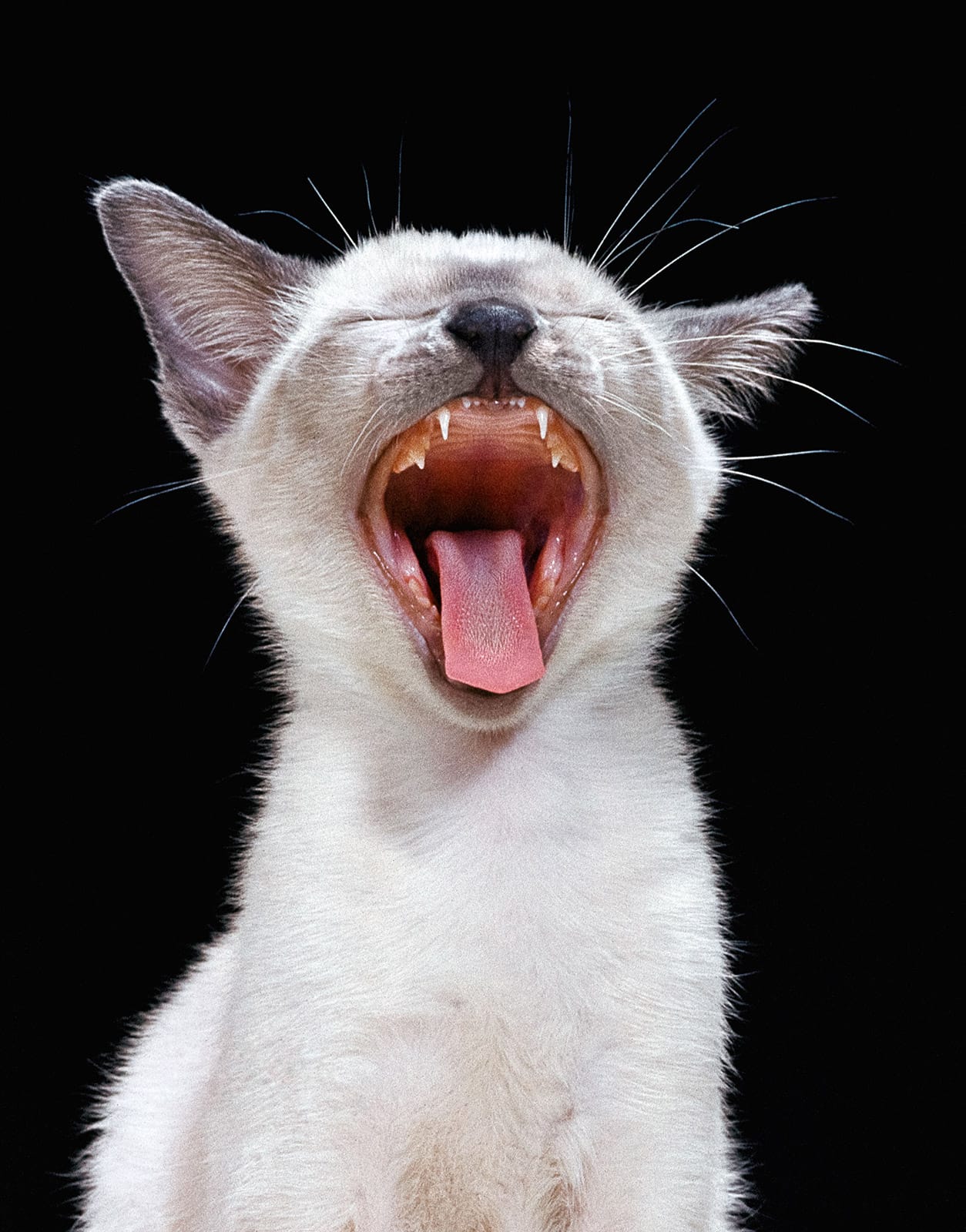
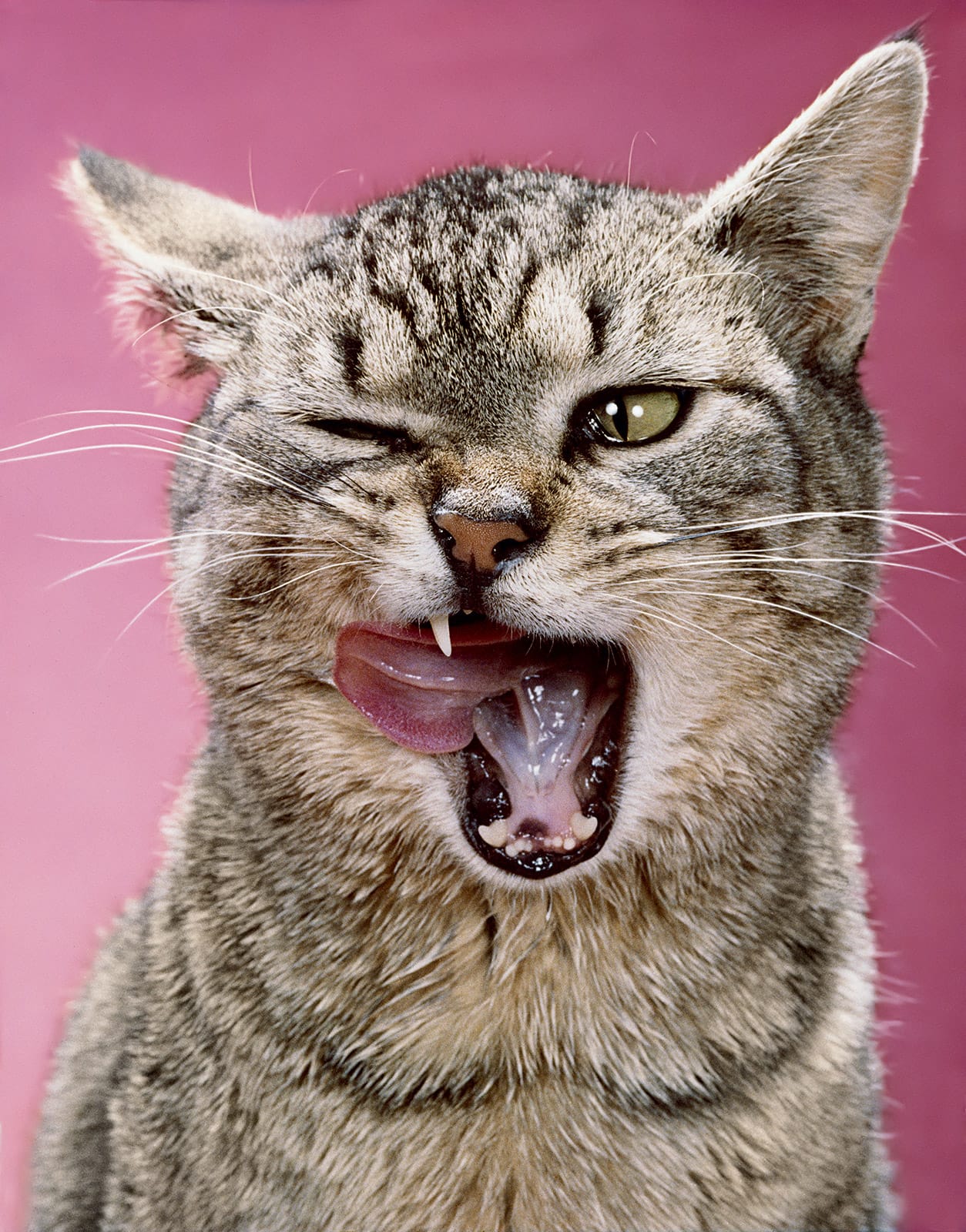
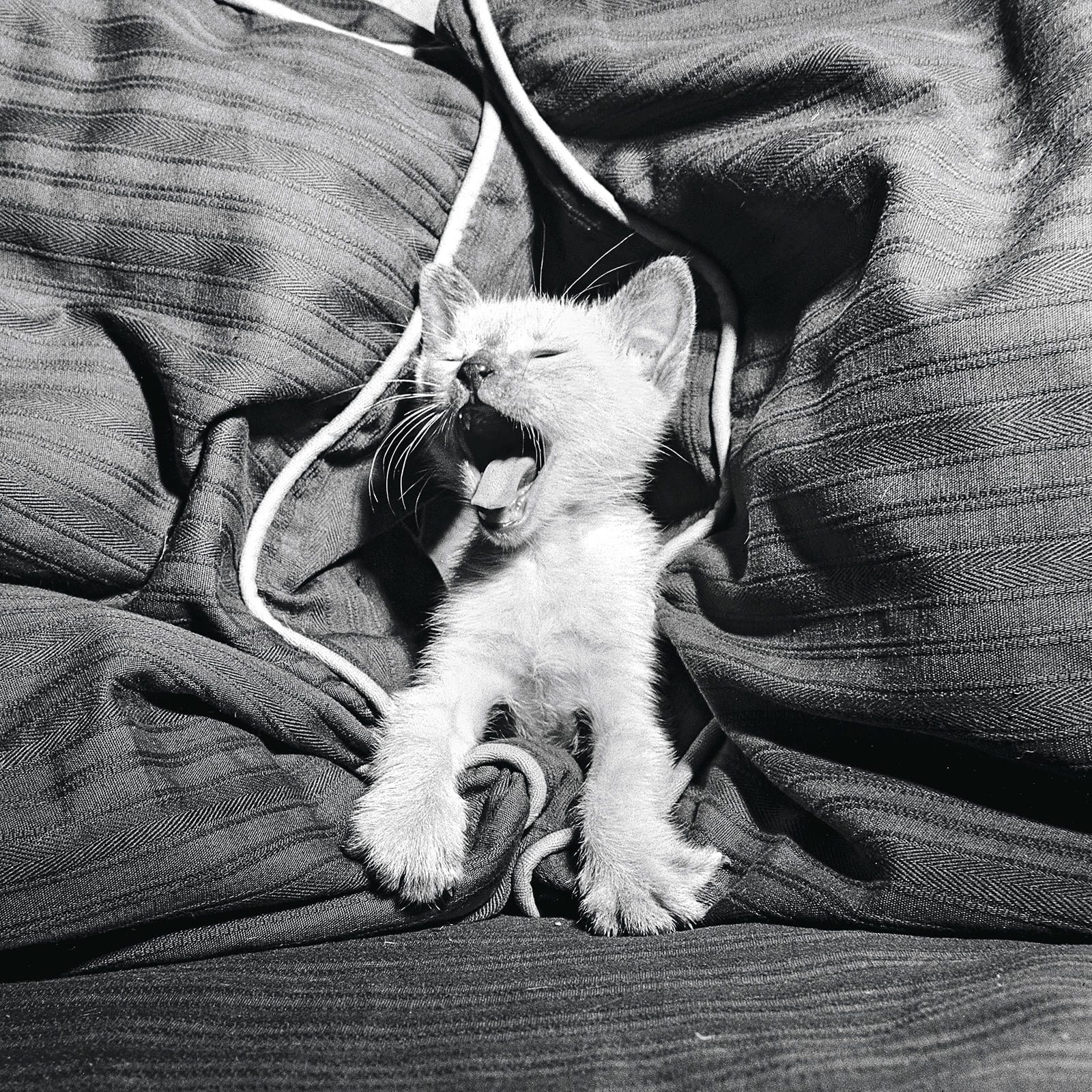
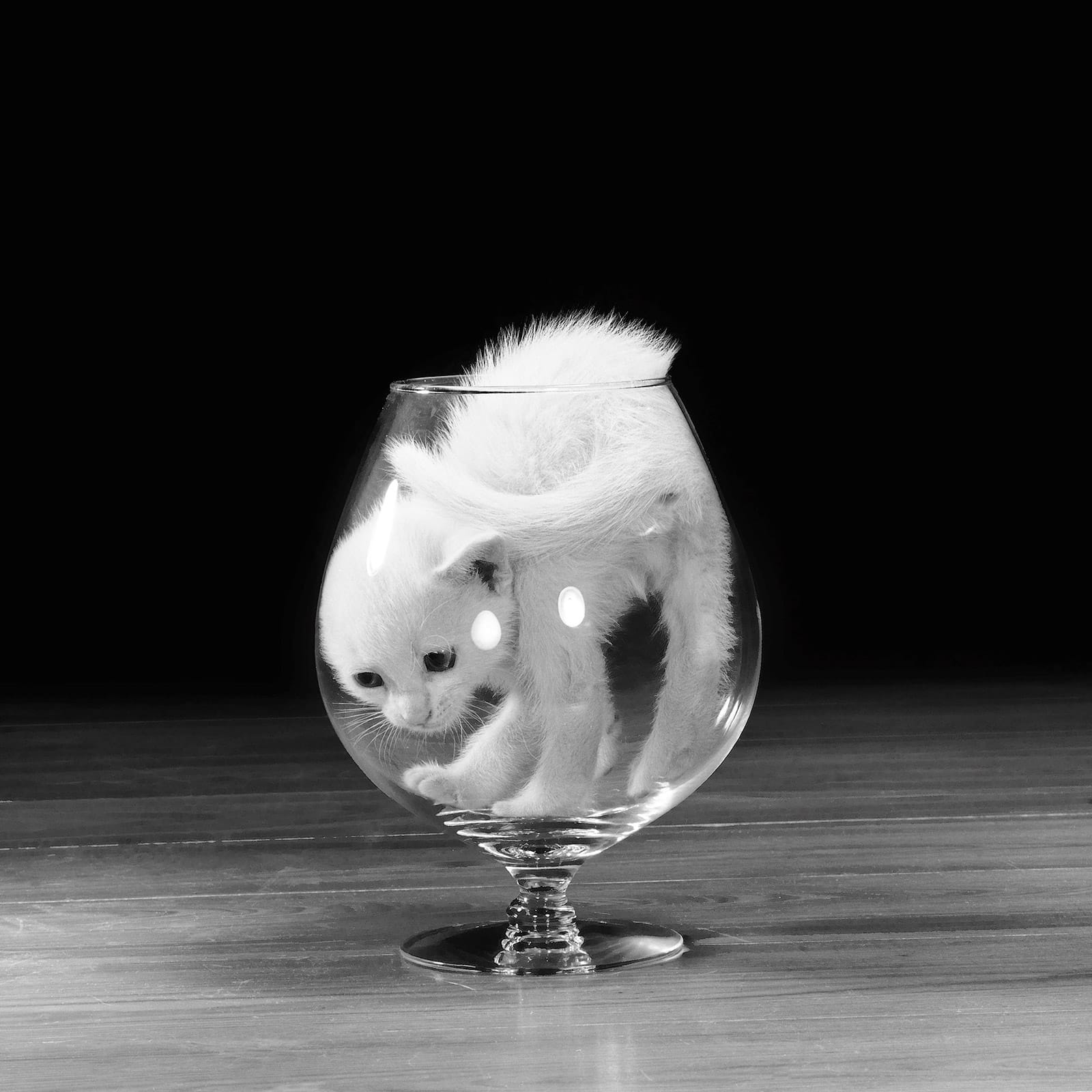
After Chandoha, cats became protagonists—"full of humor, elegance, and individuality," as art critics described his subjects. His technical mastery allowed him to capture personality and expression rather than static poses, humanizing cats in the public imagination.
According to a 1985 study by Yale professor Stephen Kellert, who pioneered the theory of "biophilia," the years after World War II marked a turning point for Americans' perception of animals and pets. Chandoha's work was both a product of and a catalyst for this cultural transformation.
CatCog Reality Check:
The invention of clay cat litter in 1947, marketed as Tidy Cats in the 1960s, enabled cats to live entirely indoors for the first time. Chandoha's rise coincided precisely with this shift—he wasn't just documenting cats; he was creating the visual identity for a new kind of cat: the indoor companion.
Why Are His Portraits So Expressive?
Walter Chandoha's cat portraits achieved unprecedented expressiveness through five specific techniques that captured feline personality rather than mere physical appearance. His methods revolutionized how photographers approach animal subjects.
1. Eye-Level Photography: Chandoha always photographed cats at their height, never from above. This choice created intimate, personality-driven portraits that treated cats as equals rather than subjects to be looked down upon.
2. Patience: "These weren't models, they were cats!" Chandoha acknowledged. He practiced quiet observation, waiting for random moments of play and rest rather than forcing poses.
3. The Tiger Trainer's Rule: Early in his career, Chandoha sought advice from a tiger trainer who told him: "To get the shot, you need three things: sound, patience and food." This wisdom guided his entire approach.
4. Sound Technique: To make multiple cats look in the same direction simultaneously, Chandoha used the sound of a can of cat food being opened—a technique still effective today.
5. Eye Contact: "If one cat would be looking out this way and another somewhere completely different, that's no good. The eye contact has to be just right," Chandoha explained.
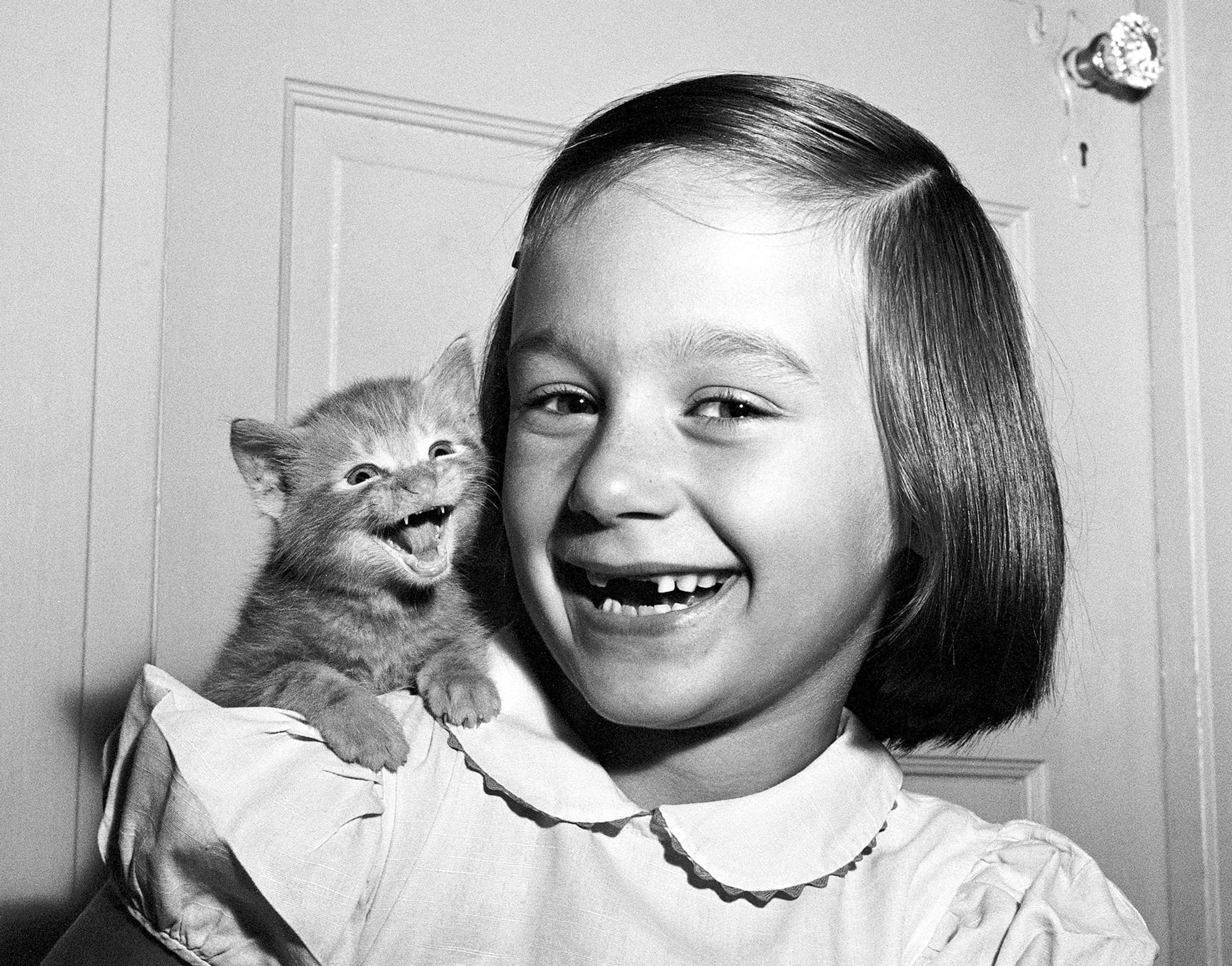
Chandoha also discovered that children created unique opportunities. "Cats would often become hypnotized when they were with the kids," he observed. "They had a rapport that was phenomenal." This explains why children appear in so many of his most celebrated photographs—the cats' relaxed state around young humans produced genuinely expressive moments.
The Evidence:
"Chandoha's philosophy: 'Cats are more expressive than dogs. They get into more situations than dogs would ever dream of and vocalize so much differently.'"
How Did He Dominate Cat Advertising?
Walter Chandoha became the dominant force in pet advertising during the Madison Avenue era of the 1950s through 1970s, when advertising directors needed eye-catching animal images for America's booming pet industry.
The Financial Times described the cultural reach: "Walking the supermarket pet-food aisle in the 1960s was like attending a Chandoha gallery opening." His photographs appeared on virtually every major cat food brand, making his images the default visual representation of cats for millions of American consumers.
Beyond pet food, Chandoha's commercial work extended to:
- More than 300 magazine covers (Life, Look, National Geographic)
- Thousands of advertisements across industries
- Greeting cards, calendars, and jigsaw puzzles
- Posters, T-shirts, and merchandising
- 34+ published books on cats
One famous campaign—"I Found Out About Joan" for Ohrbach's department store—featured a Chandoha cat image enhanced with a hat and cigarette holder, demonstrating how his photographs became raw material for advertising creativity.
| Career Achievement | Number |
|---|---|
| Cat photographs | 90,000+ |
| Total photographs | 225,000+ |
| Magazine covers | 300+ |
| Published books | 34+ |
| Career span | 70 years |
| Studio lights used | 6 |
Even Chandoha's personal life reflected his dedication—his license plate simply read "Catmobile."
Is Walter Chandoha the Father of Cat Memes?
Walter Chandoha's influence extends to internet cat culture, with many critics crediting him as an inadvertent forefather of the meme phenomenon. His commercial photography archive and distinctive visual style shaped the aesthetic of viral cat images.
The Evidence:
"Many critics credit Chandoha as an inadvertent forefather of internet cat culture, whose visual vocabulary shaped the aesthetic of viral cat content."
The connection to internet culture traces back even further through Andy Warhol. The pop art icon was "an early fan of Chandoha's book 'All Kinds of Cats'" published in 1952. Warhol used Chandoha's photographs as source material for his 1954 illustrated book "25 Cats Named Sam and One Blue Pussy"—creating an artistic lineage from documentary photography to pop art to digital remixing.
Art critics have noted: "Not only did the photographer invite the world to reconsider the value of cats in both high and low brow art, but he also played a pivotal, albeit unexpected, role in the establishment of—what we today might call—meme culture."
The Evidence:
"Andy Warhol used Chandoha's 1952 book 'All Kinds of Cats' as source material for his 1954 illustrated cat book."
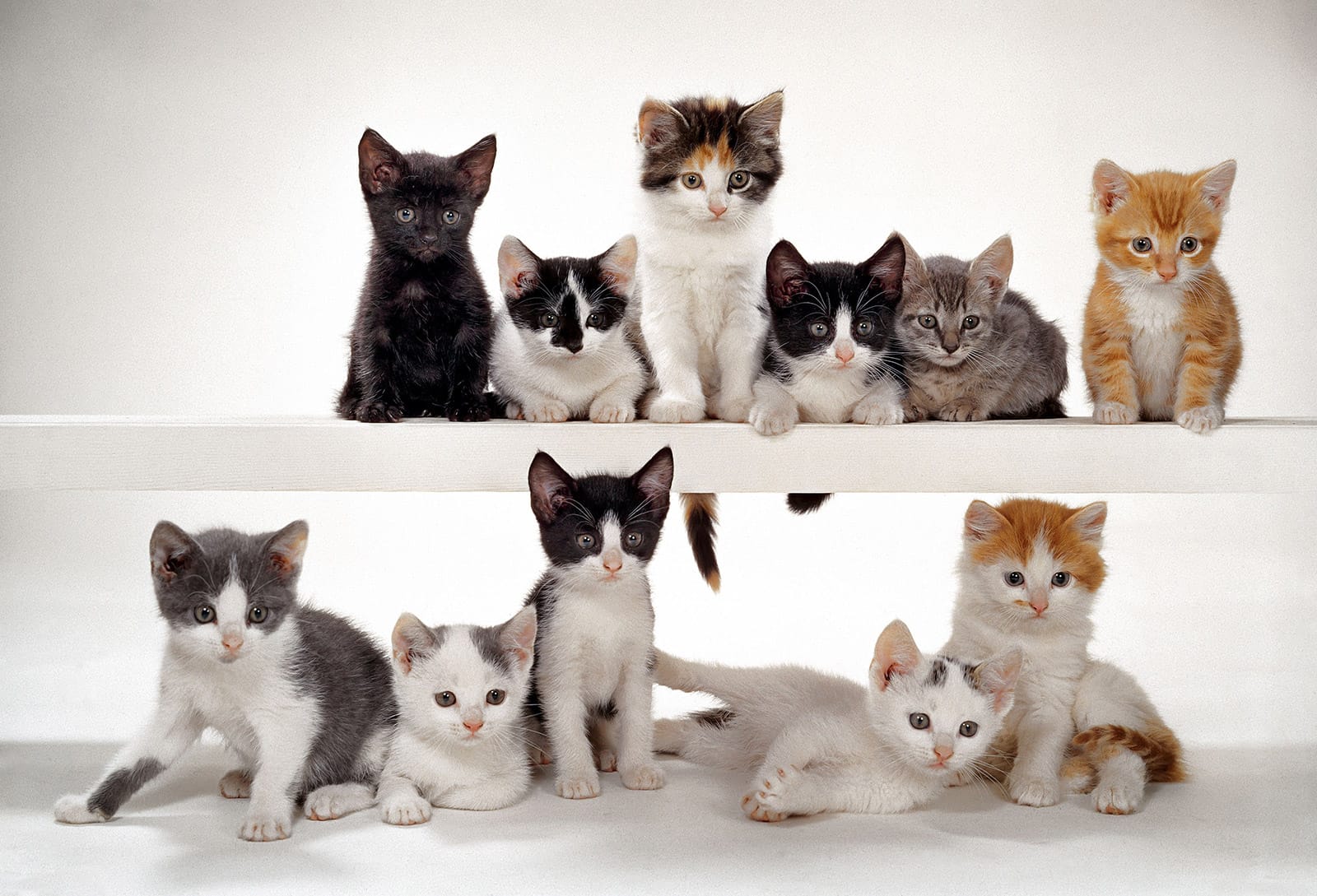
Chandoha's visual innovations—the clean colored backdrops, the glamour lighting, the personality-forward framing—established the aesthetic template that cat content creators still follow, whether they know his name or not. The "Instagram cat portrait" is essentially a Chandoha portrait shot on a phone.
Key Takeaways
- Pioneer Status: Walter Chandoha established cat photography as a dedicated profession and art form, photographing over 90,000 cats across 70 years.
- Technical Innovation: His six-light rim lighting technique, inspired by the painter Vermeer, created the luminous fur halos that became standard in pet photography.
- Eye-Level Philosophy: By photographing cats at their height rather than from above, Chandoha captured personality and dignity that transformed public perception.
- Commercial Dominance: His images appeared on 300+ magazine covers and dominated pet food packaging throughout the 1960s-70s.
- Cultural Legacy: Many critics credit Chandoha as an inadvertent forefather of internet cat culture, whose visual vocabulary shaped the aesthetic of viral cat content.
Key Terms Used
- Rim Lighting: A photography technique using light positioned behind the subject to create a luminous halo effect around edges (See full glossary)
- Eye-Level Photography: Photographing subjects from their own height perspective rather than from above, creating more intimate portraits
See the full Cat Cognition Glossary ->
Frequently Asked Questions
Who is considered the godfather of cat photography?
Walter Chandoha (1920-2019) is widely recognized as the "Godfather of Cat Photography." His 70-year career and archive of 90,000+ cat images established the visual vocabulary that defines modern cat portraits in media, advertising, and internet culture.
What lighting technique did Walter Chandoha use?
Chandoha used a six-light studio setup featuring rim lighting—positioning lights behind the subject to create a luminous halo effect around the cat's fur. He cited the Dutch master Vermeer as his primary inspiration for this backlighting approach.
How did Walter Chandoha discover his photography subject?
In winter 1949, Chandoha found a stray kitten shivering in a New York City alley. He brought the cat home, named it "Loco" after its frantic behavior, and photographed it fighting its own reflection in a mirror. Those images launched his career when published across American and European media.
What is "The Mob" photograph?
"The Mob" is one of Chandoha's most iconic images—five cats walking determinedly toward the camera on a country road. Shot in the early 1960s at his New Jersey farm, it demonstrates his eye-level photography approach and remains one of the most recognized cat photographs in popular culture.
Did Walter Chandoha influence Andy Warhol?
Yes. Andy Warhol used Chandoha's 1952 book "All Kinds of Cats" as source material for his 1954 illustrated book "25 Cats Named Sam and One Blue Pussy," creating a direct artistic lineage between documentary cat photography and pop art.
Is Walter Chandoha connected to internet cat memes?
Many critics credit Chandoha as an inadvertent forefather of internet cat culture. His visual style—clean backdrops, glamour lighting, personality-forward framing—established the aesthetic template that cat content creators still follow today, whether they know his name or not.
Did Walter Chandoha only photograph cats?
No. While famous for his 90,000+ cat photographs, Chandoha's total archive exceeded 225,000 images. He also photographed dogs, other animals, and gardens at his New Jersey farm property.
How many magazine covers featured Chandoha's cat photos?
Walter Chandoha's photographs appeared on more than 300 magazine covers, including Life, Look, and National Geographic, in addition to thousands of advertisements and 34+ published books.
Sources
- "Walter Chandoha: The Cat Photographer" - Aperture Foundation (Aperture)
- "Walter Chandoha. Cats. Photographs 1942-2018" - Taschen (Taschen)
- "Before the Internet, his cat photos ruled the world" - CNN Photo Essay (CNN)
- "We Interview Cat Photographer Walter Chandoha" - artnet News (artnet)
- "Success Secrets of a Famous Cat Photographer" - Hyperallergic (Hyperallergic)
- "Walter Chandoha: A Lifetime of Photography" - Hunterdon Art Museum Exhibition (Hunterdon Art Museum)