Why Are Cats Afraid of Cucumbers? The Science Behind the Viral Videos
Cats react to cucumbers due to their startle reflex, not snake instinct. The 18-22ms fear response violates feeding zone safety and can damage the human-cat bond permanently.

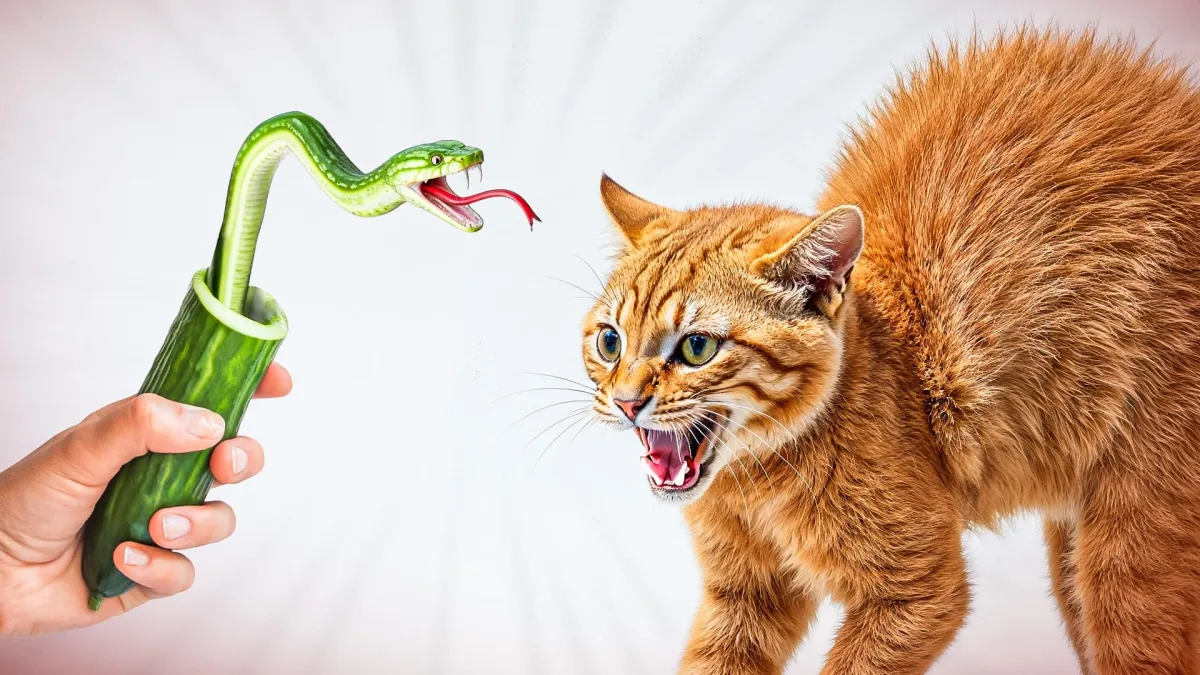
Quick Answer: Why are cats afraid of cucumbers?
Cats are not afraid of cucumbers specifically - they are reacting to an unexpected novel object appearing in their peripheral vision. The feline startle reflex activates in 18-22 milliseconds, faster than conscious thought, triggering an explosive flight response before the brain can identify whether the object is dangerous. This is NOT snake recognition instinct - it is a general neophobic reaction to novelty that becomes traumatic when it occurs in a cat's designated safe zone during feeding.
Table of Contents
- The Snake Theory Is Wrong
- How the Startle Reflex Actually Works
- Why Feeding Zones Matter
- The Trust Damage You Cannot See
- Signs Your Cat Is Stressed After a Scare
- How to Rebuild Your Cat's Safe Zone
- Key Takeaways
- Key Terms Used
- Frequently Asked Questions
- Sources
The Snake Theory Is Wrong
Cats do not recognize cucumbers as snakes, and the viral reaction has nothing to do with reptile avoidance instinct. According to Dr. Pamela Perry at the Cornell Feline Health Center, "Cats don't have a natural fear of snakes. In fact, a lot of them hunt snakes."
The snake theory spread because it sounds evolutionary and plausible. Cucumbers are elongated and green - surely cats must be confusing them with serpents? But this explanation fails basic scrutiny. Cats are predators of snakes, not prey. Domestic cats and their African wildcat ancestors actively hunt small reptiles as part of their natural diet.
What cats actually react to is novelty - the sudden appearance of an unfamiliar object in an unexpected location. The shape, color, and species resemblance are irrelevant. A banana, a zucchini, or a stuffed toy placed silently behind a feeding cat would trigger the identical explosive response.
The Evidence:
"Cats react to novelty, not snake resemblance. The startle response is a general neophobic reaction to any unexpected object appearing suddenly in peripheral vision."
As Dr. John Bradshaw of the University of Bristol explains, these viral cucumber videos are "despicable" - "an incitement for people to scare their cats and then invite people to laugh at them." The comparison to snakes is not only scientifically inaccurate but provides false justification for behavior that causes genuine distress.
How the Startle Reflex Actually Works
The feline startle reflex activates in 18-22 milliseconds - faster than conscious thought can process whether an object poses any threat. This protective mechanism evolved to keep cats alive when split-second reactions meant the difference between escaping a predator and becoming prey.
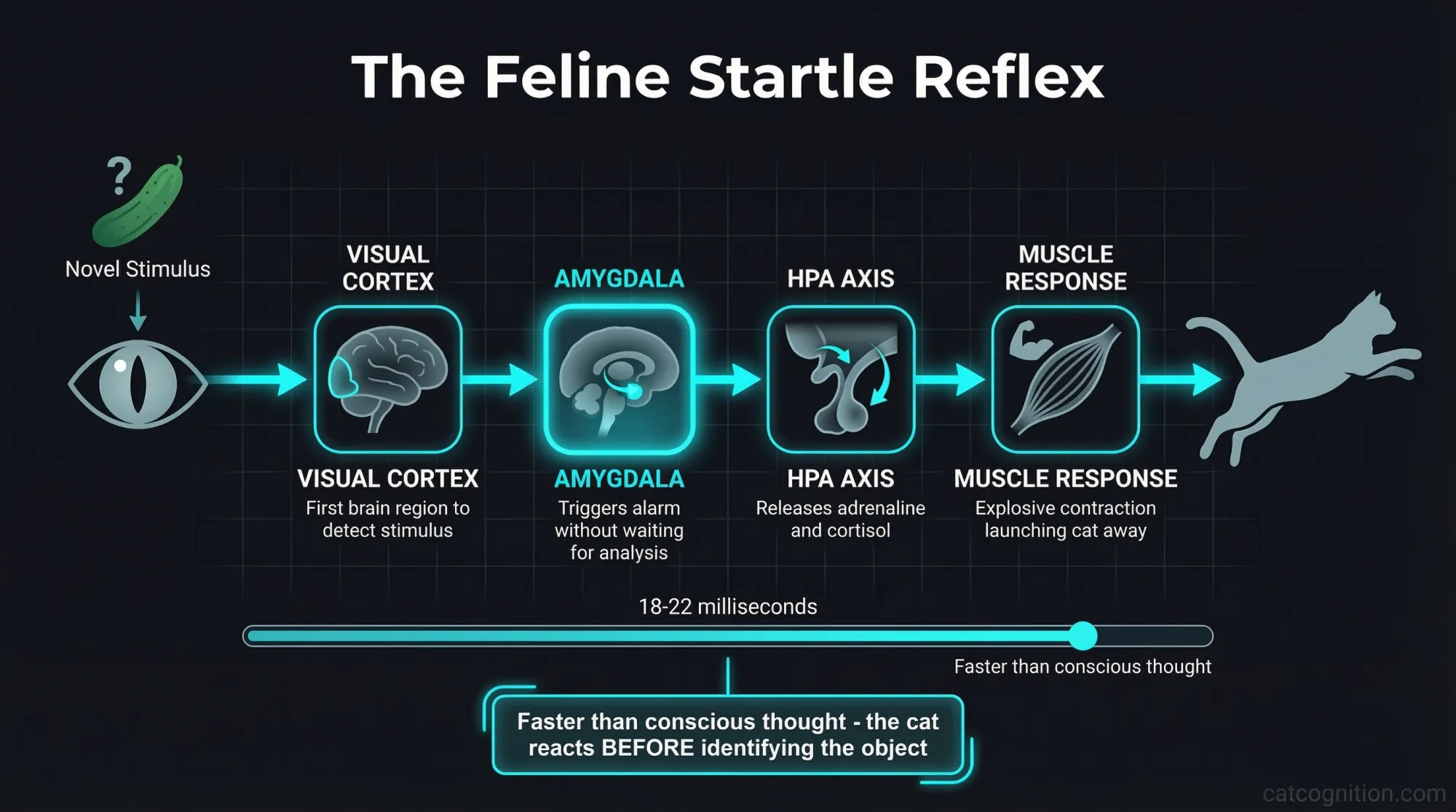
The neurological pathway begins in the brainstem. When an unexpected stimulus appears in a cat's 200-degree visual field, signals travel from the visual cortex to the amygdala within milliseconds. The amygdala does not wait for the prefrontal cortex to analyze what the object is - it triggers immediate action.
This response activates the hypothalamic-pituitary-adrenal (HPA) axis, flooding the cat's system with adrenaline and cortisol. Muscles in the limbs and spine contract explosively, launching the cat away from the perceived threat. The entire sequence completes before the cat's conscious brain has any opportunity to recognize that the threatening object is a vegetable.
The Evidence:
"The feline startle reflex activates in 18-22 milliseconds, faster than conscious thought can process whether an object is threatening."
Think of the startle reflex like a smoke detector. The detector does not analyze whether there is actually a fire - it detects particles in the air and sounds the alarm. The cat's brain detects "unexpected elongated object behind me" and triggers the alarm before confirming whether the threat is a snake, a predator, or a cucumber from the refrigerator.
Adam's Lab Note:
I once accidentally startled Moon by catching his tail in the door. I recieved an instant reflexive bite to the calf which resulted in a quick visit to A&E. Read more about it here.
Why Feeding Zones Matter
Cats associate feeding areas with safety and security, making cucumber pranks during mealtime a violation of their most psychologically protected territory. When a cat eats, they enter a vulnerable state - head down, attention focused, escape routes momentarily forgotten.
Research from Dr. Tony Buffington's Ohio State Indoor Pet Initiative demonstrates that feeding locations hold special psychological significance for cats. This is the one area in the home where cats expect complete predictability. Food appears. Danger does not.
Placing a cucumber behind a feeding cat exploits this vulnerability deliberately. The cat's safe zone suddenly contains an unexpected object. The feeding station - previously the most secure location in the home - now registers as potentially dangerous. This single event can permanently alter how a cat perceives that space.
The Evidence:
"Cats associate feeding areas with safety and security, making cucumber pranks during mealtime a violation of their most trusted space."
The aftermath often includes:
- Reluctance to eat in the same location
- Hypervigilance during meals (constantly looking around)
- Rapid eating followed by immediate flight
- Complete food refusal in severe cases
CatCog Reality Check:
If your cat refuses food for more than 48 hours after a frightening event, consult your veterinarian immediately. Prolonged food avoidance in cats can lead to hepatic lipidosis (fatty liver disease), a potentially fatal condition that develops rapidly in cats who stop eating.
The Trust Damage You Cannot See
Cats can develop negative associations not only with cucumbers but with their owners - the humans who orchestrated the scare. This represents the most significant and least discussed consequence of the cucumber prank: permanent erosion of the human-cat bond.
According to behavioral research, cats form associations through single-trial learning. Unlike dogs, who may require repeated negative experiences to develop lasting fear, cats can generalize from a single frightening event. The owner who placed the cucumber becomes linked to the trauma.
Dr. Pamela Perry at Cornell confirms this relationship damage: cats may begin associating their owner with the frightening event, not just the object itself. The human who was previously a source of safety becomes associated with unpredictability and danger.
The Evidence:
"Frightened cats can develop negative associations not only with the startling object but also with their owner, damaging the human-cat bond."
This is particularly damaging because the cat cannot understand that the scare was intentional entertainment. From the cat's perspective, something terrifying appeared while their trusted human was present - and that human did nothing to protect them. Worse, the human may have been laughing.
The behavioral signs of trust damage include:
- Hesitation before approaching the owner
- Reduced slow blinking (a key bonding behavior)
- Preference for other household members
- Startling when the owner makes sudden movements
- Avoiding physical contact that was previously welcomed
Signs Your Cat Is Stressed After a Scare
Recognizing stress symptoms helps owners identify when a single startling event has created lasting psychological impact. Not all cats will display obvious distress - some internalize stress in ways that damage health without visible behavioral changes.
Immediate Signs (within 24 hours):
- Hiding in unusual locations
- Refusal to eat or drink
- Dilated pupils that persist
- Excessive grooming (displacement behavior)
- Vocalization changes
Persistent Signs (days to weeks):
- Avoiding the room where the incident occurred
- Eating while crouched or standing (ready to flee)
- Elimination outside the litter box
- Sleep disruption
- Decreased play behavior
Research published in Applied Animal Behaviour Science confirms that chronic stress in cats causes elevated cortisol, which suppresses immune function and increases vulnerability to illness. The physiological effects of a "harmless prank" can persist long after the cucumber has been returned to the refrigerator.
| Stress Indicator | What to Watch For | Timeline |
|---|---|---|
| Appetite change | Eating less, eating faster, food avoidance | 24-72 hours |
| Location avoidance | Won't enter room where scare occurred | Days to permanent |
| Grooming changes | Over-grooming OR neglecting grooming | 48+ hours |
| Litter box issues | Urinating/defecating outside box | 24-72 hours |
| Social withdrawal | Hiding, avoiding family members | Varies |
How to Rebuild Your Cat's Safe Zone
Recovering from a cucumber scare requires deliberate environmental and behavioral modification to restore your cat's sense of security. The process cannot be rushed - cats operate on their own timeline for rebuilding trust.
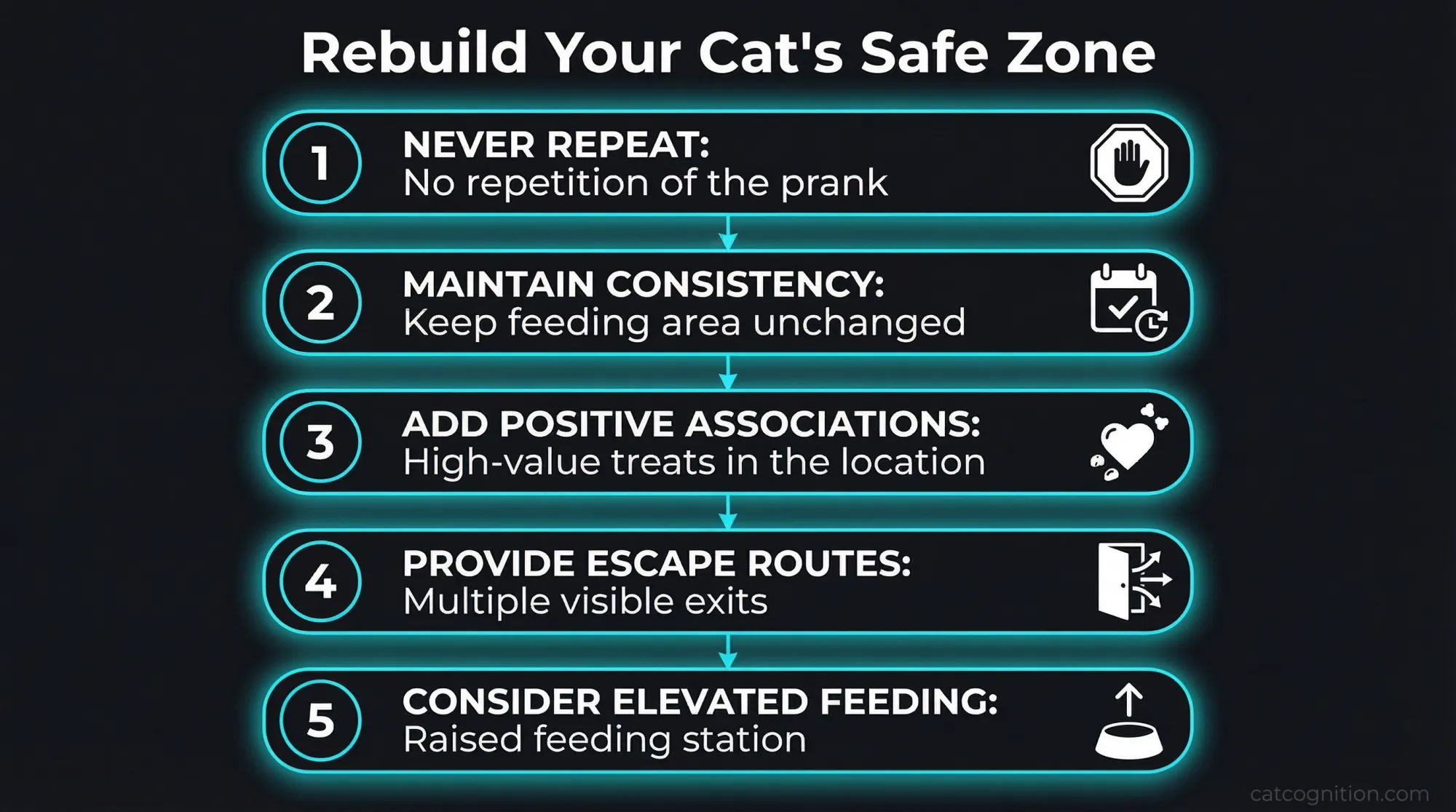
Step 1: Never Repeat the Prank
This should be obvious, but viral video culture creates pressure to recreate "funny" content. Even a single repetition confirms to the cat that their feeding area is genuinely dangerous. One scare is a traumatic accident. Two scares establish a pattern.
Step 2: Maintain Feeding Area Consistency
Do not move the food bowl, change the feeding schedule, or alter anything about the feeding environment. Predictability is the foundation of feline security. The cat needs to learn that the cucumber was an anomaly, not a new normal.
Step 3: Add Positive Associations
Spend time near the feeding area without any agenda. Sit on the floor. Read a book. Let the cat observe that this space contains nothing threatening. Offer high-value treats in the location. Gradual positive reinforcement rebuilds the safe zone classification.
Step 4: Provide Escape Routes
Cats feel more secure when they can see multiple exits from any location. If the feeding area is in a corner or dead-end, consider relocating it to a spot where the cat can survey the room while eating.
Step 5: Consider Elevated Feeding
Cats naturally prefer eating from elevated positions where they can monitor their surroundings. A raised feeding station (counter height or dedicated cat furniture) provides both security and visibility.
Key Takeaways
- Not Snake Recognition: Cats react to cucumbers because of their startle reflex responding to novelty, not because they mistake vegetables for snakes. Many cats actively hunt snakes.
- 18-22 Millisecond Response: The feline startle reflex activates faster than conscious thought, triggering flight before the brain can evaluate whether an object is actually dangerous.
- Safe Zone Violation: Feeding areas hold special psychological significance. Startling a cat during meals violates their most trusted space.
- Trust Damage: Cats can associate their owner with the frightening event, permanently damaging the human-cat bond through single-trial learning.
- Recovery Takes Time: Rebuilding a cat's sense of security requires consistent, predictable behavior and environmental stability - not quick fixes.
Key Terms Used
- Startle Reflex: An involuntary, protective response to sudden stimuli that causes rapid muscle contraction to move the animal away from potential danger.
- Neophobia: An innate or learned aversion to novel (new or unfamiliar) objects, sounds, or situations - a survival mechanism that helps cats avoid potential threats.
- Slow Blink: A deliberate, prolonged eye closure lasting 0.5-1 second that signals non-aggression and trust between cats or from cat to human.
- Resource Guarding: Defensive behavior including growling, hissing, and aggression displayed when a cat perceives a threat to valued resources such as food, water, or preferred locations.
See the full Cat Cognition Glossary ->
Frequently Asked Questions
Why do cats jump so high when scared by cucumbers?
The explosive vertical leap results from the startle reflex triggering simultaneous contraction of all major muscle groups. Cats can jump 5-6 times their body length from a standing position, and the startle response maximizes this capability to escape perceived predators. The height has nothing to do with cucumbers specifically - any sudden stimulus in the peripheral vision triggers identical muscular recruitment.
Do cats think cucumbers are snakes?
No. According to Dr. Pamela Perry at Cornell Feline Health Center, cats do not have an innate fear of snakes and many cats actively hunt reptiles. The cucumber reaction is a general neophobic startle response to any unexpected novel object, not species-specific snake recognition. A banana or zucchini would trigger the same response.
Is it harmful to scare cats with cucumbers?
Yes. Beyond the immediate stress response, cucumber scares can cause lasting psychological damage including feeding anxiety, location avoidance, and erosion of trust toward owners. Chronic stress from repeated frights suppresses immune function and may contribute to urinary issues, digestive problems, and behavioral disorders.
How long does stress from a cucumber scare last?
Acute physiological stress (elevated cortisol, rapid heart rate) resolves within minutes to hours. However, behavioral changes from a single traumatic event can persist for days, weeks, or permanently depending on the individual cat's temperament and the severity of the fright. Timid cats are particularly vulnerable to lasting effects.
Can cats be desensitized to cucumbers?
Technically yes, but there is no practical reason to do so. Cats can habituate to any novel object through gradual, positive exposure when they are not in a vulnerable state. However, deliberately desensitizing a cat to cucumbers serves no purpose - the goal should be preventing unnecessary startle events, not training cats to tolerate them.
Why don't all cats react to cucumbers?
Individual reactions depend on personality, socialization history, and environmental context. Cats with extensive exposure to novel objects during the critical socialization period (0-12 weeks) tend to be less neophobic. Additionally, cats not in a vulnerable state (like eating) may investigate unfamiliar objects rather than flee from them.
Will my cat forgive me for scaring them?
Cats do not process forgiveness the way humans do. They form associations between stimuli, locations, and individuals. With consistent, predictable behavior and no repetition of frightening events, most cats will gradually return to baseline trust levels. However, some cats may retain permanent wariness depending on temperament and the severity of the original scare.
What should I do if my cat won't eat after being scared?
Monitor food intake closely. If your cat refuses food for more than 24 hours, try offering high-value foods (like plain cooked chicken) in a different location. If food refusal extends beyond 48 hours, consult your veterinarian immediately. Prolonged fasting in cats can trigger hepatic lipidosis, a serious liver condition that requires medical intervention.
Sources
- Cats and Cucumbers: Our Behavior Expert Talks - Cornell Feline Health Center (Link)
- Vestibular and Auditory Startle Responses in Rat and Cat - Brain Research, PubMed (Link)
- Effects of Stressors on the Behavior and Physiology of Domestic Cats - Applied Animal Behaviour Science, PMC (Link)
- Indoor Pet Initiative - Dr. Tony Buffington, Ohio State University (https://indoorpet.osu.edu)
- People Are Scaring Their Cats with Cucumbers. They Shouldn't. - National Geographic (Link)
- The Acoustic Startle Reflex: Neurons and Connections - Yeomans & Frankland 1995, Brain Research Reviews (Link)