Thigmotaxis: The Real Reason Cats Love Boxes
Cats love boxes due to thigmotaxis: an instinct to seek enclosed contact for safety. A University of Utrecht study found that giving shelter cats hiding boxes significantly reduced stress, measured by the Cat-Stress-Score (CSS).

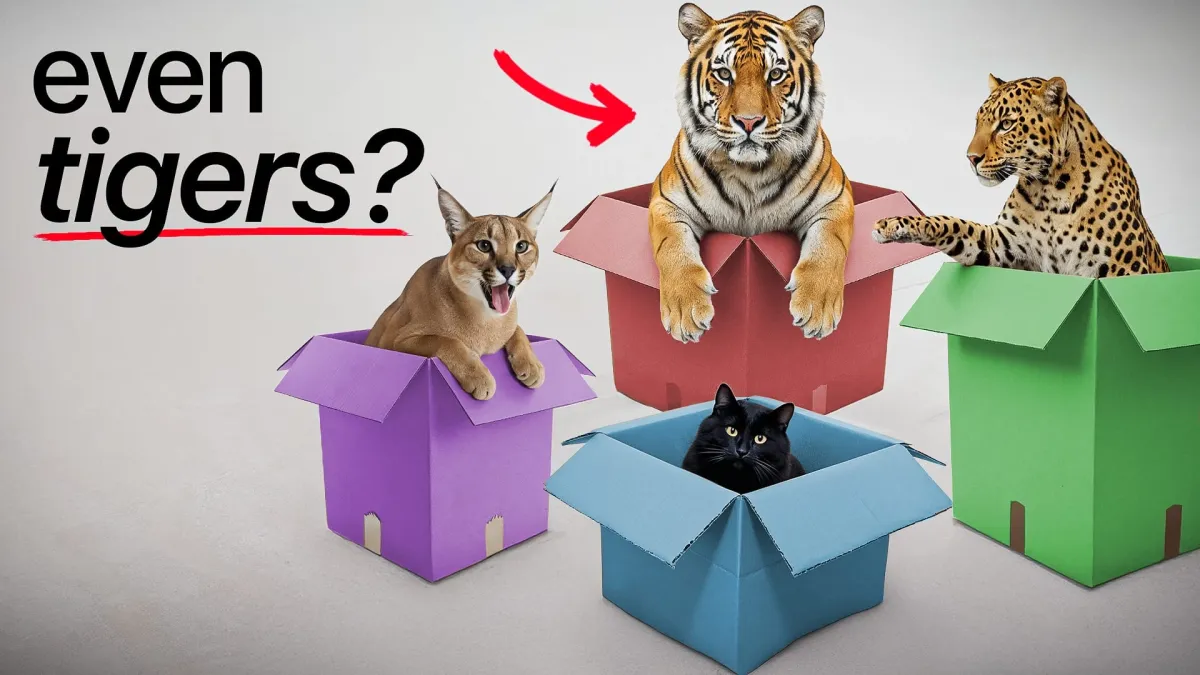
💡 Quick Answer: Why Do Cats Like Boxes?
Thigmotaxis. This is an evolutionary instinct to seek physical contact with solid surfaces (walls/enclosures). Being "hugged" by a box tells a cat's brain that they are protected from predators on the rear and sides, allowing them to focus entirely on what is in front of them. This lowers their stress levels.
Table of Contents
- What is Thigmotaxis? (The Science)
- The Utrecht Shelter Study (Stress Relief)
- Why Do Cats Sit in Squares on the Floor?
- How to Use Boxes for Enrichment
- FAQ
You buy your cat a $50 plush bed. They ignore it.
You throw a dirty Amazon box on the floor. They move in immediately.
This is the universal cat paradox. But it is not just your cat being stubborn. It is biology.
To a human, a box is trash. To a cat, a box is a tactical fortress that triggers a powerful dopamine response.
What is Thigmotaxis? (The Science)
The scientific term for "loving boxes" is Thigmotaxis.
Thigmotaxis (from the Greek thigmo for touch and taxis for movement) refers to an organism's drive to seek out physical contact with surfaces.
- In the Wild: A solitary hunter in an open field is vulnerable. A predator could attack from any angle.
- In the Box: When a cat feels the cardboard walls pressing against their sides, their brain registers "Safety." They know their flanks and rear are guarded.
⚠️ The CatCog Reality Check:
Thigmotaxis is why your cat walks along the baseboards of a hallway instead of the center. They are constantly "wall-seeking" to minimize their exposure to threats.
The Utrecht Shelter Study (Stress Relief)
Is a box just a toy, or is it medicine?
A landmark study conducted by the University of Utrecht (Netherlands) in 2014 aimed to answer this. Researchers took a group of newly arrived shelter cats—a highly stressful situation—and split them into two groups:
- Group A: Provided with a "hiding box."
- Group B: Provided with no hiding spot.
The Results:
The cats with boxes showed significantly lower stress scores (measured via the Cat-Stress-Score) within days. They reached a stable, low-stress state a full 7 days earlier than cats without boxes, recovered their appetite faster, and were more willing to interact with humans.
🧪 Adam's Lab Note:
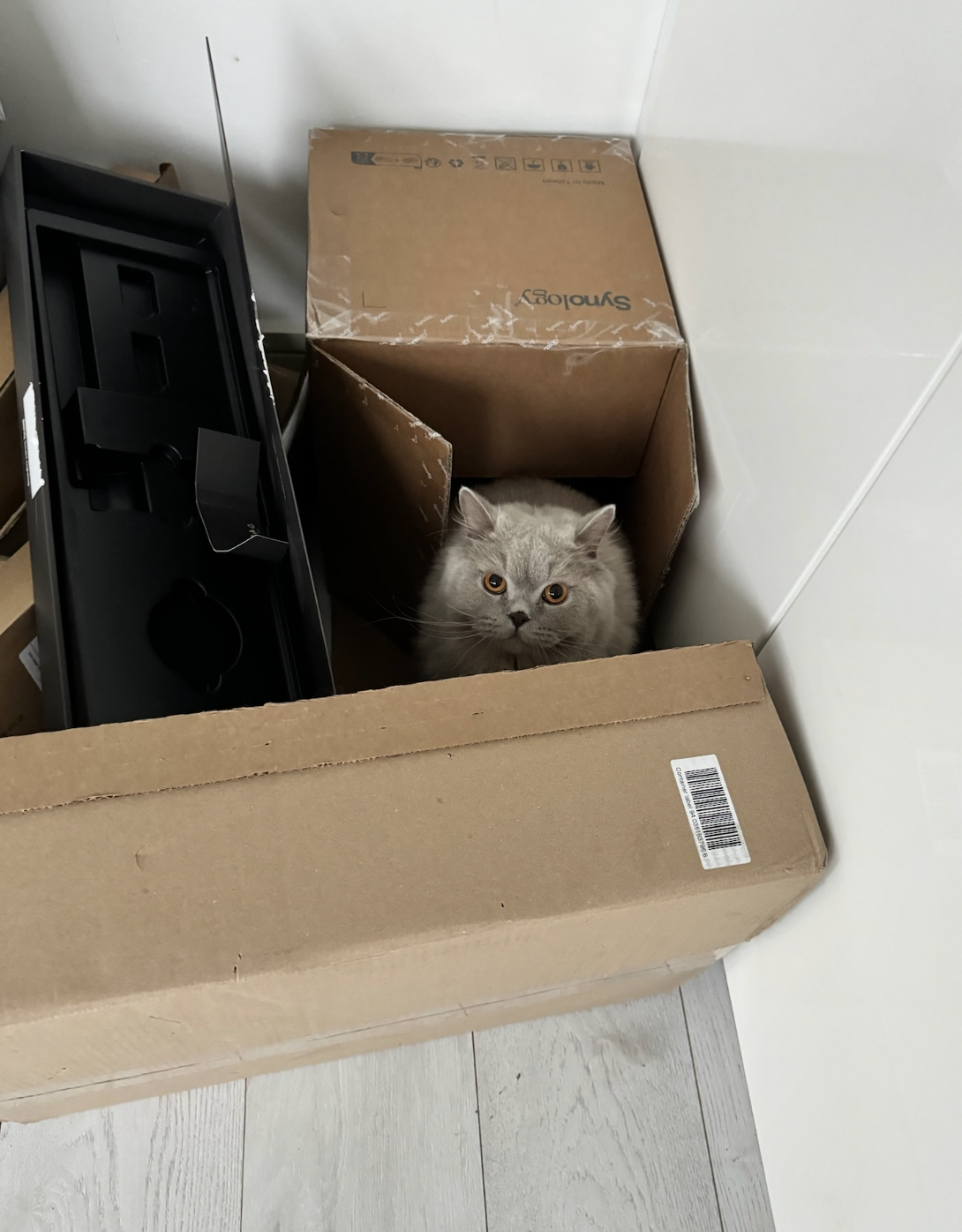
When I was travelling back and forth between my house and my parents, Moon would always get anxious when returning home. I built him a "Box Fort" and it always sped up how comfortable he felt. The box was his "Reset Button."
The CatCog Box Index: Why It Works
Why does a simple cardboard square have such a profound effect on feline neurology?
| Factor | The Mechanism |
|---|---|
| 1. Thermal Insulation | Cardboard is an insulator. Cats prefer a thermoneutral zone of 86-97°F (30-36°C)—warmer than most homes. Small boxes trap body heat, helping them stay comfortable. |
| 2. Concealment | It allows them to observe without being observed—the ultimate position for an ambush predator. |
| 3. Conflict Avoidance | In a multi-cat house, a box is a "Time Out." It signals to other cats: "I am offline." |
| 4. Tactile Pressure | Similar to a "weighted blanket" for humans, the pressure of the walls may have a calming effect (though this specific mechanism has not been directly studied in cats). |
Why Do Cats Sit in Squares on the Floor?
You have seen the viral "Cat Square" challenge. You put tape in a square shape on the rug, and the cat sits inside it.
If there are no walls (no Thigmotaxis), why do they do it?
This is called Illusory Contour Perception.
A 2021 study by Smith et al. tested this phenomenon using citizen science. They found cats are susceptible to the Kanizsa illusion—perceiving edges that don't physically exist—similarly to humans. When cats see defined contours (even just tape on the floor), their brain processes them as "enclosures" they can sit within. The researchers noted cats are "most likely attracted to 2D shapes for their contours (sides), rather than solely novelty on the floor."
How to Use Boxes for Enrichment
Don't just leave the box; optimize it.
- The "Scent Soak": Put an old t-shirt of yours in the box. This combines Thigmotaxis with Scent Bonding.
- Rotation: Cats get bored. A "New Box" smells different and exciting. Rotate them every 2 weeks (we both know you order enough stuff to do this!)
- High Ground: Put a box on a shelf. A box + height = The ultimate "God Mode" for a cat.
🔑 Key Takeaways (The CatCog Index)
Thigmotaxis: The biological drive to seek touch/walls for safety.The Utrecht Study: Proven to lower stress scores (CSS) and speed up recovery in shelter cats.Ambush Tactics: Boxes allow cats to watch the world while remaining hidden.Heat Trap: Cardboard insulation helps cats stay in their preferred thermoneutral zone (86-97°F).
Frequently Asked Questions
Q: Why do cats like small spaces?
A: This is driven by Thigmotaxis, a biological drive to seek physical contact with environmental surfaces. Confined spaces provide tactile feedback that signals safety to a cat's brain.
Q: Do boxes help stressed cats?
A: Yes. A study by the University of Utrecht found that shelter cats provided with hiding boxes showed significantly lower stress scores (Cat-Stress-Score) and reached a stable, low-stress state 7 days earlier than those without boxes.
Q: Why do cats sit in squares on the floor?
A: Research by Smith et al. (2021) suggests cats are susceptible to illusory contour perception—their brains detect the edges of shapes (even without physical walls) and process them as enclosures they can sit within.
📚 Scientific Sources & Further Reading
- Applied Animal Behaviour Science (2014) - Vinke, C.M. et al. "Will a hiding box provide stress reduction for shelter cats?" (Link: Read Study)
- Applied Animal Behaviour Science (2021) - Smith, G.E. et al. "If I fits I sits: A citizen science investigation into illusory contour susceptibility in domestic cats" (Link: Read Study)