Why Is My Cat Drooling? 7 Causes from Happy to Harmful
Cat drooling signals either contentment or a health concern requiring attention. Unlike dogs who commonly drool, cats rarely drool without reason. Learn when drooling is normal and when it's an emergency.

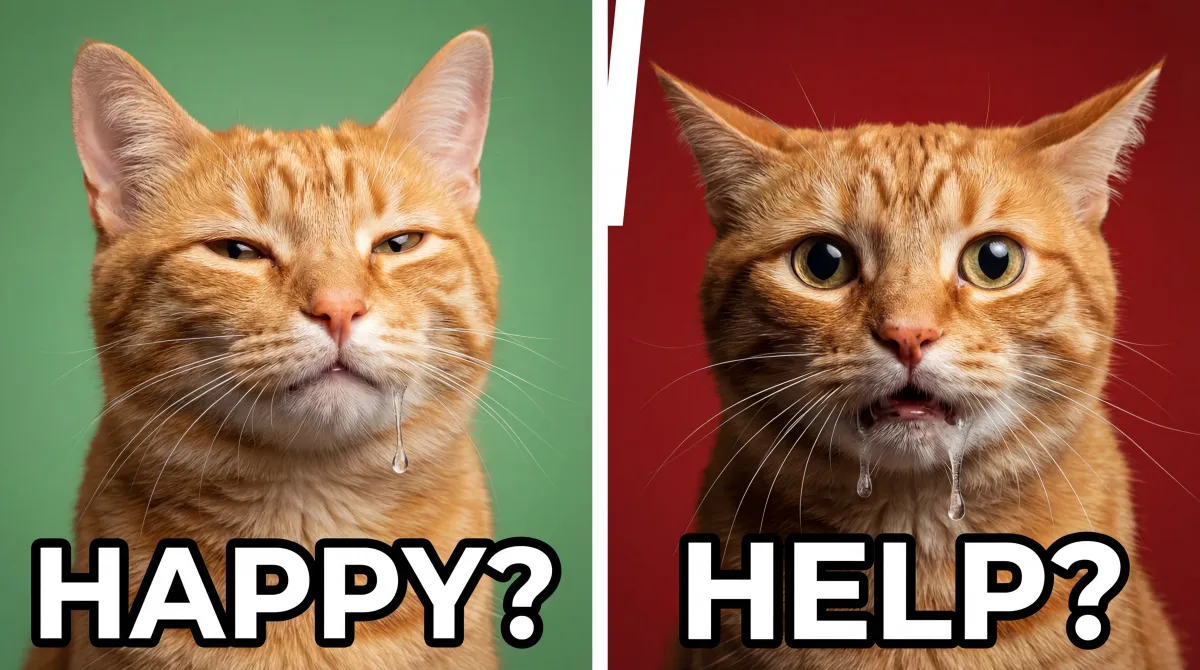
Table of Contents
- What Causes a Cat to Drool?
- Is It Normal for Cats to Drool When Happy?
- Why Is Dental Disease the Leading Cause of Cat Drooling?
- What Toxic Plants and Substances Cause Cat Drooling?
- When Is Cat Drooling an Emergency?
- What Medical Conditions Cause Chronic Drooling?
- How Can You Prevent Cat Drooling Problems?
- Key Terms Used
- Frequently Asked Questions
- Key Takeaways
- Sources
Cat drooling signals either contentment or a health concern requiring attention. Unlike dogs who commonly drool, cats rarely drool without reason. Contentment drooling during kneading or purring is normal and harmless. However, new or sudden drooling often indicates dental disease, nausea, toxin exposure, or other medical conditions requiring veterinary evaluation. The key to determining whether drooling is safe or serious lies in observing the context, duration, and accompanying symptoms. For more health topics and care advice, see our complete cat care guide.
What Causes a Cat to Drool?
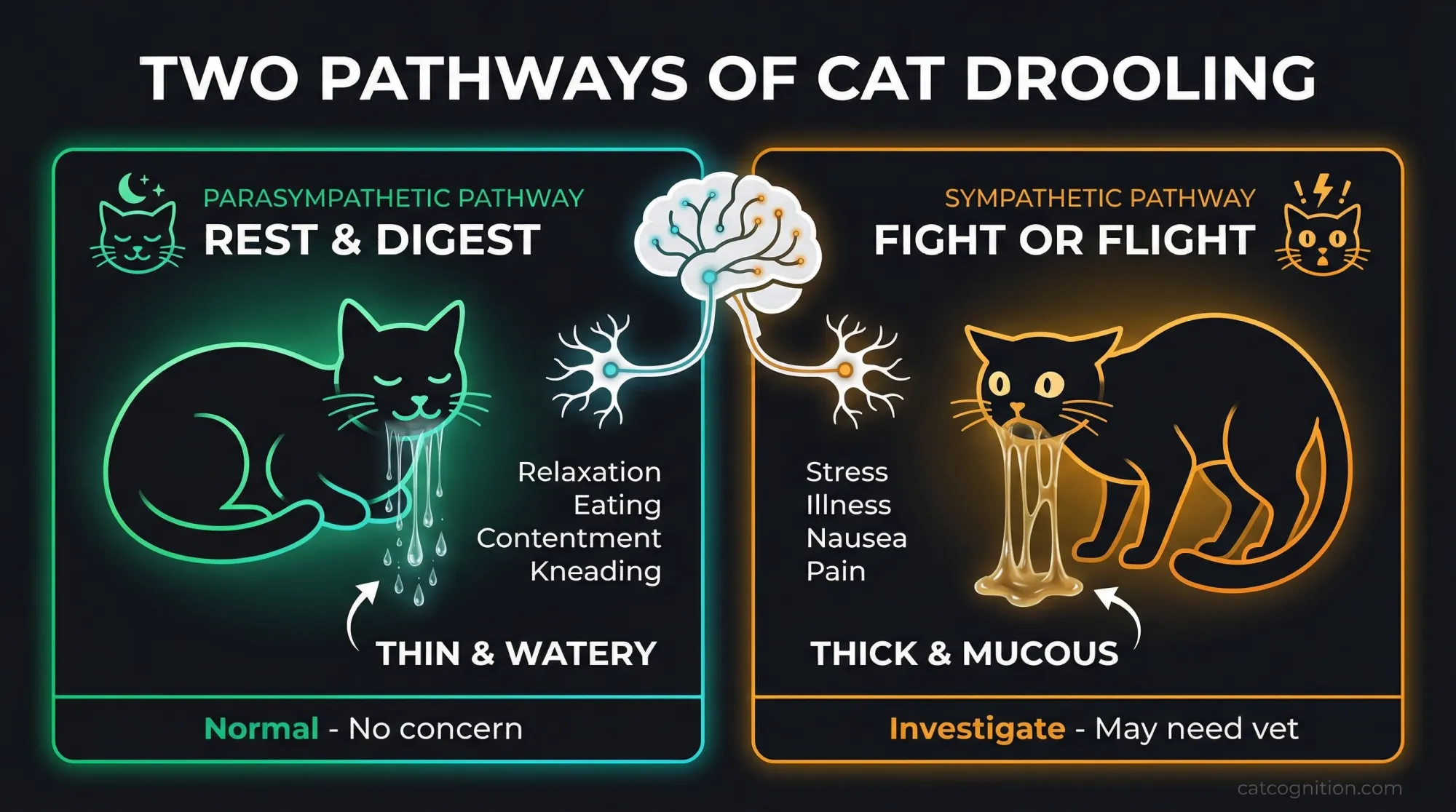
Cat drooling stems from two distinct physiological pathways controlled by different branches of the nervous system, and understanding this mechanism transforms a worrying symptom into a diagnostic tool. As Dr. Tony Buffington's research at Ohio State's Indoor Pet Initiative demonstrates, stress responses in cats often manifest through physiological symptoms like excessive salivation, making drooling an important indicator of feline emotional and physical wellbeing. The parasympathetic nervous system (rest-and-digest) produces thin, watery saliva during relaxation and eating, while the sympathetic nervous system (fight-or-flight) triggers thicker, mucous saliva during stress or illness. Cats possess five major salivary glands including the molar gland, which is unique to felines and absent in dogs and humans, making cat drool fundamentally different from dog drool.
True ptyalism involves overproduction of saliva from any of these glands, typically triggered by taste, smell, nausea, oral pain, or emotional states. Pseudoptyalism, by contrast, occurs when cats produce normal amounts of saliva but cannot swallow properly due to oral pain, neurological issues, or physical obstructions. This distinction matters because treatment approaches differ significantly depending on whether the underlying cause involves overproduction or impaired swallowing.
The Evidence:
"Unlike dogs, cats rarely drool without reason, so new or sudden drooling in cats usually indicates a problem worth veterinary investigation."
The primary function of saliva in cats is lubrication and oral protection rather than digestion. Cats have minimal digestive enzyme activity in their saliva compared to humans, whose amylase-rich saliva begins breaking down starches immediately. This evolutionary difference explains why cats evolved not to drool constantly like some dog breeds, as excessive salivation would serve no digestive purpose while potentially making them vulnerable during mealtimes in the wild.
Is It Normal for Cats to Drool When Happy?
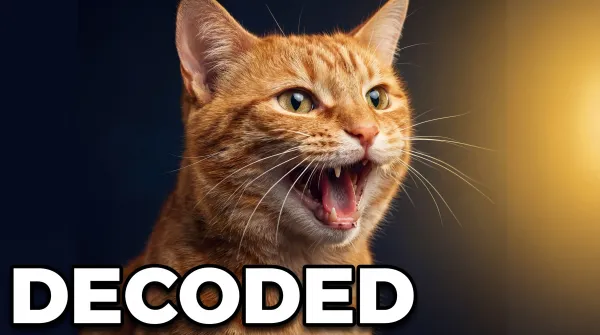
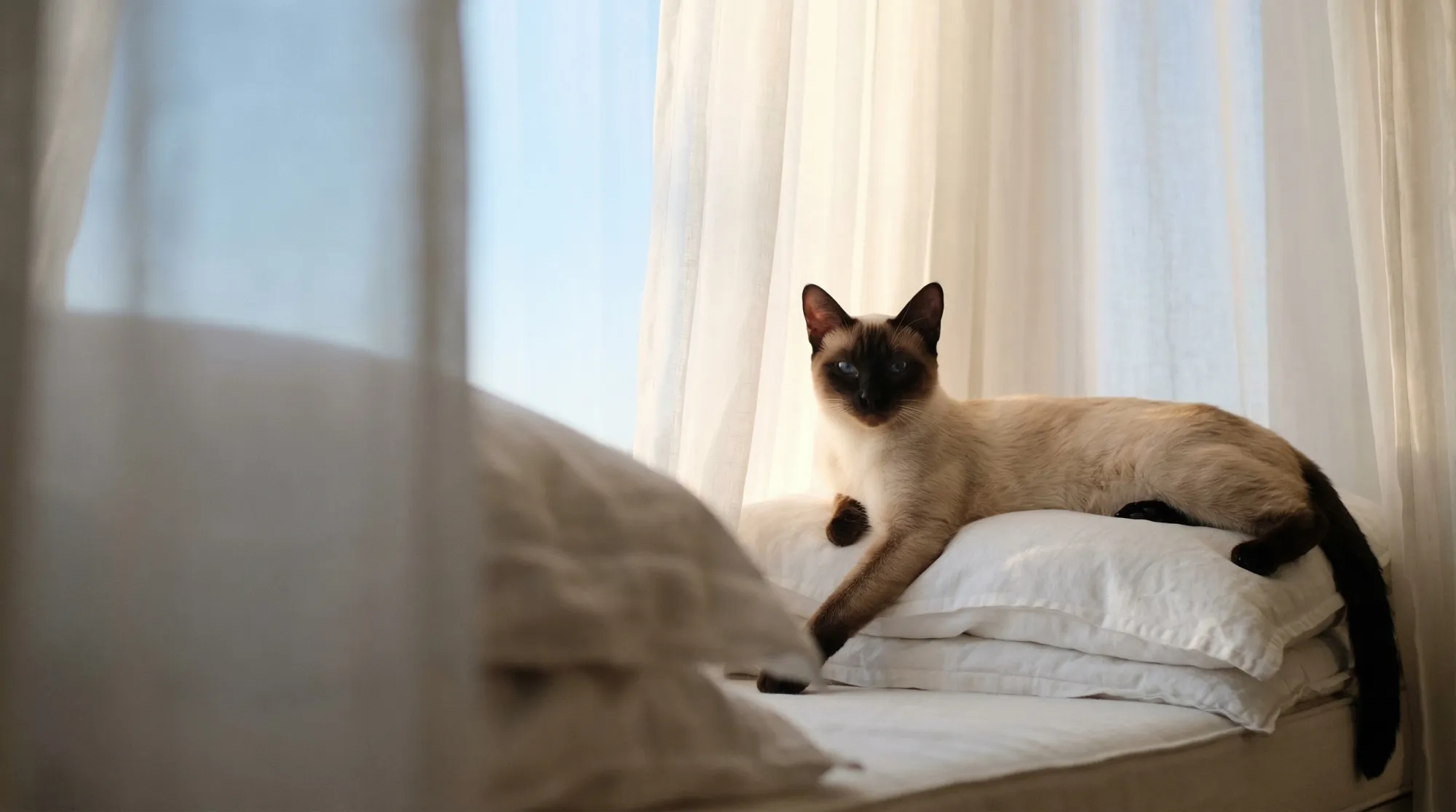
Contentment drooling during kneading, purring, or being petted is completely normal and represents one of the most misunderstood aspects of feline behavior. When cats enter a deeply relaxed state, endorphins released during pleasurable activities can stimulate salivary glands while simultaneously relaxing the mouth muscles that normally keep saliva contained. As one veterinary source describes the phenomenon, cats become "so far into the happy zone that they forget to swallow."
This behavioral pattern likely traces back to kittenhood nursing behavior. Kittens knead their mother's mammary glands to stimulate milk flow, and the warmth, comfort, and satiation of nursing creates powerful positive associations. Adult cats who drool during kneading may be experiencing a form of behavioral regression, where the pleasurable sensations of being petted and kneading trigger the same physiological responses they experienced as nursing kittens.
Contentment drooling differs from pathological drooling in several key ways. Happy drool typically appears only during specific pleasurable activities, stops when the activity ends, and occurs in cats who are otherwise eating, playing, and behaving normally. The drool itself tends to be thin and watery rather than thick or ropey. If your cat has always drooled during kneading sessions since kittenhood, this represents an individual variation rather than a developing health concern.
Why Is Dental Disease the Leading Cause of Cat Drooling?
Dental disease causes more pathological drooling in cats than any other condition, with most cats showing early evidence of periodontal disease by age three according to AAHA veterinary guidelines. The mechanism is straightforward: oral pain triggers salivation as a protective response, and cats with sore mouths often cannot or will not swallow normally. According to Cornell Feline Health Center, cats with periodontitis may be reluctant or unwilling to eat, drool, turn their heads to the side when chewing, and develop halitosis.
Feline chronic gingivostomatitis (FCGS) represents one of the most severe forms of dental-related drooling, affecting up to 10% of cats. This immune-mediated inflammatory disease causes extreme oral pain, making normal eating nearly impossible. As Dr. Maria Soltero-Rivera's 2023 research in the Journal of Feline Medicine and Surgery confirms, approximately 70-80% of cats with chronic gingivostomatitis show substantial improvement following dental extraction therapy, though 20-30% continue to require ongoing medical management.
The Evidence:
"Feline chronic gingivostomatitis affects up to 10% of cats, with 70-80% showing substantial improvement after dental extraction therapy."
Feline odontoclastic resorptive lesions (FORLs) present another common dental cause of drooling. These painful erosive lesions represent one of the most common dental problems in domestic cats, with risk increasing in older animals. The pain from FORLs triggers excessive salivation alongside other symptoms including difficulty eating, preference for wet food over dry, and dropping food while chewing.
Warning signs that suggest dental disease as the drooling cause include: thick, ropey drool rather than thin and watery; bad breath or oral odor; head tilting while eating or reluctance to chew on one side; pawing at the mouth; visible redness, swelling, or bleeding at the gum line; and decreased appetite especially for dry food.
What Toxic Plants and Substances Cause Cat Drooling?
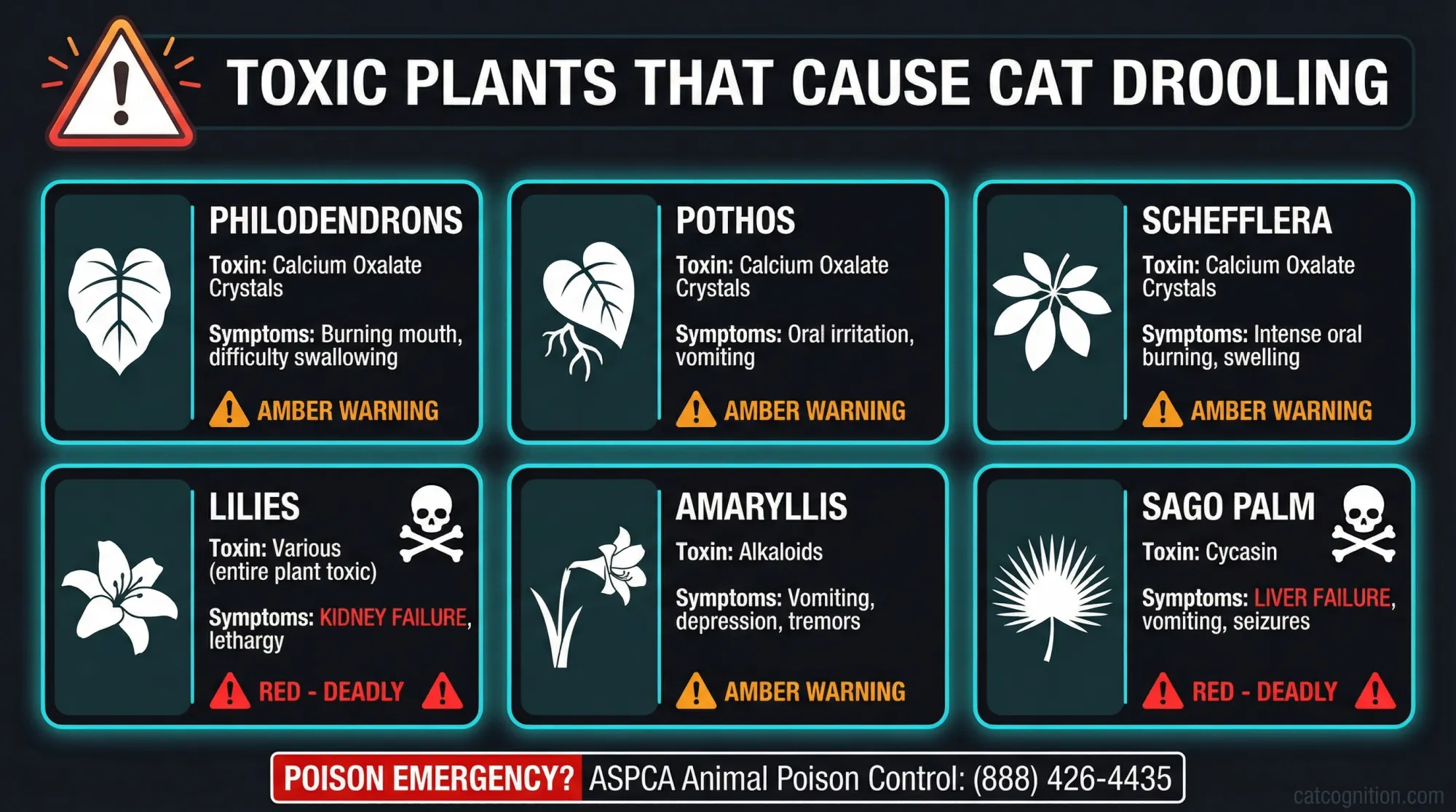
Toxic plant ingestion and chemical exposure trigger immediate drooling as the body attempts to flush irritants from the mouth and protect oral tissues. Philodendrons and other plants containing calcium oxalate crystals cause intense burning and irritation of the mouth, lips, and tongue upon contact, leading to excessive drooling, vomiting, and difficulty swallowing. According to UC Davis Center for Companion Animal Health, schefflera plants contain calcium oxalate crystals that can cause oral irritation, excessive drooling, vomiting, difficulty in swallowing, and intense burning and irritation of the mouth.
Household chemicals pose equally serious risks. VCA Animal Hospitals warns that bleach and disinfectants can cause burns in the mouth and throat, drooling, vomiting, and difficulty breathing if ingested by pets. Antifreeze, pesticides, certain essential oils, and many cleaning products can all trigger immediate drooling alongside more serious systemic symptoms.
The Evidence:
"Uncharacteristic sluggishness, unsteady gait, drooling, heavy breathing, seizures, and sudden bouts of vomiting are among the common clinical signs of feline poisoning."
Common toxic plants that cause drooling in cats include:
| Plant | Toxin | Additional Symptoms |
|---|---|---|
| Philodendrons | Calcium oxalate crystals | Burning mouth, difficulty swallowing |
| Pothos | Calcium oxalate crystals | Oral irritation, vomiting |
| Schefflera | Calcium oxalate crystals | Intense oral burning, swelling |
| Lilies | Various (entire plant toxic) | Kidney failure, lethargy |
| Amaryllis | Alkaloids | Vomiting, depression, tremors |
| Sago palm | Cycasin | Liver failure, vomiting, seizures |

Moon during his several day and night stay at the emergency vet. And the closed lily buds which were a close call.
When Is Cat Drooling an Emergency?
Emergency situations require immediate veterinary care and should never be delayed to "wait and see." Drooling accompanied by difficulty breathing indicates a potentially life-threatening airway obstruction or allergic reaction. Drooling with facial swelling suggests severe allergic response or infection requiring urgent intervention. Drooling combined with seizures or collapse points to poisoning, neurological emergency, or severe systemic illness.
Heatstroke presents another emergency scenario where drooling serves as a warning sign. Emergency Veterinary Care Centers documents that signs of heatstroke including drooling, excessive panting, vomiting, diarrhea, and weakness or collapsing require immediate care. Cats lack efficient sweating mechanisms and rely on panting and drooling to cool themselves, so visible drooling during heat exposure signals the body's temperature regulation systems are overwhelmed.
The D.R.O.O.L. Protocol provides a structured framework for assessing drooling severity:
| Factor | Question | Emergency Indicator |
|---|---|---|
| Duration | How long has drooling lasted? | Sudden onset with rapid worsening |
| Reason | Is there an obvious trigger? | Known toxin exposure or heat |
| Other symptoms | What else is happening? | Breathing difficulty, seizures, collapse |
| Onset | Was it sudden or gradual? | Sudden without explanation |
| Location | Is drool one-sided or bilateral? | One-sided may indicate focal oral problem |
Emergency (Vet Immediately):
- Drooling + difficulty breathing
- Drooling + seizures or collapse
- Drooling + facial swelling
- Known toxin ingestion
- Heatstroke symptoms (drooling + panting + weakness)
Urgent (Vet Within 24-48 Hours):
- Blood in saliva
- New drooling lasting more than 24 hours
- Drooling + refusal to eat
- Drooling + lethargy or hiding
What Medical Conditions Cause Chronic Drooling?
Beyond dental disease and toxins, several systemic medical conditions can manifest with drooling as a symptom. Kidney disease (CKD) causes nausea and gastric irritation that triggers drooling, often accompanied by lip-licking, sniffing food and walking away, and worse-smelling breath from urea leaking from blood into saliva. PetMD notes that CKD can cause nausea, vomiting, and decreased appetite, with nausea usually manifesting as lip-licking, drooling, or sniffing food and then walking away.
Gastrointestinal issues including inflammatory bowel disease, pancreatitis, and intestinal obstructions can all trigger drooling through nausea pathways. The International Society of Feline Medicine's 2022 consensus guidelines establish that signs of nausea may include ptyalism or more subtle signs such as inappetence, lip licking, and turning away from food.
Neurological conditions occasionally cause drooling through different mechanisms. Cornell Feline Health Center documents that cats with hyperesthesia syndrome may have dilated pupils, their skin may ripple, and they may drool. Feline calicivirus infection can cause drooling with cold-like symptoms and oral ulcers. Even certain tumors affecting the mouth, throat, or nervous system can present with excessive salivation.
The Evidence:
"Cats with periodontitis may be reluctant or unwilling to eat, drool, turn their heads to the side when chewing, and develop halitosis."
Less commonly, foreign objects lodged in the mouth or throat cause drooling as the body attempts to dislodge or lubricate around the obstruction. Cats who chew on string, ribbon, or thread may develop linear foreign bodies that cause persistent drooling alongside vomiting and abdominal pain.
How Can You Prevent Cat Drooling Problems?
Prevention centers on addressing the most common causes before they become serious. Annual dental checkups allow veterinarians to identify early periodontal disease, gingivitis, and tooth resorption before these conditions progress to cause pain and drooling. The AAHA Dental Care Guidelines emphasize that as dental disease progresses, signs may include excessive drooling, red and swollen gums, discolored teeth, nasal or ocular discharge, dropped food, and eating on only one side of the mouth.
Creating a cat-safe home environment eliminates many toxin-related drooling emergencies. Remove or secure all toxic houseplants, store cleaning chemicals in locked cabinets, and be aware of which human foods can cause oral irritation or poisoning in cats. Common culprits include onions, garlic, grapes, and xylitol-containing products.
Monitoring eating behavior provides early warning signs of developing oral problems. Cats who begin avoiding dry food, dropping kibble while chewing, or showing preference for one side of their mouth may be experiencing dental pain before drooling becomes obvious. Early intervention at this stage can prevent progression to more severe disease.
For cats prone to motion sickness drooling during car rides, short acclimation trips, carrier training, and withholding food for several hours before travel can reduce symptoms. Some cats benefit from veterinarian-prescribed anti-nausea medication for longer journeys.
Key Terms Used
- Ptyalism: Excessive production of saliva, also called hypersalivation
- Pseudoptyalism: Drooling from inability to swallow normally rather than overproduction of saliva
- FCGS (Feline Chronic Gingivostomatitis): A severe, immune-mediated oral inflammatory disease affecting up to 10% of cats
- FORLs (Feline Odontoclastic Resorptive Lesions): One of the most common dental problems in cats, causing painful tooth erosion
- Calcium Oxalate Crystals: Plant defense compounds found in philodendrons and similar plants that cause intense oral burning and drooling when cats chew them
- Molar Gland: A salivary gland unique to cats, absent in dogs and humans
Frequently Asked Questions
Why does my cat drool when I pet them?
Cats who drool during petting are experiencing contentment drooling, a normal physiological response to deep relaxation. Endorphins released during pleasurable activities stimulate salivary glands while relaxing the mouth muscles that normally contain saliva. This behavior often traces back to kittenhood nursing associations and is harmless as long as the cat is otherwise healthy.
Should I be worried if my cat suddenly starts drooling?
Sudden onset drooling in a cat who does not normally drool warrants attention. If the drooling is accompanied by difficulty breathing, facial swelling, seizures, vomiting, or lethargy, seek emergency veterinary care. If the cat is otherwise acting normally, observe for 24 hours and contact your veterinarian if the drooling persists.
Can stress cause a cat to drool?
Yes, stress and anxiety can trigger drooling through the sympathetic nervous system's fight-or-flight response, which produces thicker, mucous saliva. Common stressful situations include car rides, veterinary visits, and introduction to new environments. Stress-related drooling typically resolves once the stressor is removed.
What does it mean if my cat's drool is thick and ropey?
Thick, ropey drool often indicates dental disease, oral infection, or dehydration. This consistency differs from the thin, watery drool associated with contentment or nausea. If your cat produces thick drool, especially with bad breath or changes in eating behavior, schedule a veterinary dental examination.
How can I tell if my cat ate something toxic?
Signs of poisoning include sudden drooling, vomiting, diarrhea, unsteady gait, lethargy, seizures, and difficulty breathing. If you suspect toxin exposure, contact ASPCA Animal Poison Control at (888) 426-4435 immediately. Do not wait for multiple symptoms to develop, as early treatment significantly improves outcomes.
Is cat drooling during car rides normal?
Motion sickness commonly causes drooling during car rides and is generally harmless though unpleasant. The drooling should resolve within minutes of the car stopping. Withholding food before travel, using pheromone sprays, and gradually acclimating your cat to short car rides can reduce motion sickness symptoms.
At what age do cats develop dental disease that causes drooling?
According to AAHA veterinary guidelines, most cats show early evidence of periodontal disease by age three. However, dental disease can begin earlier, especially in cats with certain predispositions. Annual dental checkups throughout your cat's life help identify and address problems before they cause significant pain and drooling.
Can drooling be a sign of cancer in cats?
Drooling accompanied by blood may indicate an oral mass. Cornell Feline Health Center notes that drooling, especially with blood, may be due to a mass in the mouth. Any drooling with blood warrants veterinary evaluation within 24 hours to rule out oral cancer or other serious conditions.
Key Takeaways
- Cats rarely drool without reason: Unlike dogs, cats almost never drool without an underlying cause. New or sudden drooling warrants investigation, while lifelong happy drooling during kneading is typically normal.
- Context determines concern: Drooling during kneading, purring, or petting is usually harmless contentment drooling. Drooling accompanied by other symptoms like lethargy, breathing difficulty, or refusal to eat requires veterinary attention.
- Dental disease is the leading cause: By age three, most cats show early periodontal disease. Annual dental checkups can identify and treat problems before they progress to cause drooling and significant pain.
- Know your emergency triggers: Drooling combined with difficulty breathing, seizures, facial swelling, or known toxin exposure requires immediate emergency veterinary care without delay.
- Prevention focuses on environment and monitoring: Cat-proof your home by removing toxic plants and securing chemicals. Monitor eating behavior for early signs of oral discomfort before drooling develops.
Sources
- Feline Dental Disease - Cornell Feline Health Center (Link)
- Feline chronic gingivostomatitis current concepts in clinical management - Soltero-Rivera M, Goldschmidt S, Arzi B. Journal of Feline Medicine and Surgery, 2023 (Link)
- 2019 AAHA Dental Care Guidelines for Dogs and Cats - American Animal Hospital Association (Link)
- Poisons - Cornell Feline Health Center (Link)
- ASPCA Poison Control and Toxicology - ASPCA Animal Poison Control Center (Link)
- 17 Plants Poisonous to Pets - ASPCA (Link)
- Hypersalivation - ScienceDirect Topics (Link)
- Feline Health Topics - UC Davis School of Veterinary Medicine (Link)
- 2022 ISFM Consensus Guidelines on Management of the Inappetent Hospitalised Cat - International Society of Feline Medicine (Link)
- Understanding the anatomy of canine and feline salivary glands - Veterinary Practice News, 2023 (Link)
- Hyperesthesia Syndrome - Cornell Feline Health Center (Link)
- Cat Drooling: When it Is Normal and When it Is an Emergency - Emergency Veterinary Care Centers (Link)