Cat Life Stages Explained: The 6 Ages from Kitten to Senior
The 6 cat life stages are: Kitten (0-6 months), Junior (7 months-2 years), Prime (3-6 years), Mature (7-10 years), Senior (11-14 years), and Super-Senior (15+). A one-year-old cat equals 15 human years; a two-year-old equals 24 human years.

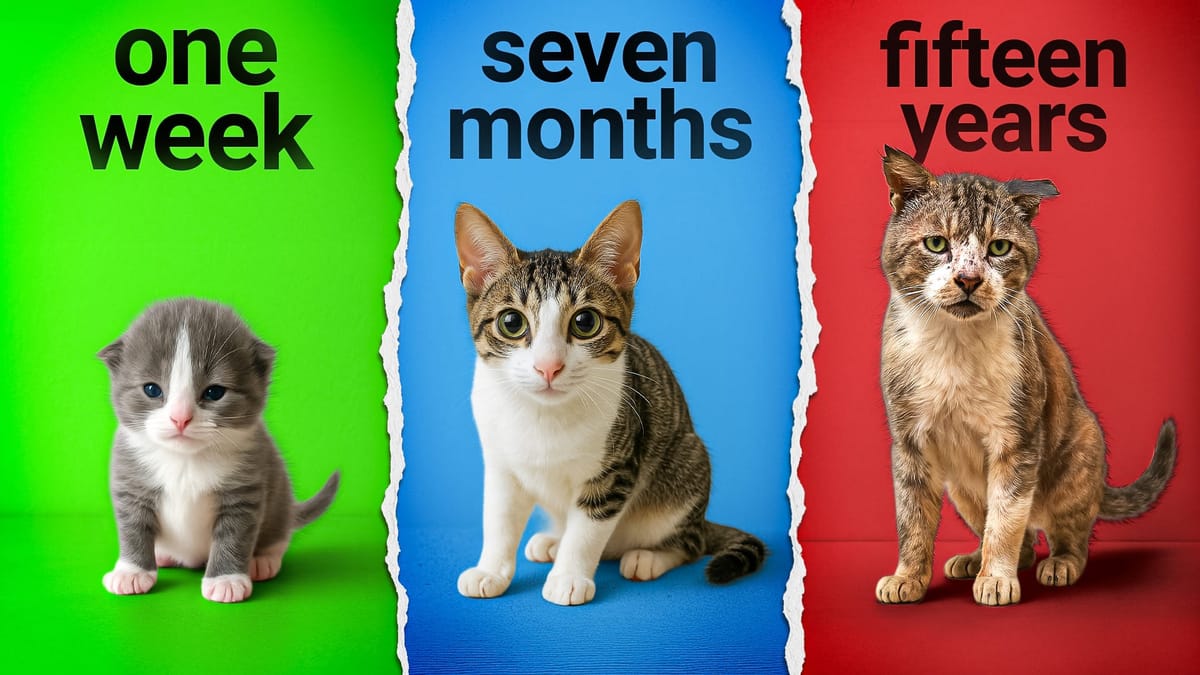
Cats experience six distinct life stages, each with unique physiological and behavioral needs. Unlike the outdated "multiply by seven" formula, cats age rapidly in their first two years (15 human years in year one, 9 more in year two), then approximately 4 human years per year thereafter. Understanding these stages is essential because sexual maturity (4-6 months) precedes social maturity (3-4 years) by nearly three years, creating a developmental gap that explains many behavioral challenges.
Table of Contents
- Why Your Cat's Age Matters More Than You Think
- The Six Life Stages: A Complete Framework
- The Hidden Epidemic: Age-Related Conditions
- When Is a Cat Considered Senior?
- The CatCog Life Stage Protocol
- How Do You Calculate Cat Age in Human Years?
- Key Takeaways
- Key Terms Used
- Frequently Asked Questions
- Sources
Why Your Cat's Age Matters More Than You Think
Cat life stages represent distinct biological phases requiring different care protocols, not just arbitrary age categories. A one-year-old cat has the developmental equivalent of a 15-year-old human, while a two-year-old equals roughly 24 human years. After age two, each cat year adds approximately 4 human years. This non-linear aging pattern means that a 7-year-old cat entering the "mature" stage requires health screening for age-related conditions, regardless of how young they appear.
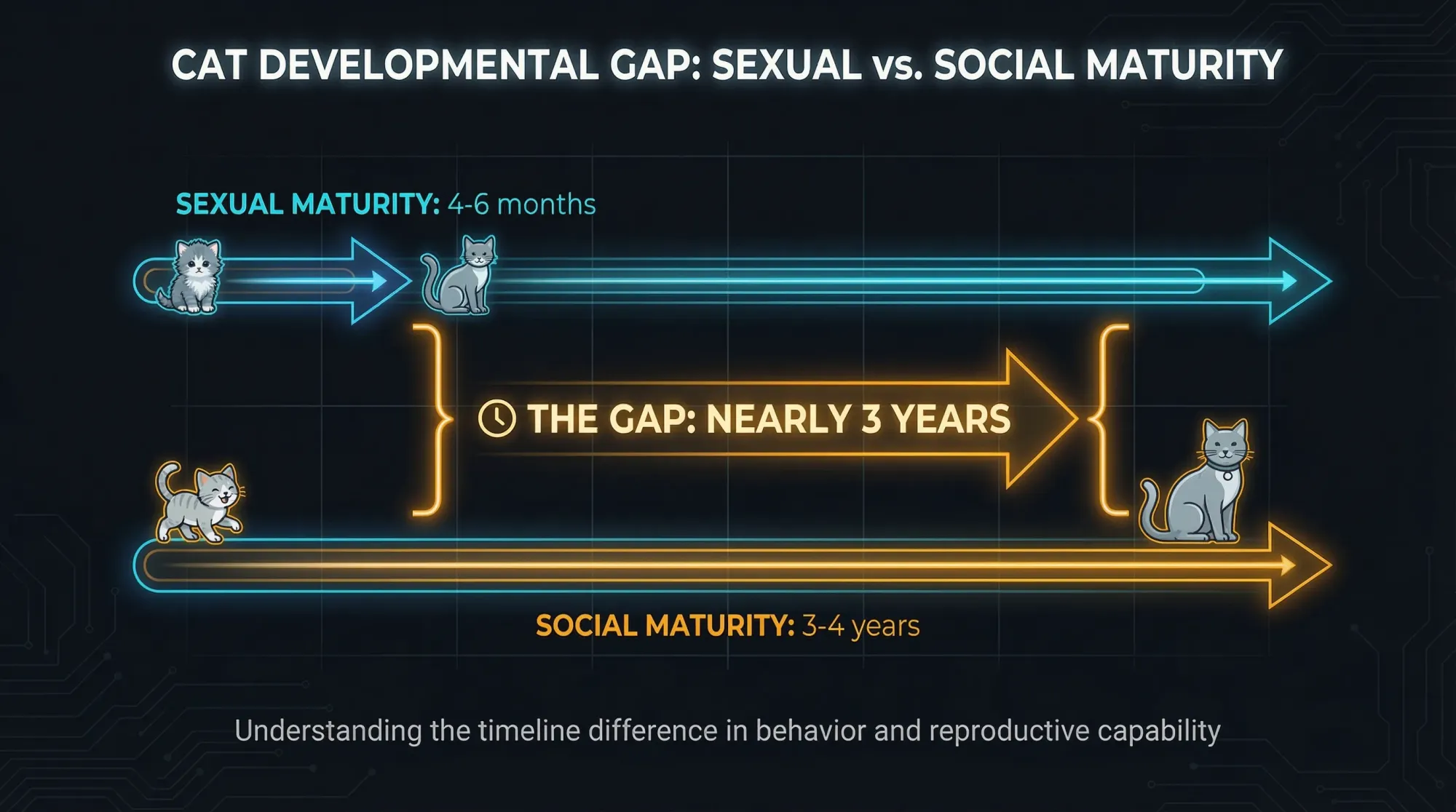
The critical insight most cat owners miss involves the gap between sexual and social maturity. Cats reach sexual maturity at 4-6 months, but according to the AVMA, they do not achieve full social maturity until 3-4 years of age. This nearly three-year developmental gap explains why adolescent cats often exhibit challenging behaviors: they possess adult reproductive systems while running immature social software. Understanding your cat's crepuscular activity patterns and developmental stage helps you provide appropriate care at every age.
The Evidence:
"Cats reach sexual maturity at 4-6 months but do not achieve full social maturity until 3-4 years of age, creating a developmental gap of nearly 3 years."

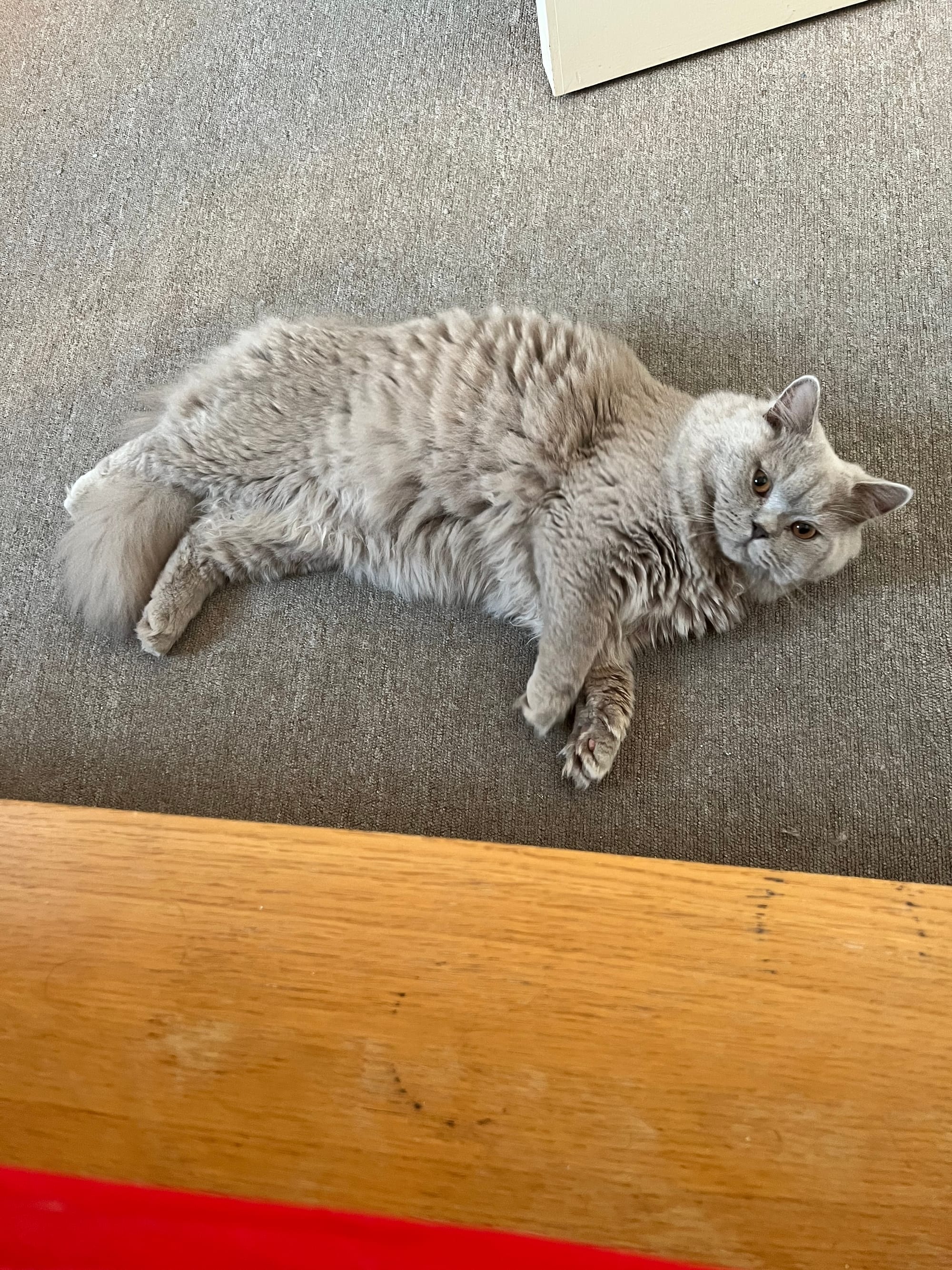

Moon has changed dramatically and he's only 4.5 years old!
The Six Life Stages: A Complete Framework
The veterinary community recognizes six distinct feline life stages, each representing specific physiological and behavioral changes that require adjusted care protocols. The 2021 AAHA/AAFP Feline Life Stage Guidelines simplified the original model specifically because individual cats and body systems age at different rates, making fixed age boundaries less important than functional assessment.

Stage 1: Kitten (0-6 Months)
Kitten development represents biological compression, with 15 human years of maturation condensed into 12 months. During this phase, kittens are downloading their entire behavioral operating system at maximum speed. The critical socialization window occurs between 2-7 weeks of age. Research demonstrates that just five minutes of daily handling before seven weeks creates lifelong socialization benefits. Missing this window means working against hardwired neophobia responses throughout the cat's life.
Kittens require three meals daily until six months old, then transition to two meals daily until one year. Sleep needs are extensive, with kittens sleeping 16-20 hours daily to support rapid neurological development.
Stage 2: Junior (7 Months - 2 Years)
Junior cats experience developmental deceleration after the rapid kitten phase. They have achieved sexual maturity but remain socially immature. Social play peaks at approximately 12 weeks, then begins shifting toward adult territorial behaviors. Junior cats are not misbehaving when they test boundaries; they are practicing adult cat behaviors. The predatory sequence remains strong during this stage, requiring adequate play outlets.
The Evidence:
"Neutered male cats live a median of 9.8 years compared to 3.7 years for intact males, demonstrating that neutering more than doubles feline lifespan."
The neutering decision during this stage has significant lifespan implications. A UC Davis necropsy study tracking 3,108 cats over 30 years found that neutered male cats live a median of 9.8 years compared to 3.7 years for intact males. For females, spayed cats live 10.5 years median versus 4.7 years for intact females. The difference between reaching senior status and losing a cat in their prime often comes down to this single intervention.
Stage 3: Prime (3-6 Years)
Prime-age cats have finally achieved full social maturity and enter maintenance mode. Weight should remain stable, activity levels become consistent, and this phase represents the annual veterinary examination baseline. The behavioral challenges of adolescence resolve as the cat's social software catches up to their physical development. During this stage, cats often display secure attachment patterns with their owners.
Stage 4: Mature (7-10 Years)
The mature life stage marks the beginning of invisible decline. As Dr. Carlo Siracusa of Penn Vet explains, "Even if your cat still looks great, aging processes are changing who they are and the way in which they interact with their environment and with you." This insight underscores why understanding life stages extends beyond knowing a cat's chronological age. The mature stage demands recognition of changes happening beneath the surface.
Veterinary recommendations shifted over recent decades. Cats were previously considered seniors at 8 years; today the threshold is 12-14 years, reflecting improved nutrition, indoor living, and veterinary advances. However, the mature stage (7-10 years) represents the optimal intervention window for preventive care. For more guidance on providing the best care for your cat at every life stage, see our comprehensive cat care guide.
The Hidden Epidemic: Age-Related Conditions
The prevalence of age-related conditions in mature and senior cats is far higher than most owners realize. Osteoarthritis affects more than 90% of cats aged 12 years and older, making joint disease nearly universal in geriatric felines. Yet cats are experts at hiding illness until conditions become advanced. A twelve-year-old cat likely experiences joint pain that remains invisible because cats are genetically programmed to conceal weakness from predators. This behavior stems from their evolutionary history as solitary predators.
The Evidence:
"Osteoarthritis affects more than 90% of cats aged 12 years and older, making joint disease nearly universal in geriatric felines."
When Is a Cat Considered Senior?
Senior cats require intensified monitoring and environmental accommodation. The cognitive changes at this stage are invisible until they become obvious problems.
The Evidence:
"Cognitive dysfunction syndrome affects 28% of cats aged 11-14 years and over 50% of cats aged 15 years and older."
Cognitive Dysfunction Syndrome (CDS) affects 28% of cats aged 11-14 years and over 50% of cats aged 15 years and older. This is not a rare condition; it affects every other super-senior cat. CDS shares similarities with human Alzheimer's disease, characterized by disorientation, altered sleep patterns, and behavioral changes.
The 2025 research on super-senior cats reveals sobering welfare statistics: 51% show frailty indicators, 47% show pain-related indicators, and 68% show diminished affiliative behavior with caregivers. These cats are not being distant; they are managing decline the only way cats know how: silently.
| Age Group | Cognitive Dysfunction Rate | Frailty Indicators | Pain Indicators |
|---|---|---|---|
| 11-14 years (Senior) | 28% | Not specified | Not specified |
| 15+ years (Super-Senior) | 50%+ | 51% | 47% |
The CatCog Life Stage Protocol: Actionable Care at Every Phase
Understanding life stages becomes valuable when translated into specific care adjustments. The transition from mature (7-10 years) to senior (11+ years) represents the most critical intervention window.
Three Essential Changes at the Mature Stage:
| Change | Action | Benefit |
|---|---|---|
| Increase Veterinary Visits | Bi-annual examinations for cats 7+ | Blood panels catch kidney decline, thyroid issues, and early diabetes before symptoms appear |
| Modify the Environment | Low-entry litter boxes, ramps to elevated spots, heated beds | Addresses arthritis-related mobility changes before pain becomes visible |
| Document Behavioral Baselines | Record normal behavior patterns | Enables early detection of cognitive changes |
The VISHDAAL acronym captures key warning signs: increased Vocalization, altered Interaction, Sleep-wake cycle changes, House-soiling, Disorientation, Activity changes, Anxiety, and Learning/memory deficits.
How Do You Calculate Cat Age in Human Years?
The Evidence:
"The first year of a cat's life equals approximately 15 human years, the second year adds 9 more years, and each subsequent year equals approximately 4 human years."
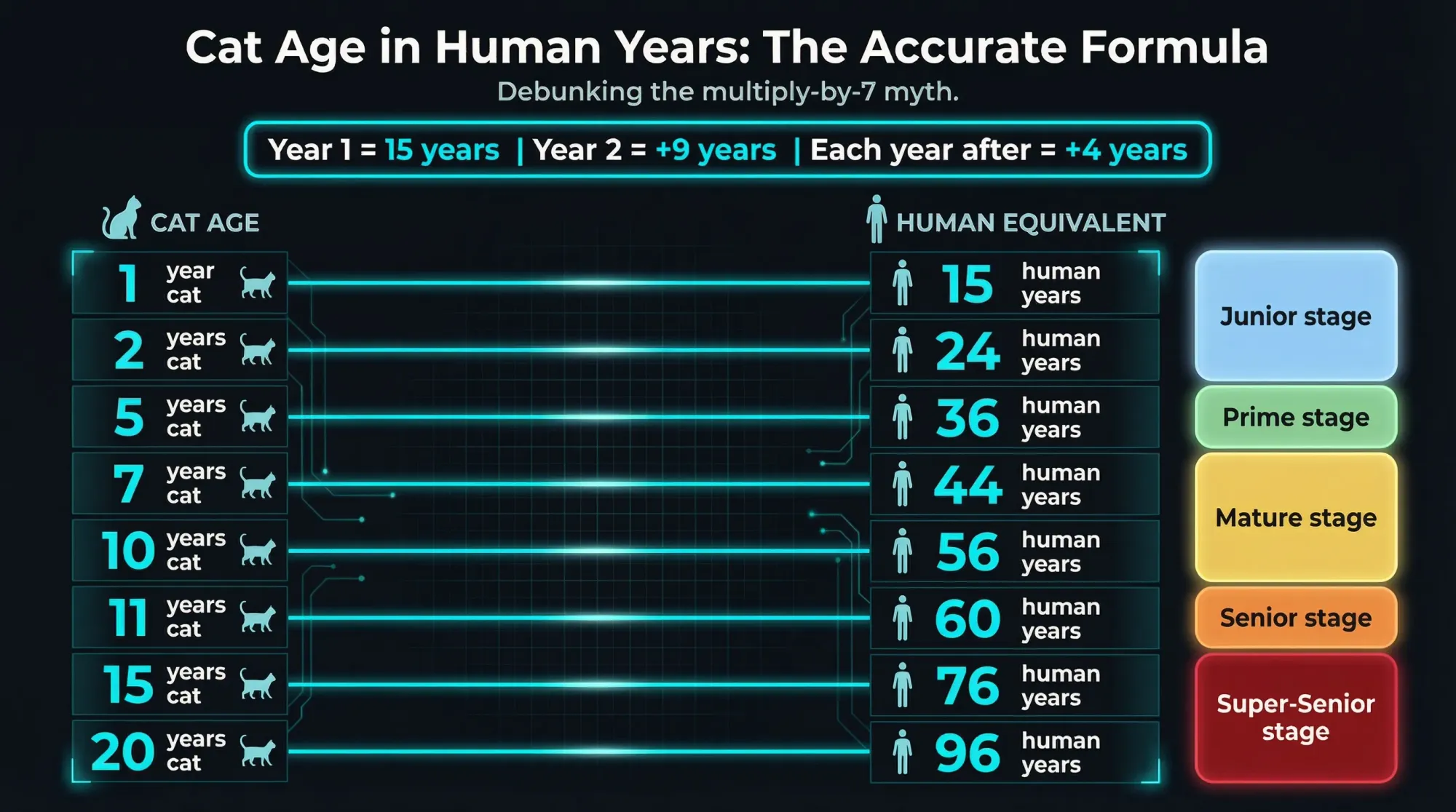
The outdated "multiply by seven" formula fails to capture feline developmental patterns. International Cat Care provides the accurate conversion: a cat's first year equals approximately 15 human years, the second year adds 9 more years (reaching 24 human years total), and each subsequent year equals approximately 4 human years. A 10-year-old cat equals roughly 56 human years. A 15-year-old cat equals approximately 76 human years.
| Cat Age | Human Equivalent | Life Stage |
|---|---|---|
| 1 year | 15 years | Junior |
| 2 years | 24 years | Junior |
| 5 years | 36 years | Prime |
| 7 years | 44 years | Mature |
| 10 years | 56 years | Mature |
| 11 years | 60 years | Senior |
| 15 years | 76 years | Super-Senior |
| 20 years | 96 years | Super-Senior |
This calculation contextualizes life stage transitions. A cat entering the mature stage at seven years (44 human years equivalent) is approaching middle age. Senior status at eleven years (60 human years equivalent) aligns with expectations for increased health monitoring.
Key Takeaways
- Developmental Gap: Cats reach sexual maturity at 4-6 months but do not achieve social maturity until 3-4 years, explaining many adolescent behavioral challenges.
- Non-Linear Aging: The first year equals 15 human years, the second adds 9 more, and subsequent years add approximately 4 each, making the "multiply by seven" formula obsolete.
- Intervention Window: The mature stage (7-10 years) represents the optimal time for preventive care adjustments, not the senior stage (11+ years).
- Hidden Conditions: Osteoarthritis affects 90%+ of cats over 12, and cognitive dysfunction affects 50%+ of cats over 15, yet cats instinctively hide these conditions.
- Actionable Protocol: Bi-annual vet visits after age seven, environmental modifications for joint health, and documented behavioral baselines enable early detection of age-related changes.
Key Terms Used
- Cognitive Dysfunction Syndrome: Age-related cognitive decline in cats similar to human Alzheimer's disease, characterized by disorientation, altered sleep patterns, and behavioral changes.
- Social Maturity: The developmental stage (typically 3-4 years) when cats establish adult social behaviors and territorial defense patterns, distinct from sexual maturity.
- Frailty: A clinical concept from geriatric medicine applied to senior cats, describing a state of increased vulnerability to stressors due to cumulative decline in physiological reserves.
- VISHDAAL: Acronym for cognitive dysfunction signs: Vocalization, altered Interaction, Sleep-wake changes, House-soiling, Disorientation, Activity changes, Anxiety, Learning/memory deficits.
See the full Cat Cognition Glossary ->
Frequently Asked Questions
When should I switch my cat to senior food?
Most veterinarians recommend transitioning to senior-formulated food when cats enter the mature stage (7-10 years), not waiting until the senior stage (11+ years). Senior diets contain increased antioxidants, joint-supporting nutrients, and adjusted protein-to-phosphorus ratios for kidney health. Consult your veterinarian for individual recommendations.
How do I know if my senior cat has cognitive dysfunction syndrome?
Watch for the VISHDAAL signs: increased Vocalization (especially at night), altered Interaction with family, Sleep-wake cycle changes, House-soiling, Disorientation, Activity changes, Anxiety, and Learning/memory deficits. Disorientation appears first in over 40% of cats 17+ years old. Report behavioral changes to your veterinarian, as many conditions are treatable.
Do indoor cats live longer than outdoor cats?
Yes, with important nuance. The UC Davis necropsy study found indoor-only cats had a median lifespan of 9.43 years, indoor-outdoor cats lived 9.82 years, and outdoor-only cats lived 7.25 years. The outdoor-only cats show a significantly shorter lifespan, likely due to trauma and infectious disease exposure. However, the biggest factor is whether cats are spayed or neutered, which more than doubles median lifespan regardless of living situation.
At what age should I start bi-annual vet visits?
Begin bi-annual veterinary visits when your cat reaches the mature stage at seven years old. Blood panels during these visits catch kidney decline, thyroid issues, and early diabetes before symptoms appear.
Why does my two-year-old cat still act like a kitten?
Cats reach sexual maturity at 4-6 months but do not achieve full social maturity until 3-4 years. A two-year-old cat has adult equipment but runs adolescent behavioral software. The boundary testing and excessive play reflect incomplete social development that resolves by age three to four.
How can I tell if my older cat is in pain?
Cats hide pain as a survival instinct. Signs include decreased grooming, reluctance to jump, changes in posture, and reduced interaction. Since over 90% of cats 12+ have osteoarthritis, discuss pain management with your veterinarian.
What is the difference between senior and super-senior cats?
Senior cats are 11-14 years old, while super-senior cats are 15+ years. Super-senior cats show higher rates of frailty (51%), pain indicators (47%), and diminished social behavior (68%). They require adapted environments and increased veterinary surveillance.
Is the "multiply cat age by seven" formula accurate?
No. This outdated formula does not account for cats' rapid early development. The accurate conversion: year one equals 15 human years, year two adds 9 more (24 total), and each subsequent year adds approximately 4 human years. A seven-year-old cat equals roughly 44 human years, not 49.
Sources
- 2021 AAHA/AAFP Feline Life Stage Guidelines - AAHA/AAFP Task Force (PubMed)
- Cognitive Dysfunction in Older Cats - Sordo et al., 2021, Veterinary Record (DOI)
- UC Davis Necropsy Study on Feline Lifespan - UC Davis School of Veterinary Medicine, 2022 (UC Davis)
- Cat Age in Human Years - International Cat Care (International Cat Care)
- Special Needs of the Senior Cat - Cornell Feline Health Center (Cornell)
- Dr. Carlo Siracusa - Animal Behavior Service - University of Pennsylvania School of Veterinary Medicine (Penn Vet)
- Mental Decline in Aging Cats - Morris Animal Foundation (Morris Animal Foundation)
- Indoor Pet Initiative - Ohio State University (OSU Indoor Pet Initiative)