Why Cats Hate Your Music: The Science of Feline Hearing
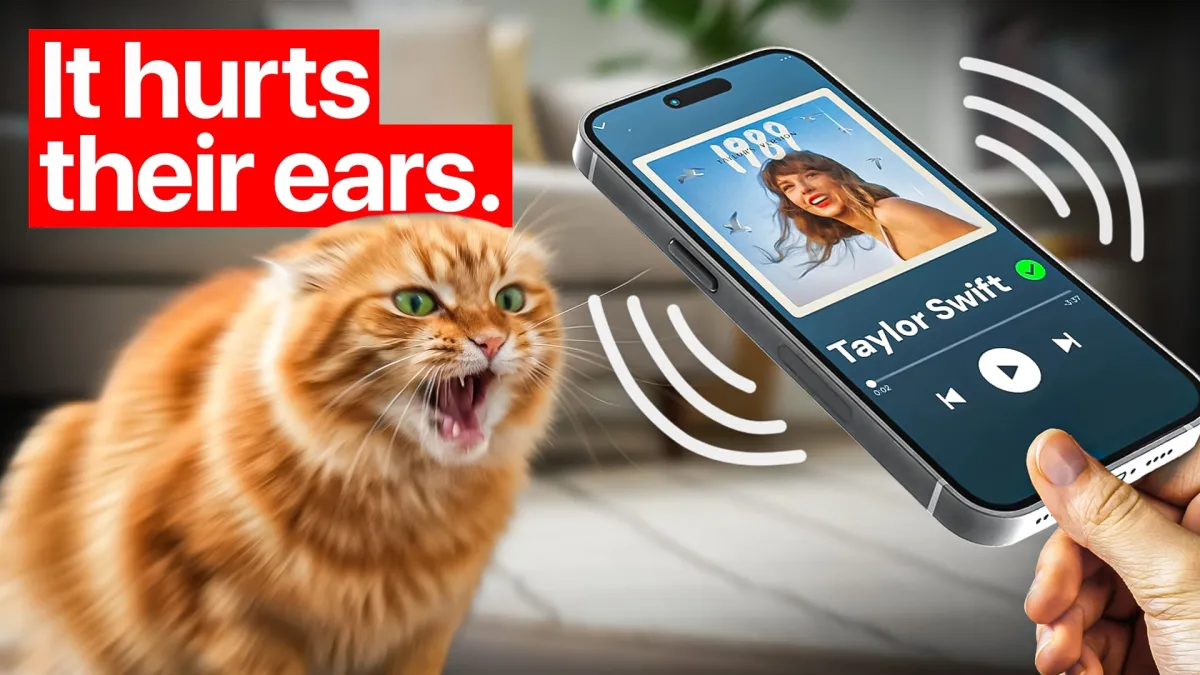
Cats are indifferent to human music because the frequencies and tempos don't match their biology. A 2015 study proved cats prefer species-specific music designed around purring frequencies and feline vocal ranges - not Taylor Swift.

💡 Quick Answer: Do cats like music?
Cats are biologically indifferent or averse to human music. Cats do NOT prefer human music of any genre - classical, pop, jazz, or metal are equally meaningless to them. A 2015 study published in Applied Animal Behaviour Science found that cats prefer species-specific music composed at frequencies matching feline vocalizations (300-3,000 Hz) and tempos mimicking purring, not human heartbeats. To your cat, Taylor Swift sounds as meaningless as slowed-down whale song sounds to you.
Table of Contents
- Do Cats Like Music?
- How Cats Hear Differently Than Humans
- Why Human Music Fails for Cats
- What Is Species-Specific Cat Music?
- What Music Actually Calms Cats?
- Key Terms Used
- Key Takeaways
- Frequently Asked Questions
Do Cats Like Music?
The short answer: not your music.
When you play your favorite playlist, your cat probably leaves the room, stares with profound indifference, or flattens their ears in discomfort. This isn't your cat being difficult. This is biology-driven behavior.
Human music is a species-specific experience. Composers build songs around the human heartbeat (60-100 BPM), human vocal ranges (85-255 Hz), and emotional associations formed through cultural exposure. A song that moves you to tears activates neural pathways shaped by decades of human-specific sound patterns.
Your cat has none of these associations. To them, your music is noise optimised for the wrong species.
💬 CatCog Soundbite:
"Human music is composed for human biology. Playing Taylor Swift for your cat is like playing whale song for a human - technically audible, but emotionally meaningless."

How Cats Hear Differently Than Humans
Cat ears are precision hunting instruments, not just decorative triangles.
The mechanics:
- Cats can rotate each ear independently up to 180 degrees
- The ear canal shape amplifies sounds before reaching the eardrum
- The feline middle ear has two chambers (unlike most mammals), expanding frequency range
The frequency comparison:
| Species | Low Range | High Range | Optimal Sensitivity |
|---|---|---|---|
| Humans | 20 Hz | 20,000 Hz | 1,000-4,000 Hz |
| Cats | 48 Hz | 85,000 Hz | 500-32,000 Hz |
| Dogs | 40 Hz | 60,000 Hz | 4,000-8,000 Hz |
What this reveals:
Cats hear ultrasonic frequencies completely silent to humans. The upper limit of human hearing (20,000 Hz) is barely the halfway point of a cat's range. This evolved because mice communicate ultrasonically - cats developed hearing where their prey "talks." This ultrasonic sensitivity is part of why cats are crepuscular hunters, active at dawn and dusk when mice are most active.
💬 CatCog Soundbite:
"Cats can hear frequencies up to 85,000 Hz - more than four times higher than humans. They evolved to hear where mice communicate."
Why Human Music Fails for Cats
Human music follows biological rules - but they're human biological rules.
| Musical Element | Human Basis | Cat Equivalent |
|---|---|---|
| Tempo | Resting heart rate: 60-100 BPM | Resting heart rate: 140-220 BPM |
| Vocal range | Human speech: 85-255 Hz | Cat vocalizations: 300-3,000 Hz |
| Emotional triggers | Crying, laughter, speech inflection | Purring (25-30 Hz), suckling sounds, prey calls |
The tempo problem: A song at 80 BPM feels restful to humans because it matches our resting heart rate. To a cat with a resting heart rate of 140-220 BPM, this tempo is unnaturally slow - like listening to music at half speed.
The frequency problem: Taylor Swift's vocal range sits primarily between 200-1,000 Hz. This falls below where cats are most sensitive (500-32,000 Hz) and outside typical feline vocalisations. Her voice registers, but it carries no biological meaning to a cat's brain.
The association problem: Minor keys sound "sad" because humans learned that association. Cats have no exposure to human musical conventions. A chord progression that makes you weep is just a sequence of vibrations to your cat.
⚠️ The CatCog Reality Check: This isn't about "good" or "bad" music. Beethoven is equally meaningless to cats. Classical, jazz, metal, pop - to a cat, it all falls into "sounds that are not evolutionarily relevant."
What Is Species-Specific Cat Music?
David Teie, a cellist with the National Symphony Orchestra, asked a simple question: What would music designed for cats actually sound like?
In collaboration with Charles Snowdon at the University of Wisconsin, Teie tested the species-specific music hypothesis.
The 2015 study methodology:
- 47 domestic cats tested
- Two conditions: human classical music (Bach, Fauré) vs. cat-specific compositions
- Measured: approaching speakers, rubbing behavior, head orientation, relaxation signs
The results:
- Cats showed significantly more positive responses to species-specific music
- Increased approach behavior, purring, and rubbing against speakers
- Human classical music produced indifference or mild avoidance
- Younger and older cats were more responsive than middle-aged cats
What made Teie's music "cat music":
| Element | How It Works |
|---|---|
| Frequency range | Composed in 300-3,000 Hz (feline vocal range) |
| Pitch | One octave higher than human voices |
| Tempo | Based on purring and suckling rhythms, not heartbeat |
| Sound patterns | Sliding pitches mimicking cat vocalizations |
💬 CatCog Soundbite:
"Cats showed significant preference for music composed in their vocal frequency range with tempos matching purring - not human heartbeats."
What Music Actually Calms Cats?
Based on the research, here's what works:
Sounds That Help
| Sound Type | Why It Works |
|---|---|
| Species-specific cat music | Matches feline biology (David Teie's "Music for Cats") |
| Purr recordings | 25-30 Hz frequency induces relaxation |
| Bird sounds (moderate volume) | Stimulates hunting instincts safely |
| Silence | Often underrated - simply turning off human audio |
Sounds That Stress
| Sound Type | Why It Stresses Cats |
|---|---|
| Loud bass-heavy music | Vibrations trigger thigmotaxis (seeking enclosed spaces) |
| Sudden volume changes | Triggers startle reflex, can cause overstimulation |
| Unpredictable dynamics | Action movies, dramatic orchestral pieces |
| Talk radio/podcasts | Unfamiliar human voices are alerting |
The veterinary clinic study: A 2020 study in the Journal of Feline Medicine and Surgery found that playing species-specific music in a veterinary clinic reduced stress scores in cats. Cats exposed to cat-appropriate music showed lower stress indicators and were easier to handle during examinations.
🧪 Adam's Lab Note: Moon completely ignores human music but visibly relaxes when I play bird videos on the TV - ears forward, watching intently. The prey sounds engage him in a way no Spotify playlist ever has. He also loves David Tie's Music for Cats album which I'd recommend!
Key Terms Used
- Crepuscular: Activity pattern where cats are most active at dawn and dusk, inherited from ancestors who hunted when prey was vulnerable.
- Overstimulation: A stress response triggered when sensory input exceeds a cat's threshold, causing sudden behavioral changes.
- Purring: A low-frequency vocalization (25-30 Hz) that serves self-soothing, bonding, and potentially healing functions.
- Thigmotaxis: The instinct to seek contact with walls and enclosed spaces when feeling threatened or stressed.
See the full Cat Cog Glossary →
Key Takeaways
🔑 Key Takeaways
Cats hear differently: Range of 48 Hz to 85,000 Hz with optimal sensitivity at 500-32,000 Hz - far above where human music is composed.Human music is biologically mismatched: Our music (60-100 BPM, 85-255 Hz vocal range) is built on human biology, not feline biology.Species-specific music works: The 2015 Teie study proved cats prefer music in their vocal range (300-3,000 Hz) with purring-based tempos.Your playlist isn't personal: Cats don't hate Taylor Swift specifically - they're equally indifferent to Beethoven. The issue is species, not taste.Silence is often best: For stressed cats, turning off human audio may be more effective than finding the "right" music.
Frequently Asked Questions
Do cats like music?
Cats are generally indifferent or averse to human music. A 2015 study from the University of Wisconsin found cats respond positively only to species-specific music designed to match their hearing range (48 Hz to 85,000 Hz) and biological rhythms like purring, not human heartbeats or vocal ranges.
Why does my cat hate Taylor Swift?
Human pop music is composed at frequencies and tempos optimized for human biology. Taylor Swift's vocal range (200-1,000 Hz) and typical song tempos (70-120 BPM) fall outside feline optimal hearing and biological rhythms. To a cat, pop music sounds as strange as slowed-down whale song sounds to humans.
What music calms a stressed cat?
Research shows species-specific music calms cats effectively. This music incorporates frequencies in the feline vocal range (300-3,000 Hz) and tempos based on purring rather than human heartbeats. Commercial examples include "Music for Cats" by David Teie. Alternatively, simple silence often works better than any human music.
Who is David Teie?
David Teie is a cellist with the National Symphony Orchestra who collaborated with University of Wisconsin researchers to study species-specific music. His 2015 study published in Applied Animal Behaviour Science demonstrated that cats show significantly more positive responses to music designed for their biology than to human classical music.
Can loud music hurt my cat's ears?
Yes. Cats hear frequencies up to 85,000 Hz and have highly sensitive ears evolved for detecting prey. Loud music, especially with heavy bass or sudden volume changes, can cause stress and discomfort. Signs include flattened ears, leaving the room, or agitation.
Sources
- Snowdon, C.T., Teie, D., & Savage, M. (2015). Cats Prefer Species-Appropriate Music. Applied Animal Behaviour Science, 166, 106-111. https://doi.org/10.1016/j.applanim.2015.02.012
- Heffner, H.E. (1985). Hearing range of the domestic cat. Hearing Research, 19(1), 85-88. https://pubmed.ncbi.nlm.nih.gov/4066516/
- Hampton, A., Ford, A., Cox, R.E., Liu, C., & Koh, R. (2020). Effects of music on behavior and physiological stress response of domestic cats in a veterinary clinic. Journal of Feline Medicine and Surgery, 22(2), 122-128. https://doi.org/10.1177/1098612X19828131
- Music for Cats - David Teie. https://www.musicforcats.com/