Why Is My Cat Breathing Fast? Normal Rates and Warning Signs
A healthy cat at rest breathes 15-30 times per minute. Rapid breathing above 30 bpm during sleep may indicate heart disease, asthma, or other conditions requiring veterinary attention.

Table of Contents
- Quick Answer
- What Is a Normal Breathing Rate for Cats?
- Why Do Cats Hide Respiratory Distress?
- Why Is My Cat Breathing Fast While Sleeping?
- Why Is My Cat Breathing Fast But Acting Normal?
- The 30-Second Breathing Check: How to Count Your Cat's Respiratory Rate
- The CatCog Respiratory Zone System
- What Causes Rapid Breathing in Cats?
- Do Cats Pant Like Dogs?
- When Is Fast Breathing a Medical Emergency?
- How to Film Your Cat's Breathing for the Vet
- Special Considerations: Brachycephalic Breeds
- Age Considerations: Kittens and Senior Cats
- Key Terms Used
- Frequently Asked Questions
- Key Takeaways
- Sources
A healthy cat at rest breathes 15-30 times per minute, with sleeping cats averaging 20-21 breaths per minute. Rapid breathing in cats (tachypnea) becomes concerning when resting rates consistently exceed 30 breaths per minute. Unlike dogs, cats do not pant to cool down, so open-mouth breathing is almost always abnormal. The three most common causes of feline respiratory distress are asthma, heart failure, and pleural effusion. Because cats evolved to hide illness, visible breathing changes often indicate advanced disease requiring immediate veterinary attention.
What Is a Normal Breathing Rate for Cats?
A normal resting respiratory rate for adult cats falls between 15-30 breaths per minute, with sleeping cats typically breathing 20-21 times per minute according to multiple peer-reviewed studies. This range represents the veterinary consensus established across major institutions including the Cornell Feline Health Center, VCA Animal Hospitals, Tufts University, and the Cardiac Education Group's 2024 guidelines. Cats breathe approximately twice as fast as humans at rest, reflecting their higher metabolic rate as smaller obligate carnivores.
The critical threshold of 30 breaths per minute during sleep specifically derives from cardiac research. A 2013 study published in the Journal of Feline Medicine and Surgery found that healthy cats with normal echocardiograms consistently maintained sleeping respiratory rates below 30 breaths per minute. Sleeping respiratory rates consistently above this threshold may indicate early cardiac involvement requiring echocardiographic evaluation.
The Evidence:
"Within-cat mean sleeping respiratory rate in echocardiographically normal cats was consistently below 30 breaths per minute, with the median approximating 21 breaths per minute."
Understanding baseline values matters because your individual cat may naturally breathe at the lower or higher end of normal. Some cats rest at 12 breaths per minute while others hover around 28, and both patterns can be completely healthy. The key is knowing your cat's personal baseline and recognizing when deviation occurs.
| Breathing Context | Normal Range | Concern Threshold |
|---|---|---|
| Resting (awake, calm) | 15-30 bpm | >30 bpm consistently |
| Sleeping | 9-28 bpm (median 20-21) | >30 bpm consistently |
| After play/exercise | Temporarily elevated | >30 bpm after 5+ minutes rest |
| In veterinary clinic | 28-176 bpm (stress-elevated) | Use home baseline for comparison |
Why Do Cats Hide Respiratory Distress?
Cats evolved to mask respiratory symptoms because visible weakness attracted predators in ancestral environments. As the Cornell Feline Health Center explains, "Cats have become very, very good at hiding any signs of respiratory distress." Cats can handle severely reduced lung functionality and still appear normal. This survival mechanism that once protected wild cats now works against domestic cats and caregivers seeking to monitor health.
The evolutionary mismatch creates a dangerous blind spot. Cats that displayed obvious breathing difficulty in the wild were quickly eliminated from the gene pool. Modern cats inherit this same instinct to conceal vulnerability, meaning by the time breathing changes become visible to owners, the underlying condition may already be advanced and potentially life-threatening.
The Evidence:
"Any cat that is showing signs of breathing difficulty, whatever the cause, is at high risk of dying if the respiratory problem is not treated promptly."
This hiding behavior explains why proactive monitoring matters more for cats than reactive observation. A cat breathing fast while acting otherwise normal is not necessarily a cat that is fine. Fast breathing with otherwise normal behavior may indicate early-stage respiratory or cardiac disease that has not yet progressed to cause visible distress. The absence of other symptoms does not rule out serious underlying conditions. Understanding how to read your cat's body language can help you notice subtle changes before they become emergencies.
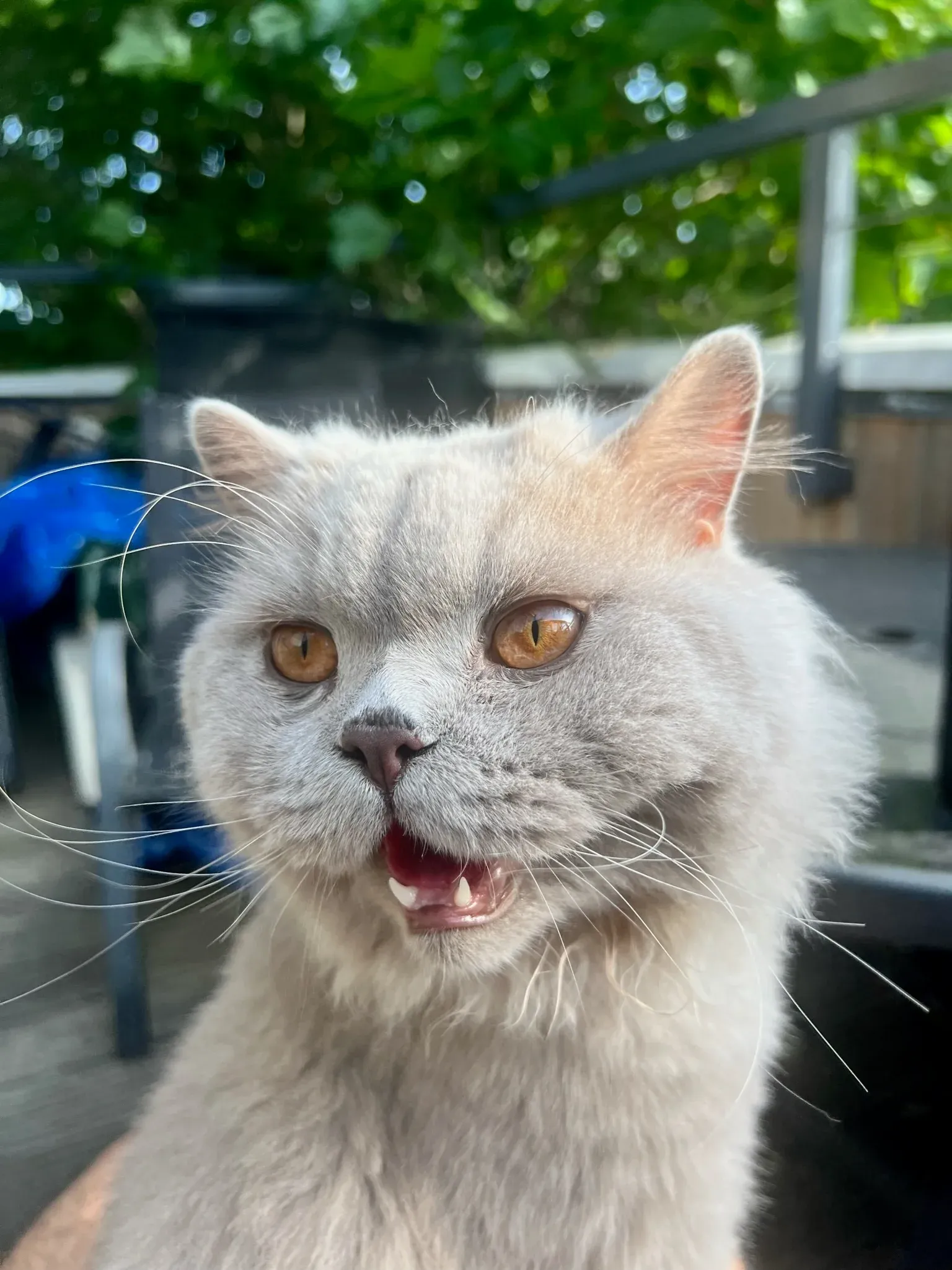
Moon's only ever shown fast breathing during one particularly hot summer a few years ago, he must have been aged around 2 years old. He was panting as it was so hot outside so I had to do some DIY cooling. The perils of extremely hot weather in a country where air conditioning is not commonplace. Below is a picture of him at the time.
Why Is My Cat Breathing Fast While Sleeping?
Sleeping cats breathing faster than 30 breaths per minute consistently across multiple observations warrant veterinary evaluation, though occasional elevations above this threshold occur in approximately 14% of healthy cats during brief arousal periods or other transient factors. The distinction lies between temporary variation and persistent patterns. A single elevated reading during an active dream differs from consistently elevated readings across multiple sleep sessions.
Research published in the Journal of Feline Medicine and Surgery established that even cats with well-controlled heart failure maintain sleeping respiratory rates below 30 breaths per minute. If a healthy cat should breathe below this threshold, and a cat with controlled heart disease can maintain this rate, then persistent elevation in an apparently healthy cat suggests undiagnosed underlying disease worth investigating.
The Evidence:
"Most cats with congestive heart failure that is medically well-controlled and stable have sleeping and resting respiratory rate means below 30 breaths per minute at home."
Factors that can temporarily increase sleeping respiratory rate include recent physical activity, warm ambient temperature, active dreams (with visible twitching), pain, and stress from environmental changes. These physiological causes typically resolve within minutes to hours. Pathological causes including heart disease, asthma, pleural effusion, and respiratory infections cause persistent elevation that does not resolve spontaneously. If your cat sleeps with you, you have regular opportunities to observe their resting respiratory patterns.
Why Is My Cat Breathing Fast But Acting Normal?
A cat breathing fast but behaving normally represents one of the most deceptive presentations of feline illness precisely because cats conceal respiratory compromise until advanced stages. This pattern actually warrants closer monitoring and veterinary consultation, not reassurance. The evolutionary programming that helped wild cats survive now masks disease progression in domestic cats.
The three most common causes of respiratory distress in cats, according to the Cornell Feline Health Center, are asthma (and acute exacerbation), heart failure (causing fluid buildup in lungs), and pleural effusion (fluid collection around lungs). All three conditions can present initially with elevated respiratory rate as the only visible sign before progressing to more obvious symptoms.
Approximately 1-5% of domestic cats worldwide suffer from asthma, affecting an estimated 800,000 cats in the United States alone. Asthmatic cats may maintain normal activity levels between episodes while showing subtle signs like occasional rapid breathing, periodic coughing, or mild wheezing that owners attribute to hairballs or minor respiratory irritation. This is one of the common mistakes cat owners make when assessing their pet's health.
This article provides general educational information, not veterinary advice. Respiratory distress can be life-threatening in cats, and conditions can deteriorate rapidly. When in doubt, err on the side of seeking professional evaluation. Home monitoring supplements but never replaces veterinary care. If your cat shows emergency signs (open-mouth breathing, blue gums, visible distress), seek immediate veterinary attention.
The 30-Second Breathing Check: How to Count Your Cat's Respiratory Rate
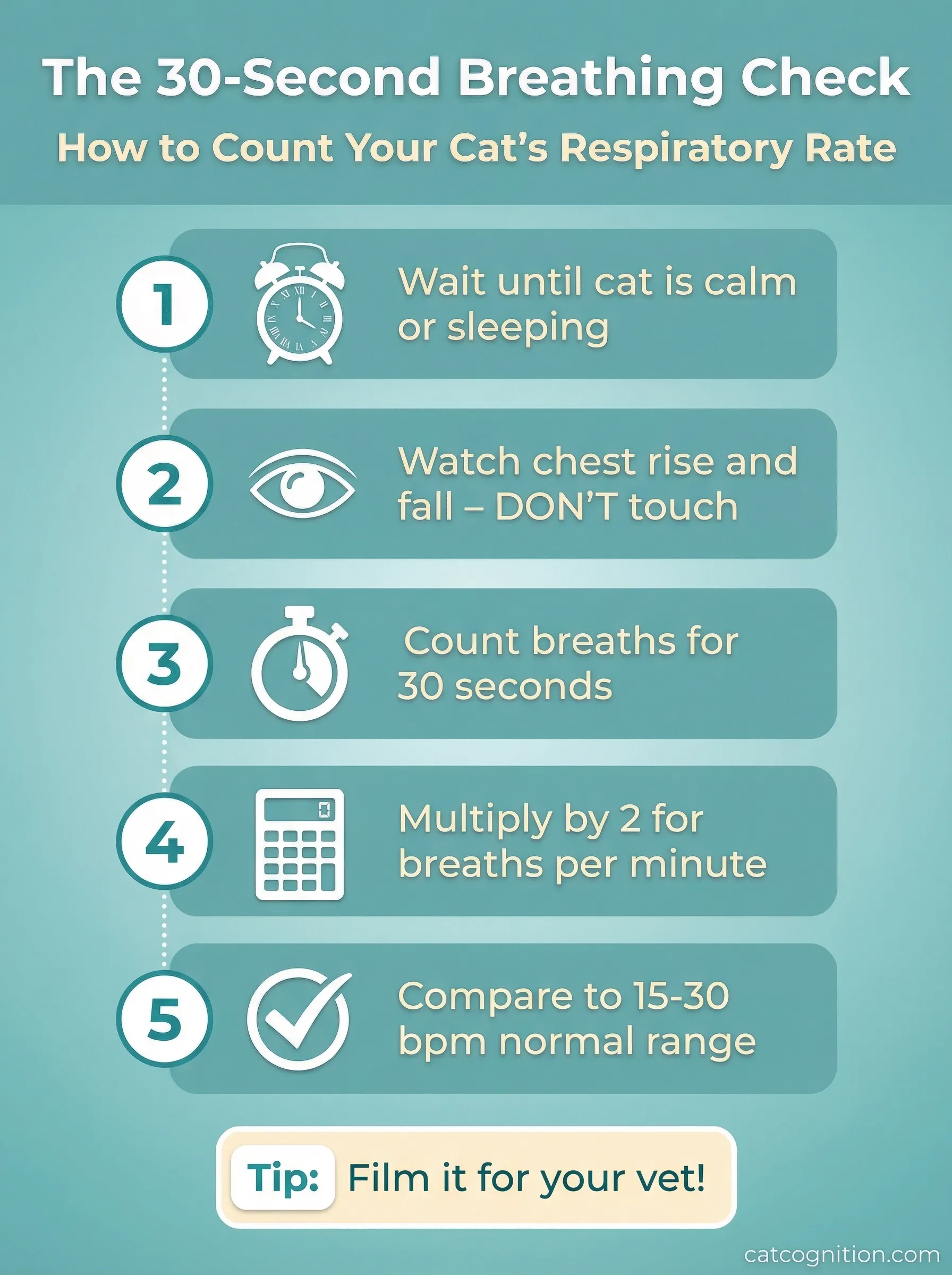
The 30-Second Breathing Check provides a standardized protocol for monitoring your cat's respiratory rate at home, where stress does not artificially inflate the measurement. Research shows that respiratory rates measured in veterinary clinics average 64 breaths per minute compared to 27 breaths per minute at home for the same healthy cats, a 2.4-fold stress-induced elevation that can falsely suggest disease.
Step 1: Choose the Right Moment
Wait until your cat is calm and relaxed, ideally sleeping or resting peacefully. Do not attempt measurement immediately after play, eating, or any activity. The perfect moment is when your cat is dozing on the sofa or bed, breathing regularly without purring.
Step 2: Observe Without Touching
Watch your cat's chest or abdomen rise and fall from a distance. Veterinary cardiologists advise against touching your cat while counting, as physical contact will cause them to breathe faster. Each complete rise and fall equals one breath.
Step 3: Count for 30 Seconds and Multiply
Count the number of complete breath cycles (one inhalation plus one exhalation) for 30 seconds, then multiply by 2 to get breaths per minute. Alternatively, count for a full 60 seconds for greater accuracy.
Step 4: Establish Your Cat's Baseline
Repeat this measurement on 3-5 different occasions over several days to establish your individual cat's baseline. Most healthy cats will show consistent rates between 15-25 breaths per minute at rest. Document these baseline readings.
Step 5: Compare Against Thresholds
Use the CatCog Respiratory Zone System to interpret your readings relative to your cat's established baseline.
The CatCog Respiratory Zone System
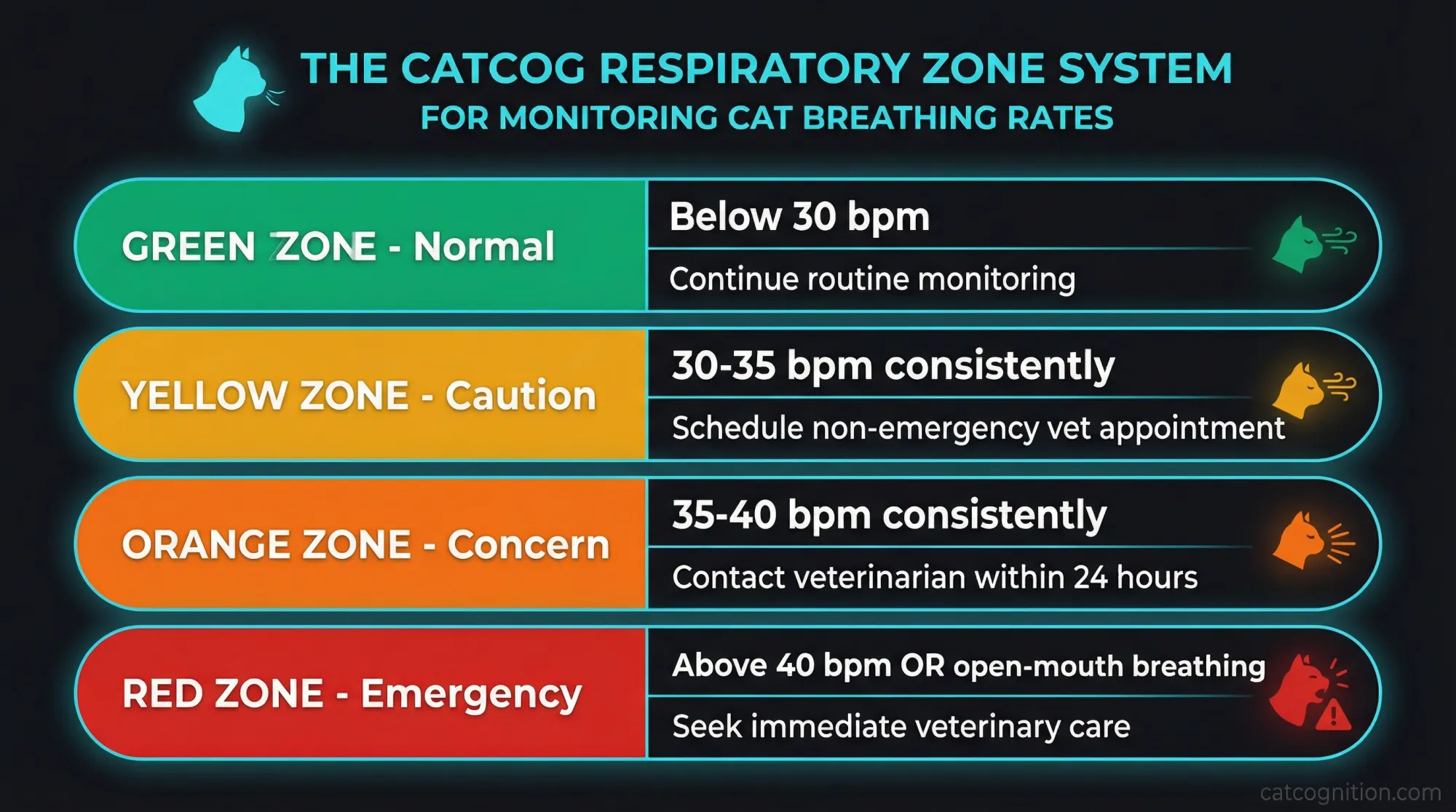
The CatCog Respiratory Zone System provides a color-coded framework for interpreting your cat's breathing rate and determining appropriate action based on clinical thresholds. These evidence-based zones translate complex veterinary research into clear guidance, helping cat owners distinguish between normal variation, early warning signs requiring scheduled veterinary attention, and emergency situations demanding immediate intervention.
| Zone | Rate (Resting/Sleeping) | Action |
|---|---|---|
| Green (Normal) | Below 30 bpm | Continue routine monitoring |
| Yellow (Caution) | 30-35 bpm consistently | Schedule non-emergency vet appointment |
| Orange (Concern) | 35-40 bpm consistently | Contact veterinarian within 24 hours |
| Red (Emergency) | Above 40 bpm OR any open-mouth breathing | Seek immediate veterinary care |
Important Context for Zone Interpretation:
The 30 bpm threshold represents the point where healthy cats should consistently fall below during sleep. A rate of 30-35 bpm does not mean immediate danger but warrants professional evaluation to rule out early-stage disease. The 35 bpm threshold aligns with veterinary guidelines; Tufts University Cummings School recommends that resting respiratory rates consistently above 35 breaths per minute warrant veterinary consultation.
Emergency veterinary guidance from multiple sources identifies rates exceeding 60 breaths per minute as indicating life-threatening respiratory compromise requiring immediate intervention. However, any rate above 40 bpm at rest, particularly if sustained, should prompt same-day veterinary evaluation rather than waiting.
The Evidence:
"Cats' respiratory rates in veterinary clinics average 64 breaths per minute versus 27 breaths per minute at home due to stress-induced elevation."
What Causes Rapid Breathing in Cats?
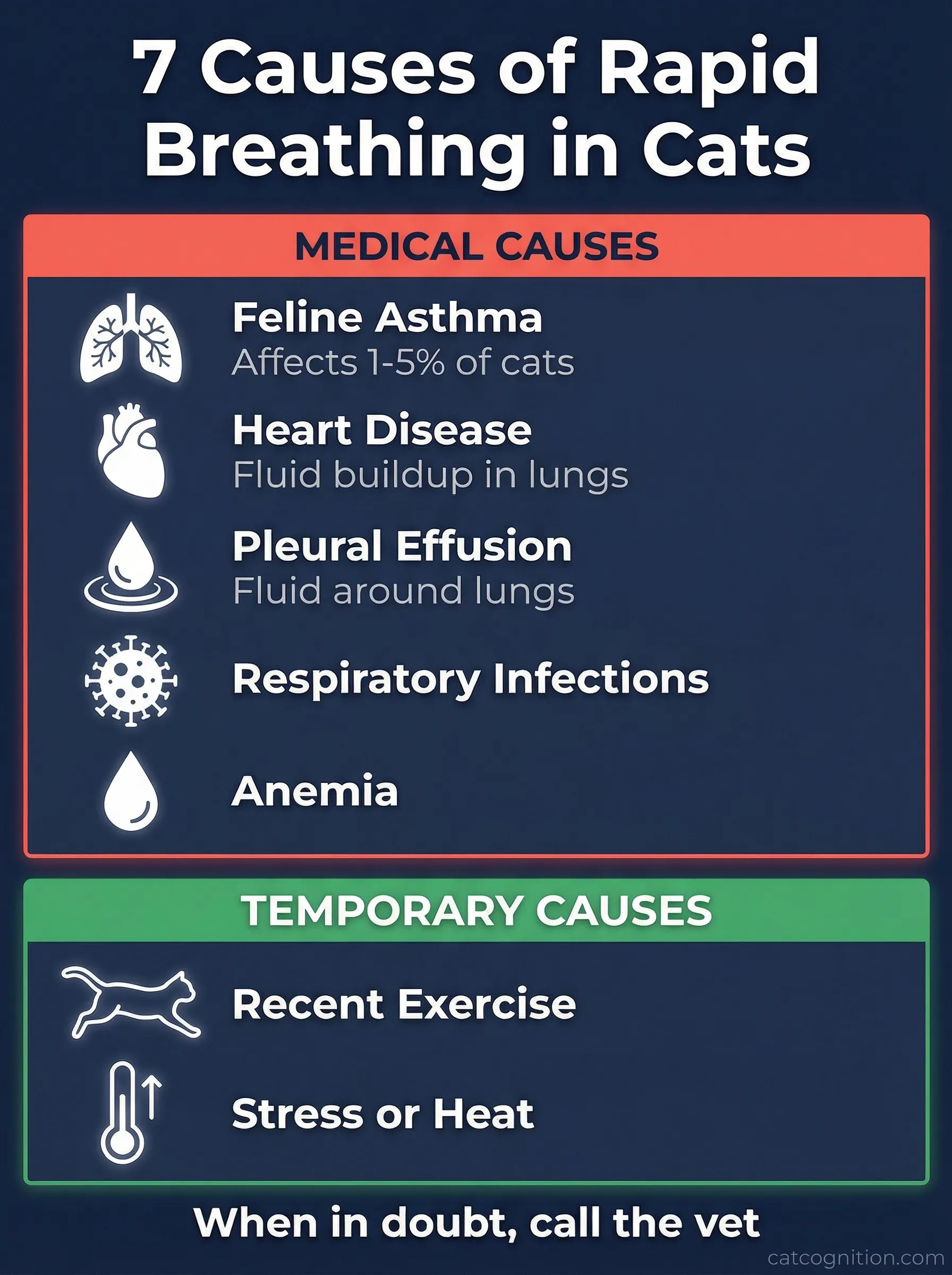
Rapid breathing in cats (tachypnea) results from either physiological causes representing normal responses to temporary conditions, or pathological causes indicating disease states requiring veterinary treatment. Distinguishing between these two categories is essential for determining whether your cat simply needs time to recover and calm down, or whether the elevated respiratory rate signals an underlying medical condition requiring prompt professional intervention.
Physiological Causes (Usually Self-Limiting):
- Recent exercise or vigorous play
- Elevated ambient temperature or heat exposure
- Stress, anxiety, or fear (car rides, vet visits, new environments)
- Pain from injury or recent surgery
- Brief panting after intense exertion (should resolve within 1-2 minutes)
Pathological Causes (Require Veterinary Evaluation):
- Feline Asthma: Affects approximately 1-5% of cats worldwide. Causes airway inflammation and bronchospasm leading to rapid, sometimes labored breathing.
- Heart Disease/Failure: Fluid buildup in or around the lungs from cardiac dysfunction increases respiratory rate as compensation.
- Pleural Effusion: Fluid accumulation in the space surrounding the lungs compresses lung tissue and restricts breathing capacity.
- Respiratory Infections: Bacterial, viral, fungal, or parasitic infections of the lower respiratory tract cause inflammation and breathing difficulty.
- Heartworm-Associated Respiratory Disease (HARD): In heartworm-endemic areas, this condition mimics asthma symptoms and causes respiratory distress.
- Anemia: Reduced oxygen-carrying capacity in the blood triggers faster breathing to compensate for inadequate oxygen delivery.
- Tumors or Masses: Growths in the chest cavity, airways, or lungs can physically obstruct breathing or cause fluid accumulation.
Understanding cat life stages helps contextualize respiratory rate expectations, as senior cats may have different baselines and risks.
Do Cats Pant Like Dogs?
Cats rarely pant to regulate body temperature the way dogs do, making open-mouth breathing in cats almost always abnormal and requiring attention. Dogs commonly pant after exercise, during warm weather, or when excited as a normal thermoregulation mechanism. Cats lack this behavioral adaptation because they evolved different cooling strategies including grooming (saliva evaporation) and seeking shade.
Brief panting in cats may occur immediately after intense play or during extremely stressful situations like car rides, but this should resolve within 1-2 minutes once the cat calms. Any panting lasting beyond a few minutes in cats warrants investigation. Persistent open-mouth breathing indicates respiratory distress and requires emergency veterinary care.
The Evidence:
"Open-mouth breathing in cats is almost always abnormal and requires immediate veterinary attention, unlike dogs who pant normally to cool down."
The distinction matters because owners who have experience with dogs may misinterpret cat panting as normal. A dog panting on a warm day needs water and shade. A cat panting on a warm day may be experiencing heat stroke, a medical emergency. The physiological difference makes panting a more alarming sign in cats than in dogs.
When Is Fast Breathing a Medical Emergency?
Certain respiratory presentations in cats require immediate emergency veterinary care without delay for observation or home monitoring. Unlike routine fast breathing that resolves with rest, the following signs indicate potentially life-threatening respiratory compromise where minutes can determine survival outcomes. Recognizing these emergency triggers enables cat owners to act decisively when intervention is critical.
Seek Emergency Care Immediately If You Observe:
- Open-mouth breathing or panting lasting more than 1-2 minutes after rest
- Resting respiratory rate consistently above 40 breaths per minute
- Gasping, choking, or gagging sounds while breathing
- Blue, gray, or pale gums (cyanosis indicating oxygen deprivation)
- Visible abdominal effort with each breath (abdominal push)
- Extended neck posture while breathing (orthopnea)
- Flared nostrils with each breath
- Respiratory rate exceeding 60 breaths per minute
- Collapse or extreme lethargy combined with breathing changes
- Any respiratory change in a cat with known heart disease
What to Do During a Respiratory Emergency:
Keep your cat calm and avoid handling more than necessary. Stress worsens respiratory distress. Transport to the nearest emergency veterinary hospital immediately. Call ahead if possible so they can prepare for your arrival. Do not attempt home remedies or wait to see if symptoms improve.
How to Film Your Cat's Breathing for the Vet
Filming your cat's breathing at home before veterinary visits provides clinical baseline data impossible to obtain in the stress of a consultation room. Research demonstrates that healthy cats show respiratory rates 2.4 times higher in veterinary clinics than at home, with clinic rates ranging from 28-176 breaths per minute compared to home rates of 16-60 breaths per minute.
Filming Protocol:
- Record when your cat is genuinely relaxed or sleeping (not immediately post-play)
- Capture at least 30-60 seconds of continuous footage
- Ensure the chest or abdomen is clearly visible in frame
- Record in good lighting without flash
- Avoid making sounds or movements that might disturb your cat
- Note the date, time, and any relevant context (post-meal, typical evening rest, etc.)
- Save multiple recordings from different days to show typical patterns
This video evidence transforms subjective descriptions into objective data. Instead of telling your veterinarian "I think my cat is breathing fast," you can show them exactly what you are observing in a non-stress environment where your cat behaves normally. Understanding why your cat watches you may also help you time recordings for when they are most relaxed.
Special Considerations: Brachycephalic Breeds
Brachycephalic (flat-faced) cat breeds including Persians, Himalayans, Exotic Shorthairs, and British Shorthairs may have different respiratory baselines due to structural airway differences. These breeds often experience stenotic nares (narrowed nostrils) and other anatomical variations that affect breathing patterns. The issues associated with extreme breeding can significantly impact respiratory function.
If you have a brachycephalic cat, work with your veterinarian to establish breed-appropriate baseline values. The standard 15-30 breaths per minute range may not apply equally to breeds with shortened airways. Additionally, brachycephalic cats are at higher risk for respiratory complications and heat-related breathing problems.
Age Considerations: Kittens and Senior Cats
The respiratory rate guidelines in this article apply primarily to adult cats (12 months and older). Kittens may naturally breathe faster than adults due to their higher metabolic rate and smaller lung capacity. Senior cats may experience age-related changes in respiratory function that affect their normal patterns.
For kittens, establish baseline values early and track changes as they mature. For senior cats (11 years and older), increased monitoring frequency may help detect developing cardiac or respiratory conditions earlier. Regular veterinary checkups become increasingly important as cats age, as conditions like hypertrophic cardiomyopathy become more prevalent. Understanding cat life stages provides context for age-appropriate health expectations.
Key Terms Used
- Tachypnea: Abnormally rapid breathing rate; in cats, generally defined as resting respiratory rate exceeding 30-40 breaths per minute
- Dyspnea: Labored or difficult breathing characterized by visible effort, not just increased rate
- Respiratory rate: The number of complete breath cycles (one inhalation plus one exhalation) per minute
- Pleural effusion: Accumulation of fluid in the space surrounding the lungs, compressing them and causing breathing difficulty
- Cyanosis: Blue or purple discoloration of gums and mucous membranes indicating inadequate blood oxygen levels
- Orthopnea: Extended neck posture adopted to ease breathing difficulty
- Brachycephalic: Cat breeds with shortened skulls and flattened faces, such as Persians and Himalayans
Frequently Asked Questions
Why is my cat breathing fast while sleeping but seems fine otherwise?
Sleeping cats breathing faster than 30 breaths per minute consistently warrant veterinary evaluation even without other symptoms. Cats evolved to hide illness, so respiratory changes may be the first detectable sign of developing heart disease or asthma. Occasional temporary elevations during active dreams are normal, but persistent elevation across multiple sleep sessions suggests underlying pathology.
Is it normal for cats to breathe fast after playing?
Yes, temporarily elevated respiratory rate after vigorous play is physiologically normal. However, breathing should return to baseline within 5-10 minutes of rest. If elevated breathing persists longer, or if your cat shows any open-mouth breathing during recovery, this warrants further attention.
Why does my cat breathe faster at the vet than at home?
Research shows that cats' respiratory rates in veterinary clinics average 64 breaths per minute compared to 27 breaths per minute at home, a 2.4-fold stress-induced elevation. This "white coat syndrome" occurs because cats find veterinary environments stressful. Filming your cat's breathing at home provides accurate baseline data for your veterinarian.
Can stress cause a cat to breathe fast?
Yes, stress, anxiety, and fear activate the sympathetic nervous system and increase respiratory rate. Common stressors include car rides, veterinary visits, new environments, unfamiliar people or animals, and loud noises. Stress-related respiratory elevation should resolve once the stressor is removed and the cat has time to calm down.
What does it mean if my cat is breathing with their mouth open?
Open-mouth breathing in cats is almost always abnormal and requires immediate attention. Unlike dogs who pant routinely, cats do not use panting for temperature regulation. Brief panting after intense play should resolve within 1-2 minutes. Any persistent open-mouth breathing indicates respiratory distress and may constitute a medical emergency.
How can I tell the difference between rapid breathing and labored breathing?
Rapid breathing (tachypnea) means increased respiratory rate with normal breathing effort, where the chest moves faster but without visible strain. Labored breathing (dyspnea) shows visible effort including abdominal heaving, extended neck posture, flared nostrils, or exaggerated chest movement. Both warrant attention, but labored breathing indicates more immediate distress.
Should I count my cat's breathing rate while they are purring?
No, do not count respiratory rate while your cat is purring. Purring involves rhythmic contractions of the laryngeal muscles that overlay the breathing pattern and make accurate counting impossible. Wait until your cat stops purring, or count during sleep when purring does not occur.
At what breathing rate should I take my cat to the emergency vet?
Seek emergency veterinary care immediately if your cat's resting respiratory rate exceeds 40 breaths per minute, if any open-mouth breathing lasts more than 1-2 minutes, if you observe blue or pale gums, visible abdominal effort with breathing, or if respiratory rate exceeds 60 breaths per minute. These signs indicate potentially life-threatening respiratory compromise.
Key Takeaways
- Normal resting respiratory rate for cats is 15-30 breaths per minute: Sleeping cats typically breathe 20-21 times per minute. Rates consistently above 30 breaths per minute during sleep warrant veterinary evaluation.
- Cats are masters at hiding respiratory distress: By the time breathing changes become visible, underlying conditions may already be advanced. Proactive monitoring catches problems earlier than reactive observation. For more guidance on keeping your cat healthy, see our complete cat care guide.
- The 30-Second Breathing Check provides accurate home monitoring: Count chest rises for 30 seconds, multiply by 2, and avoid touching your cat during measurement. Film your cat's breathing to share with your veterinarian.
- Open-mouth breathing in cats is almost always abnormal: Unlike dogs, cats do not pant for thermoregulation. Any panting lasting more than 1-2 minutes after rest requires attention, and persistent open-mouth breathing is a medical emergency.
- Know your emergency triggers: Respiratory rate above 40 bpm at rest, open-mouth breathing, blue gums, visible breathing effort, or rates exceeding 60 bpm require immediate emergency veterinary care without delay.
Sources
- Respiratory rate of clinically healthy cats measured in veterinary consultation rooms - PubMed, 2018 (Link)
- Sleeping and resting respiratory rates in healthy adult cats and cats with subclinical heart disease - Journal of Feline Medicine and Surgery, 2013 (Link)
- Sleeping and resting respiratory rates in dogs and cats with medically-controlled left-sided congestive heart failure - PubMed, 2016 (Link)
- Dyspnea (Difficulty Breathing) - Cornell Feline Health Center (Link)
- Feline Asthma: What You Need To Know - Cornell Feline Health Center (Link)
- Monitoring Your Pet's Respiratory (Breathing) Rate - Cardiac Education Group, 2024 (Link)
- Home Breathing Rate Evaluation - VCA Animal Hospitals (Link)
- Monitoring Heart Disease Treatment at Home - Tufts University Cummings School of Veterinary Medicine (Link)
- Feline Asthma: What's New and Where Might Clinical Practice be Heading? - Journal of Feline Medicine and Surgery, 2010 (Link)
- Measuring Your Pet's Breathing Rate - Texas A&M Veterinary Medical Teaching Hospital (Link)