Why Do Cats Sleep So Much? The Science Behind 16-Hour Naps
Cats sleep 12-18 hours daily because obligate carnivore metabolism, apex predator status, and crepuscular wiring demand it. Learn the 104-minute sleep cycle, age-based changes, and when sleep signals a health problem.

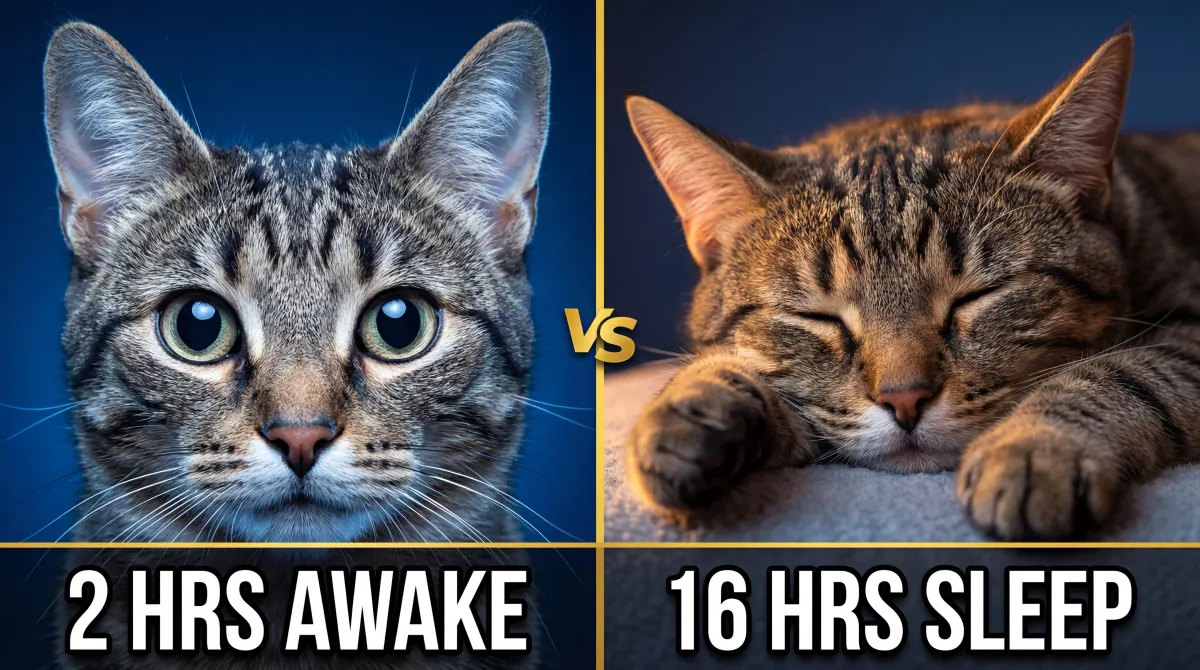
Table of Contents
- How Much Do Cats Actually Sleep?
- Why Do Cats Need So Much Sleep?
- What Happens Inside a Sleeping Cat's Brain?
- Why Do Cats Sleep All Day and Run Around at Night?
- How Cat Sleep Changes With Age
- Do Indoor Cats Sleep More Than They Should?
- Why Do Cats Twitch in Their Sleep?
- When Sleep Changes Signal a Problem
- Key Terms
- Frequently Asked Questions
- Key Takeaways
- Sources
Cats sleep 12--18 hours per day because they are obligate carnivores running protein-dependent metabolism that demands extended recovery, apex predators whose low predation risk permits prolonged deep sleep, and crepuscular hunters wired for intense dawn-and-dusk activity bursts separated by mandatory rest. A domestic cat's sleep budget is not laziness --- it is the operating cost of a body optimized to sprint, kill, and digest in cycles.
Your cat is asleep. Again. Sprawled across the arm of the sofa at 2 PM, one paw dangling, ears twitching at nothing. You watched this same cat tear across the living room at 5:30 this morning like the floor was lava. Now the animal looks clinically unconscious. This is the third location today --- the windowsill at dawn, the bed by noon, the sofa now.
The answer reaches deeper than most articles suggest. As Dr. John Bradshaw of the University of Bristol explains in his research on normal feline behaviour, cats retain core behavioural patterns from their wild ancestors --- including polyphasic sleep patterns and crepuscular activity peaks --- because domestication modified their social behaviour far more than their fundamental physiology (Bradshaw, 2018, Journal of Feline Medicine and Surgery). Research from Dr. Tony Buffington at Ohio State University's Indoor Pet Initiative, alongside foundational sleep neuroscience from the 1960s and cutting-edge 2024 noninvasive EEG studies, reveals a biology-first explanation that no competitor provides: the domestic cat's sleep architecture is a precision-engineered system with measurable cycles, distinct brain states, and an evolutionary logic that traces back millions of years.

How Much Do Cats Actually Sleep?
Adult domestic cats sleep between 12 and 18 hours per day, with preliminary survey data from the Sleep Foundation suggesting that a substantial portion may exceed 18 hours regularly --- a range that spans more daily sleep than any other common household pet and represents the single largest time commitment in a cat's life (Sleep Foundation; Cats Protection).
That range --- 12 to 18 hours --- is not random variation. The position within the range depends on age, activity level, health status, and environment. Kittens sleep up to 20 hours per day because nearly all of their sleep is brain-building REM sleep. Senior cats sleep more because aging degrades sleep architecture, requiring longer total time to achieve the same restorative benefit. And indoor cats without adequate stimulation may default to sleep simply because nothing else is happening --- a distinction between biological necessity and behavioural surplus that matters for welfare.
The raw numbers invite a reframe. A cat sleeping 16 hours is not a broken animal. A cat sleeping 16 hours is an obligate carnivore maintaining the metabolic budget that evolution built for hunting 20 small prey per day in short, violent bursts --- even though the closest thing to prey in a modern apartment is a feather wand.
| Age Group | Typical Sleep Range | Primary Driver |
|---|---|---|
| Newborn kittens (0--4 weeks) | 18--22 hours | Brain development via REM sleep |
| Juvenile cats (2--12 months) | 16--20 hours | Growth + high play energy expenditure |
| Adult cats (1--10 years) | 12--16 hours | Obligate carnivore metabolism + crepuscular cycle |
| Senior cats (11--14 years) | 14--18 hours | Reduced activity + sleep architecture fragmentation |
| Geriatric cats (15+) | 16--20 hours | Increased NREM, decreased REM efficiency |
Why Do Cats Need So Much Sleep?
Cats need prolonged sleep because their protein-dependent metabolism --- deriving 52% of energy from protein and just 2% from carbohydrates --- runs on gluconeogenesis, a costly biochemical process that demands extended recovery periods unavailable to herbivores running cheaper carbohydrate pathways (Verbrugghe & Hesta, 2017, Veterinary Sciences). Cats are obligate carnivores with very low liver glucokinase activity, meaning their bodies convert protein to blood glucose rather than processing carbohydrates directly. This metabolic strategy fuels explosive predatory output but demands proportionally more downtime.
The evolutionary logic is straightforward. Research by Dr. Tony Buffington at Ohio State's Indoor Pet Initiative documents that wild cats hunt up to 20 small prey per day (Ohio State Indoor Pet Initiative). Each hunt involves a sprint-ambush sequence requiring peak neurological and muscular performance. Between hunts, the cat must rest, digest protein, and rebuild glycogen reserves. The polycyclic sleep pattern --- short bursts of intense activity followed by extended rest --- is not a quirk. The polycyclic pattern is the operating system of an apex predator.
A landmark 1974 study comparing sleep across 53 mammalian species at the University of Chicago found that sleep duration correlates positively with metabolic rate and negatively with brain weight: smaller mammals with higher metabolic rates sleep more (Zepelin & Rechtschaffen, 1974, Brain, Behavior and Evolution). Domestic cats, at 3--5 kg with a relatively high metabolic rate, fall squarely into the high-sleep category.
"Cats derive 52% of metabolizable energy from crude protein, 46% from fat, and only 2% from carbohydrates --- meeting blood glucose requirements from gluconeogenesis rather than carbohydrate metabolism." --- Verbrugghe & Hesta 2017, Veterinary Sciences
The Predation Equation
The relationship between predation risk and sleep adds a second evolutionary layer. A landmark Yale University study of 39 mammalian species published in Science found that species under higher predation risk spend less time in paradoxical (REM) sleep --- the most vulnerable sleep state (Allison & Cicchetti, 1976, Science). Cats, as apex predators with few natural enemies, can afford to enter deep sleep states that a rabbit or deer cannot.
Capellini et al. (2008) modernised this framework with the largest phylogenetic sleep analysis ever conducted --- drawing from a database of 127 mammalian species --- and confirmed that carnivores sleep more than herbivores after controlling for evolutionary relatedness (Capellini et al., 2008, Evolution). This analysis supports the "predation equation": total sleep duration tracks with predator status.
However, the same research group published a companion paper in Functional Ecology the same year that added a critical nuance: the pattern of sleep --- polycyclic versus monophasic --- correlates more strongly with energetic constraints than with predation risk. Smaller animals need to feed more frequently, preventing them from consolidating sleep into a single long bout. This finding does not contradict the predation explanation. Rather, the two papers together paint a more complete picture: predation risk explains how much cats sleep (total duration), while body size and metabolic rate explain how cats sleep (in short bursts rather than one long block). The polycyclic nap pattern that defines the domestic cat is a metabolic necessity, not a predator luxury.
Note that the Allison & Cicchetti (1976) study, while foundational and published in Science, has known limitations: some exceptions exist (rabbits sleep as much as moles despite vastly different predation risk), and the study predates modern phylogenetic comparative methods. Capellini's reanalysis with phylogenetic controls provides the more robust statistical framework.

What Happens Inside a Sleeping Cat's Brain?
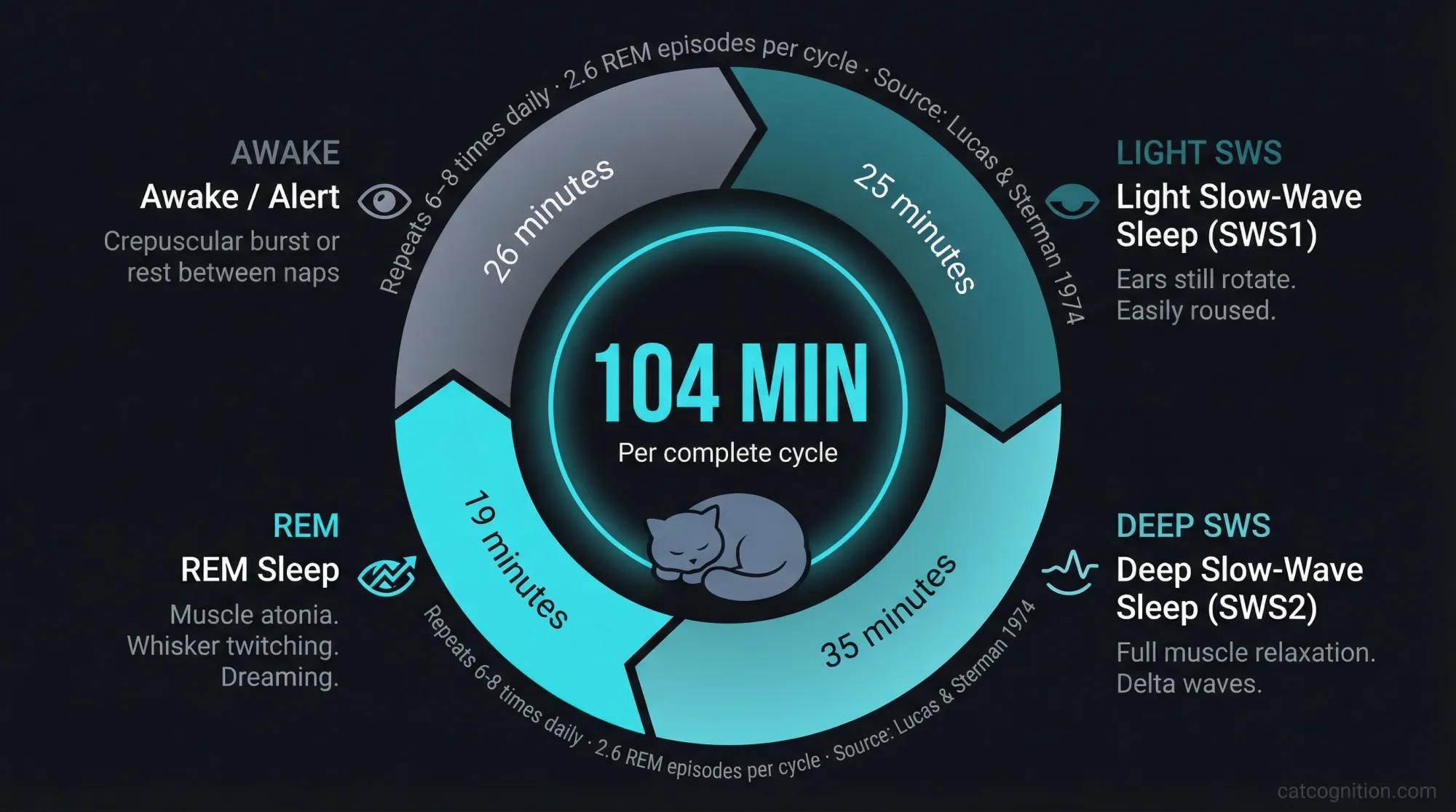
Cats cycle through four distinct vigilance states --- wakefulness, light slow-wave sleep (SWS1), deep slow-wave sleep (SWS2), and REM sleep --- progressing through them in a fixed sequence that repeats in precise 104-minute cycles containing 79 minutes of sleep and 26 minutes of wakefulness, with an average of 2.6 REM episodes per sleep cycle (Lucas & Sterman, 1974, Experimental Neurology; Ursin, 1968, Brain Research).
The term "catnap" is misleading. Each 79-minute sleep episode is not superficial drowsiness. The cat's brain progresses through a complete architecture: light slow-wave sleep (ears still rotating, muscles partially engaged, easily roused), deep slow-wave sleep (body fully relaxed, high-amplitude delta waves, difficult to wake), and REM sleep (rapid eye movement behind closed lids, complete muscle atonia with whisker and paw twitches, brain activity indistinguishable from waking). REM-NREM cycling in cats is sleep-dependent rather than clock-dependent, meaning each individual nap can contain its own complete sleep cycle regardless of time of day.
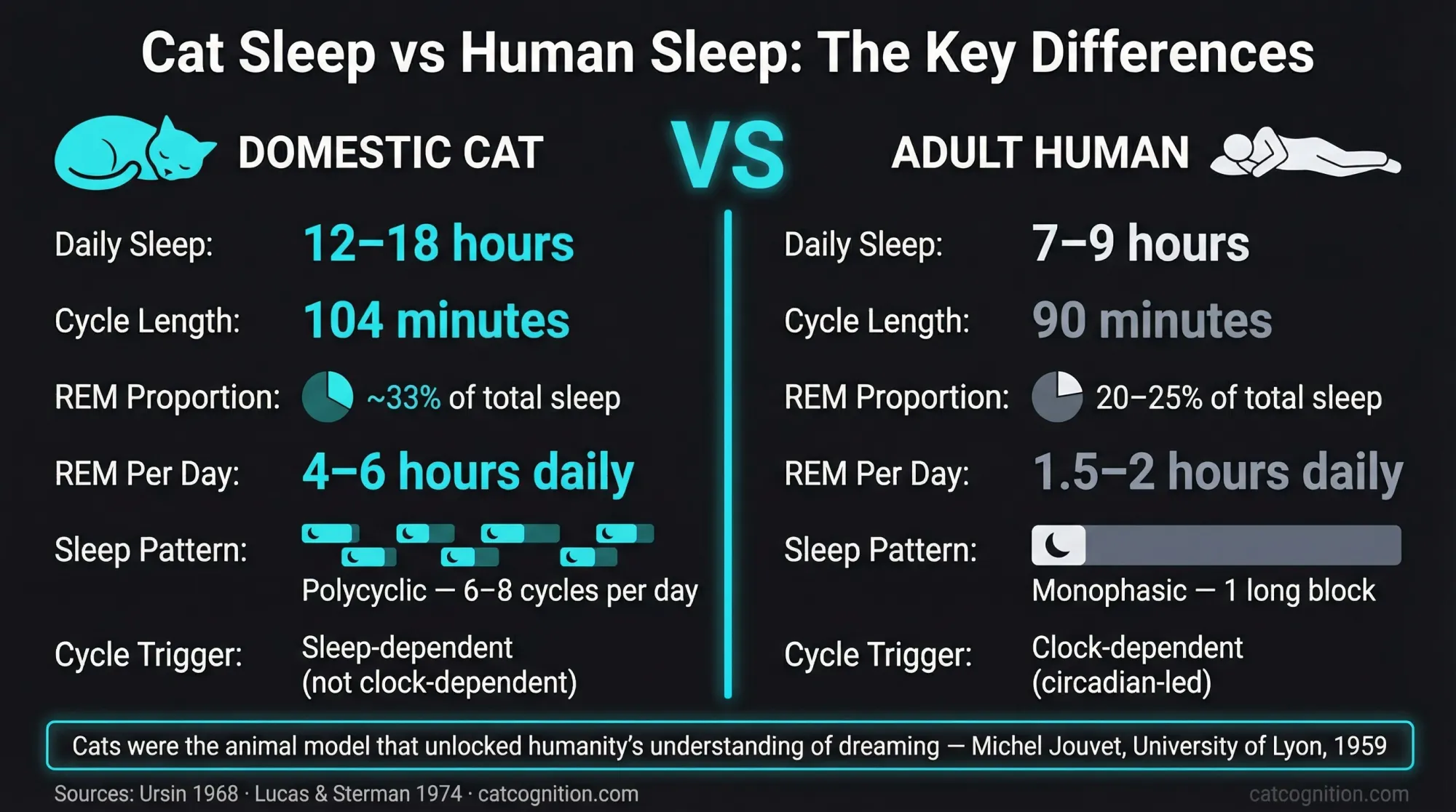
Adult cats spend approximately 33% of total sleep time in REM sleep --- compared to 20--25% in adult humans --- and each REM episode averages approximately 19 minutes (Ursin, 1968; Luppi, 2019, Biologie aujourd'hui). Cats can accumulate 4--6 hours of REM sleep per day (Ursin, 1968).
How Cats Helped Humanity Discover Dreaming
The science of REM sleep owes its existence to cats. In 1959, French neuroscientist Michel Jouvet performed experiments on cats at the University of Lyon that identified paradoxical sleep --- what we now call REM sleep --- as a third brain state entirely distinct from both waking and slow-wave sleep (Luppi, 2019). Jouvet demonstrated complete muscle atonia during REM, explaining why sleeping cats twitch their whiskers and paws without acting out full hunting sequences. When Jouvet lesioned the brain region responsible for REM atonia in cats, sleeping cats stood up, walked, and appeared to stalk and pounce on invisible prey --- the first direct evidence that REM sleep involves experiential content. Cats were the animal model that unlocked humanity's understanding of dreaming.
"Cats cycle through 104-minute sleep-wake episodes containing 79 minutes of sleep and 2.6 REM periods per episode." --- Lucas & Sterman 1974, Experimental Neurology
Sleep regulation in cats follows the same two-process model as humans --- a circadian process (the 24-hour clock) and a homeostatic process (sleep pressure). Tobler and Scherschlicht (1990) demonstrated at the University of Zurich that after 14 hours of sleep deprivation, cats showed enhanced delta and theta slow-wave activity --- the same sleep-pressure rebound observed in sleep-deprived humans (Tobler & Scherschlicht, 1990, Behavioural Brain Research). The longer a cat stays awake, the deeper the cat needs to sleep. Cat sleep is biologically regulated, not optional.
In 2024, Anna Balint and colleagues at Eotvos Lorand University achieved the first noninvasive EEG measurement of cat sleep --- fitting 12 family cats with electrode caps using a methodology originally developed for dogs, with most measurements (11 of 12 cats) taking place at the university's Ethology Department rather than in traditional sleep laboratories. The study confirmed that home-living cats show the same distinct NREM and REM sleep stages previously measured only in controlled laboratory settings, validating decades of foundational research with modern methods (Balint et al., 2024, Journal of Mammalogy). This is preliminary research (n=12), but the findings are consistent with the larger body of laboratory evidence spanning 1968--1990.
Why Do Cats Sleep All Day and Run Around at Night?
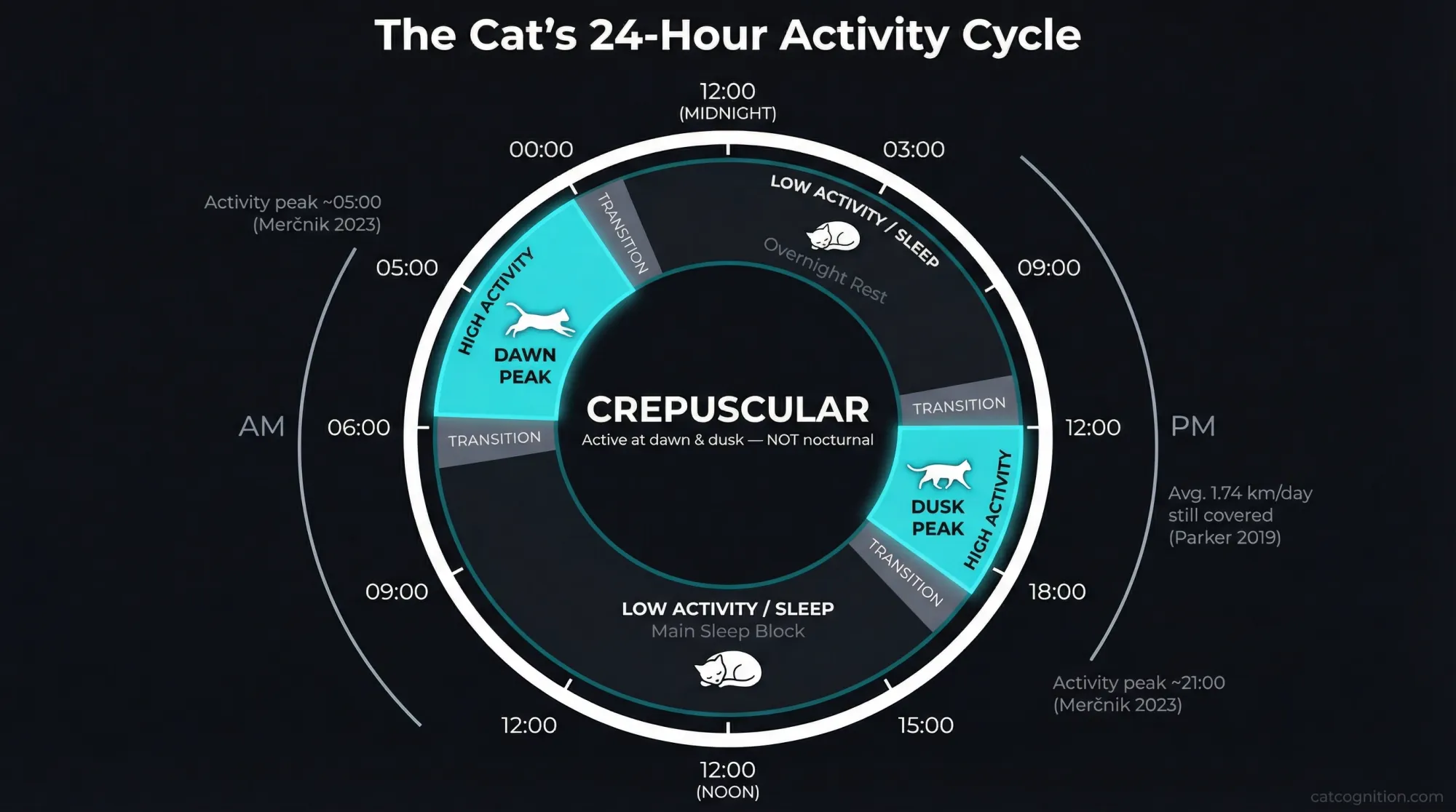
Domestic cats are crepuscular --- most active at dawn and dusk, not throughout the night --- a pattern confirmed at the neurological level through brain temperature recordings showing bimodal activity peaks at twilight times, with 2--4 hour ultradian cycles superimposed on the 24-hour circadian rhythm (Kuwabara, Seki & Aoki, 1986, Physiology & Behavior). Calling cats nocturnal is the single most common factual error in popular content about cat sleep. Cats are crepuscular with nocturnal tendencies --- an important distinction.
A 2019 study tracking 14 indoor cats 24/7 using ultra-wideband technology found two clear activity peaks: one before sunrise and one before sunset, with indoor cats covering an average of 1.74 km per day despite appearing sedentary (Parker et al., 2019, Animal Biotelemetry). That number is striking --- indoor cats walk nearly 2 km per day just moving around the house, concentrated at dawn and dusk.
A 2023 two-year field study monitoring free-ranging cats through 2,081 video clips from 732 camera-trap nights found circadian activity peaks at approximately 21:00 and 05:00, and a trend toward increased nocturnal activity during new moon phases, when nights are darkest (overall p = 0.065) --- an effect that reached statistical significance only in spring (Merčnik et al., 2023, Applied Animal Behaviour Science). This preliminary lunar association is entirely absent from competitor content and suggests that even outdoor cat sleep schedules may respond to ambient light at fine granularity. This crepuscular wiring is also why many owners experience nighttime vocalizations --- cats ramp up activity as darkness falls.
"Free-ranging cats showed a trend toward increased nocturnal activity around the new moon (p = 0.065), reaching statistical significance only in spring --- 2,081 video clips across 732 camera trap nights." --- Merčnik et al. 2023, Applied Animal Behaviour Science
Indoor Cats and Disrupted Circadian Clocks
Piccione et al. (2013) made a striking discovery: while outdoor cats maintain robust daily rhythmicity with clear crepuscular peaks, indoor cats with limited environmental access showed no innate daily rhythmicity, instead adopting their owners' daily schedule --- human presence and care dominated their timing entirely (Piccione et al., 2013, Journal of Veterinary Behavior). Indoor cats essentially adopt their owner's schedule. A follow-up study by Parker et al. (2022) confirmed that indoor cats eat more frequently and are more impacted by human interactions than outdoor cats, though both groups retained underlying 24-hour cyclicity tied to twilight cues (Parker et al., 2022, Animals).
The mechanism behind this disruption involves melatonin suppression. Indoor cats exposed to artificial light at night experience suppressed melatonin production, disrupting the circadian signalling that organises sleep-wake timing. Constant artificial lighting flattens the natural light-dark cycle that the suprachiasmatic nucleus (SCN) --- the brain's master clock --- uses to calibrate biological rhythms. The result: indoor cats may sleep at random intervals rather than in the crepuscular pattern their biology is built for. Their superior night vision means even low ambient light can disrupt melatonin cycles. Maintaining consistent light-dark cycles in the home supports the circadian health that organises restorative sleep.
How Cat Sleep Changes With Age
Kitten sleep, adult sleep, and senior cat sleep are three biologically different states --- not just more or less of the same thing. The developmental arc of feline sleep architecture is one of the most dramatic in mammalian biology, and understanding each phase explains why a kitten sleeping 20 hours is not the same as a geriatric cat sleeping 20 hours. For a deeper look at what each life phase means for your cat's overall health and needs, see our guide to cat life stages explained.
Kittens: Brain Construction Under Way
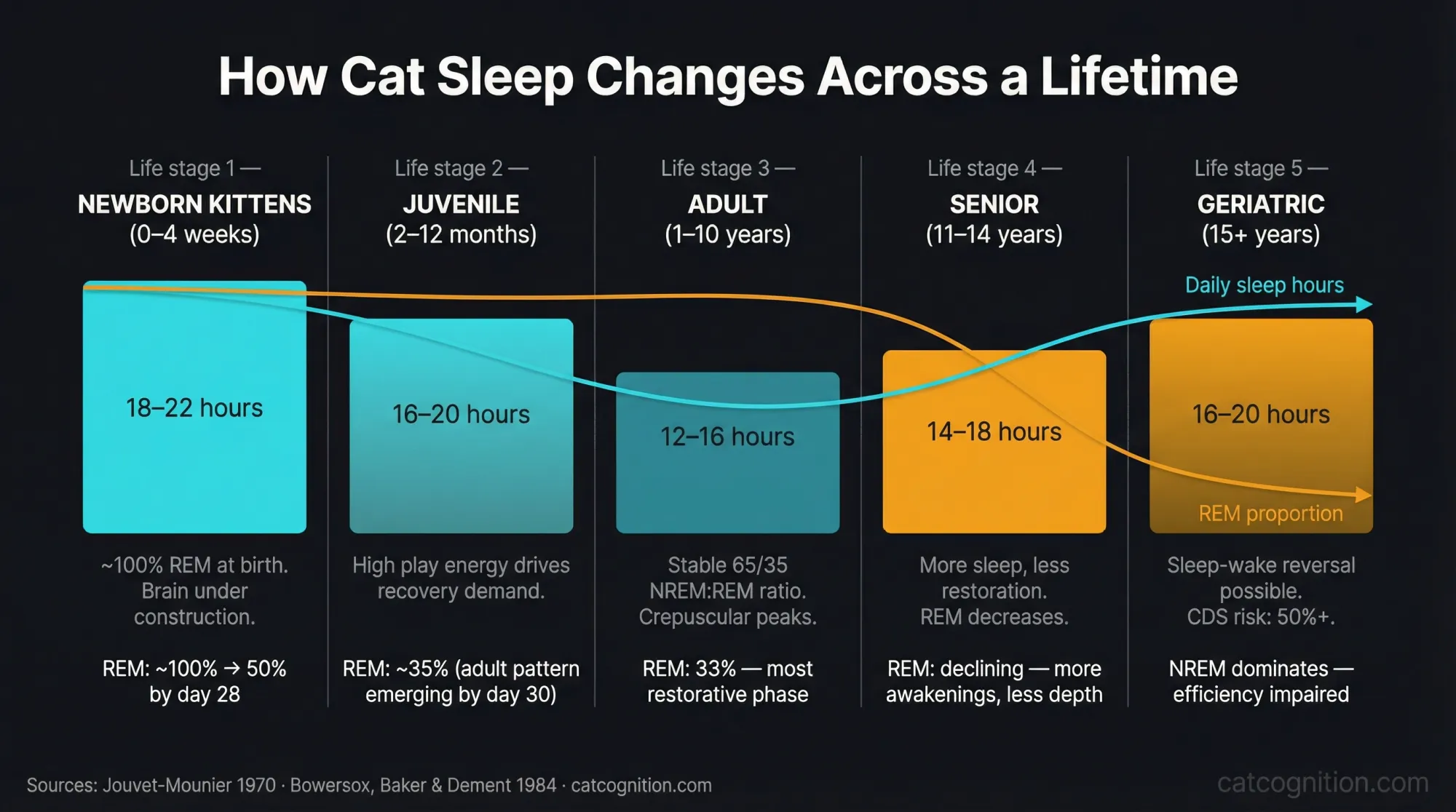
Newborn kittens in their first days of life spend virtually all sleep time in REM (active) sleep, with NREM sleep beginning to emerge during the first postnatal week --- the highest REM proportion of any mammalian age group (Jouvet-Mounier et al., 1970, Developmental Psychobiology). By day 28, REM has dropped to approximately 50% of sleep time. By day 30, the adult sleep pattern emerges: approximately 65% NREM and 35% REM. This 20-day developmental sprint --- from all-REM to adult architecture --- reflects a period of intense brain wiring. REM sleep drives neural synapse formation, sensory processing maturation, and motor circuit development. Kittens sleep so much because their brains are under construction.
A kitten sleeping 20 hours is healthy. A kitten that is lethargic during its brief waking periods --- not eating, not playing, not responding to stimuli --- requires urgent veterinary attention. The distinction between sleeping and lethargy is critical at this age.
Adult Cats: The Steady State
Adult cats (1--10 years) sleep 12--16 hours per day in the polycyclic pattern described above: 104-minute cycles with clear crepuscular activity peaks. Adult sleep architecture is stable, with the 65/35 NREM-to-REM ratio holding steady throughout the adult years. The total sleep budget reflects the metabolic cost of maintaining an obligate carnivore body, and individual variation within the 12--16 hour range correlates with activity level, diet composition, and environmental stimulation.
Senior and Geriatric Cats: Fragmented and Less Restorative
Senior cats do not simply sleep "more." Their sleep quality degrades. A study by Bowersox, Baker & Dement (1984) found that aged cats experience more brief awakenings, less REM sleep, and more NREM sleep compared to young adults --- mirroring the sleep architecture degradation seen in aging humans (Bowersox, Baker & Dement, 1984, Electroencephalography and Clinical Neurophysiology). The result is paradoxical: senior cats spend more total time sleeping but get less restorative benefit from each sleep episode, because the REM proportion --- the most restorative sleep phase --- decreases.
This fragmentation has clinical implications. Cognitive dysfunction syndrome (CDS) affects 28% of cats aged 11--14 and over 50% of cats aged 15+, with sleep-wake cycle disturbance as a core diagnostic sign within the VISHDAAL framework developed by Dr. Danielle Gunn-Moore at the University of Edinburgh (Sordo & Gunn-Moore, 2021, Veterinary Record). CDS neuropathology mirrors human Alzheimer's disease, including beta-amyloid deposits and hyperphosphorylated tau. A senior cat that reverses sleep-wake cycles --- active all night, sleeping all day --- is exhibiting a potential CDS marker, not a personality change.
"Cognitive dysfunction syndrome affects 28% of cats aged 11--14 and over 50% of cats aged 15+, with sleep-wake cycle disturbance as a core diagnostic sign." --- Sordo & Gunn-Moore 2021, Veterinary Record

Do Indoor Cats Sleep More Than They Should?
Indoor cats may sleep more than their biology requires when environmental stimulation is inadequate --- and this excess sleep is a welfare concern, not a harmless quirk. The research base strongly supports the biological drivers behind 12--16 hours of daily sleep, but indoor cats sleeping consistently at the high end of the range (18+ hours) without corresponding activity may be experiencing boredom-driven oversleeping.
The distinction matters. A cat sleeping 16 hours with clear crepuscular activity peaks, alert waking periods, and regular play engagement is operating within normal biological parameters. A cat sleeping 18--20 hours because the environment offers no stimulation --- no interactive play, no vertical space, no window views, no puzzle feeders --- is defaulting to sleep as the only available activity. As Dr. Tony Buffington's Indoor Pet Initiative research demonstrates, cats need environmental enrichment not just for stress reduction but for maintaining normal activity-rest cycling (Ohio State Indoor Pet Initiative).
The Obesity-Sleep Vicious Cycle
Boredom-driven oversleeping creates a dangerous feedback loop. A sedentary indoor cat that sleeps excessively burns fewer calories, leading to weight gain. Excess weight reduces mobility and motivation for physical activity, which increases sedentary time, which promotes more sleep, which drives further weight gain. With studies estimating that 40--60% of domestic cats are overweight or obese --- depending on assessment methodology --- this cycle represents a significant population-level welfare concern.
The interventions are straightforward but require consistency:
| Enrichment Strategy | Target | Evidence Base |
|---|---|---|
| 15--20 minutes interactive play at dawn/dusk | Aligns with crepuscular drive | Parker et al., 2019 (activity peaks confirmed at dawn/dusk) |
| Puzzle feeders for dry food | Replaces passive eating with foraging behaviour | Buffington, Indoor Pet Initiative |
| Vertical space (cat trees, shelves) | Provides patrol routes and territorial surveillance | Cats Protection; Buffington |
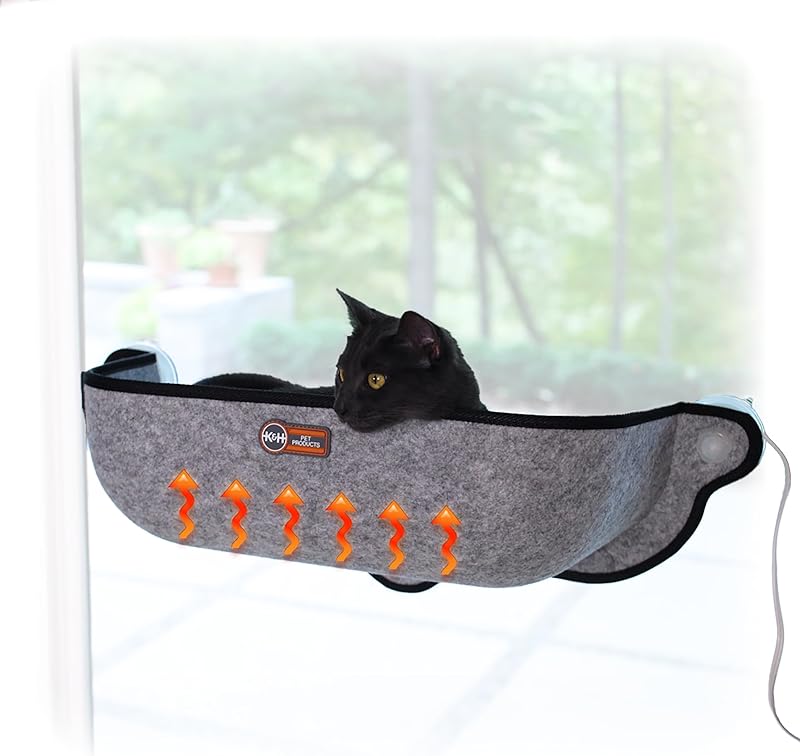
| Window perches with bird-feeder views | Supplies visual stimulation during owner absence | Cats Protection |
| Rotating novel toys every 3--5 days | Prevents habituation-driven disengagement | Dr. Mikel Delgado, Purdue University |
If a cat's sleep duration decreases by 1--2 hours after introducing enrichment, the previous sleep level likely included boredom surplus rather than biological necessity.
Breed Variation
Anecdotal evidence and breed community observations suggest sleep variation across breeds: Persian, Ragdoll, Maine Coon, and Russian Blue cats tend toward the higher end of the sleep range, while Siamese, Bengal, and Abyssinian cats tend toward the lower end with more sustained active periods. No peer-reviewed study has conducted controlled measurement of breed-specific sleep duration, so these observations should be treated as general tendencies rather than established facts. A Bengal sleeping 18 hours warrants more attention than a Persian sleeping 18 hours, given breed-typical activity expectations.
Why Do Cats Twitch in Their Sleep?
Cats twitch during sleep because REM (rapid eye movement) sleep produces complete muscle atonia --- full-body paralysis --- with residual motor signals "leaking" through as whisker flutters, paw paddling, ear movements, and tail flicks, a phenomenon first demonstrated in Michel Jouvet's 1959 experiments at the University of Lyon and confirmed across six decades of subsequent research (Luppi, 2019, Biologie aujourd'hui). Cats spend approximately 33% of total sleep time in REM --- roughly 4--6 hours per day --- giving ample opportunity for visible twitching (Ursin, 1968).
The twitching is not a seizure and does not indicate distress. When Jouvet lesioned the pontine tegmentum --- the brain region generating REM atonia --- sleeping cats stood up, walked around, and appeared to stalk invisible prey, providing the first direct evidence that REM sleep involves experiential content (likely dreaming). The residual twitching visible in normal sleeping cats represents the small motor signals that escape the atonia mechanism. Cats almost certainly experience dream-like states during REM, and the twitching content often mirrors hunting sequences: paw paddling (chasing), whisker movement (tracking), and vocalizations (the chatter of predatory excitement).
"Domestic cats spend approximately 33% of total sleeping time in REM sleep --- discovered using cat experiments that identified paradoxical sleep as a third brain state in 1959." --- Luppi 2019, Biologie aujourd'hui
When Sleep Changes Signal a Problem
The critical diagnostic signal is not the total hours a cat sleeps but any deviation from that individual cat's established baseline. A sudden shift of two or more hours --- in either direction --- warrants investigation. Changes in sleep location, daytime alertness, and crepuscular activity pattern matter as much as raw duration.
Not all cat sleep is healthy. While 12--18 hours of daily sleep is biologically normal for adult cats, changes in a cat's individual sleep pattern --- not the absolute number of hours --- are the diagnostic signal. A cat that has always slept 16 hours is fine at 16 hours. A cat that suddenly shifts from 14 to 18 hours, or from 16 to 12, warrants investigation. Track your cat's baseline, not a population average.
A cat sleeping 16 hours per day is not the same as a lethargic cat. Normal feline sleep is polycyclic --- cats alternate between active crepuscular periods and rest periods, waking alert and responsive between naps. Lethargy is a persistent lack of responsiveness during periods that should be active. A cat that sleeps the same total hours but fails to show normal alertness during dawn and dusk crepuscular peaks may be ill, even if overall sleep duration has not changed.
The CatCog Sleep Health Index
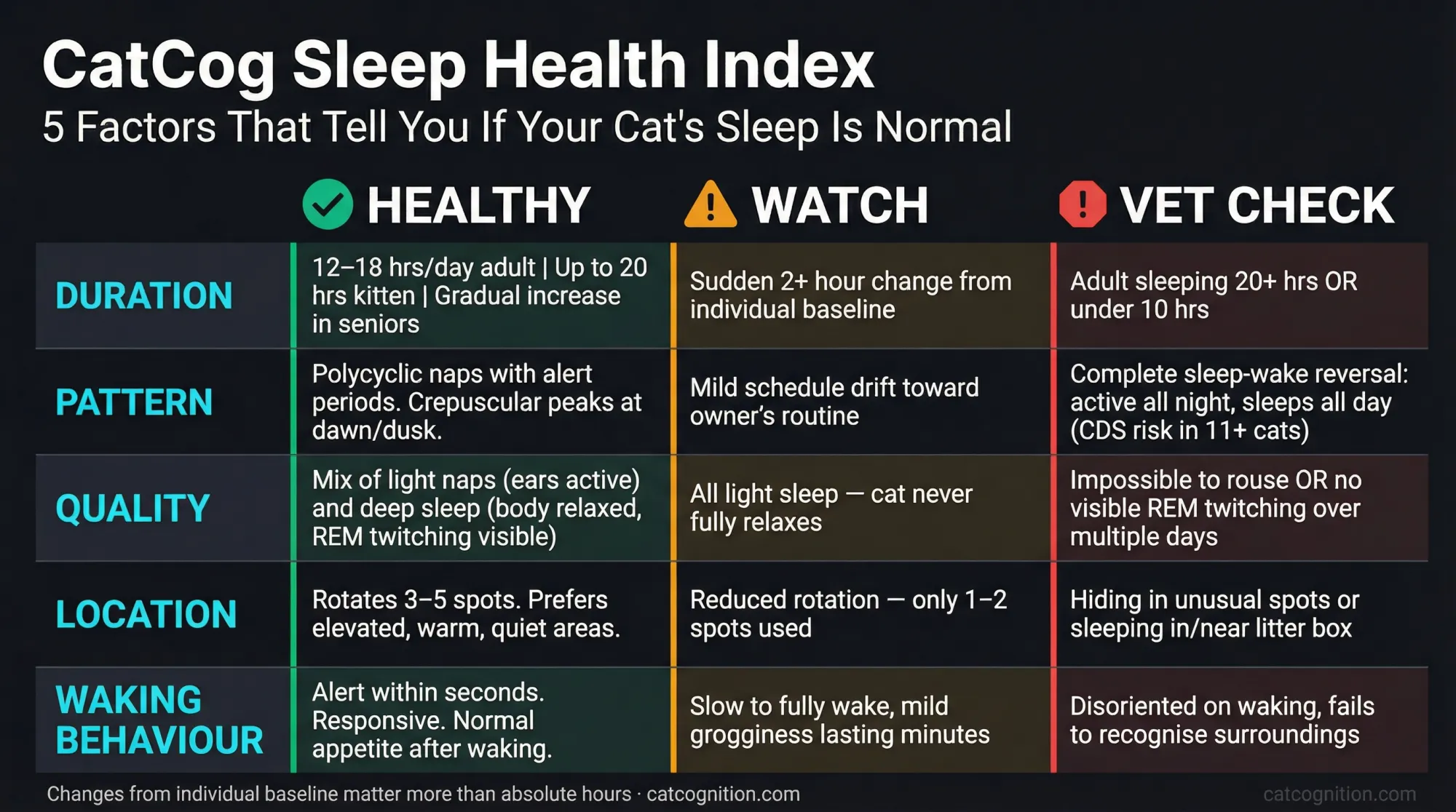
The CatCog Sleep Health Index assesses five factors to distinguish normal sleep from potential warning signs. Each factor traces to peer-reviewed evidence.
1. Duration — Healthy: 12--18 hours per day for adults, up to 20 hours for kittens, with a gradual increase in seniors. Watch: a sudden increase or decrease of 2+ hours from the individual cat's baseline. Vet check: sleeping 20+ hours as an adult, or sleeping less than 10 hours without apparent stimulation.
2. Pattern — Healthy: polycyclic sleep with multiple naps separated by alert periods, with crepuscular activity peaks at dawn and dusk. Watch: mild schedule drift toward the owner's patterns, which is common in indoor cats. Vet check: complete sleep-wake reversal where the cat is active all night and sleeps all day, which is a CDS risk marker in cats aged 11+.
3. Quality — Healthy: a mix of light naps (ears still active, cat wakes easily) and deep sleep (body fully relaxed, REM twitching visible). Watch: all light sleep where the cat never fully relaxes. Vet check: all deep sleep where the cat is difficult to rouse, or no visible REM twitching over multiple days.
4. Location — Healthy: the cat rotates between 3--5 sleeping spots, preferring elevated, warm, quiet areas. Watch: reduced rotation to only 1--2 spots. Vet check: hiding in unusual or inaccessible spots, or sleeping in or near the litter box.
5. Waking Behaviour — Healthy: alert within seconds of waking, responsive to stimuli, with normal appetite and grooming after waking. Watch: slow to fully wake with mild grogginess lasting several minutes. Vet check: disoriented upon waking, fails to recognize surroundings, or does not resume normal activity.
Veterinary Escalation Criteria
Consult a veterinarian if any of the following apply:
| Warning Sign | Possible Condition | Urgency |
|---|---|---|
| Sleep duration suddenly increases or decreases by 2+ hours from baseline | Pain, infection, hypothyroidism, anaemia, organ disease | Within 1 week |
| Sleep-wake cycle reversal in cat aged 11+ | Cognitive dysfunction syndrome (CDS) | Within 1 week; describe VISHDAAL signs |
| Sleeps through crepuscular peaks without responding to stimuli | Metabolic disease, neurological condition | Within 1 week |
| Hides in unusual locations to sleep | Pain, illness, environmental stress | Within 1--2 weeks |
| Sleep changes with weight loss, appetite changes, increased thirst | Hyperthyroidism, diabetes, CKD | Within 1 week; bloodwork |
| Difficult to rouse from sleep | Neurological condition, metabolic crisis | URGENT: same-day or emergency |
| Nighttime vocalizing with daytime disorientation (senior cats) | CDS --- mirrors Alzheimer's "sundowning" | Within 1 week |
| Kitten lethargic during waking periods | Infection, FIP, congenital condition | URGENT: same-day veterinary visit |

Key Terms
- Crepuscular: active primarily at dawn and dusk; domestic cats are crepuscular, not nocturnal, with activity peaks confirmed by brain temperature recordings at twilight times
- NREM sleep: non-rapid eye movement sleep, comprising light slow-wave sleep (SWS1) and deep slow-wave sleep (SWS2); constitutes approximately 65% of adult cat sleep time
- REM sleep: rapid eye movement (paradoxical) sleep; constitutes approximately 33% of adult cat sleep; associated with dreaming, muscle atonia, and whisker/paw twitching
- Circadian rhythm: the internal 24-hour biological clock driven by the suprachiasmatic nucleus (SCN); regulates the timing of sleep-wake cycles
- Obligate carnivore: an animal that must consume animal-based protein for survival; cats rely on gluconeogenesis rather than carbohydrate metabolism for blood glucose
Frequently Asked Questions
These questions cover the specific sleep behaviours cat owners search for most often --- from sleeping positions and sounds to location choices and what they reveal about a cat's health and emotional state. Each answer draws on the feline sleep science covered in the sections above.
Can cats purr in their sleep?
Cats can produce purring vibrations during light slow-wave sleep (SWS1) when partial muscle tone is maintained. During deep slow-wave sleep and REM sleep, the muscle atonia that characterises those stages generally prevents sustained purring. A cat purring while appearing asleep is likely in the lightest sleep phase --- ears may still rotate and the cat can be roused easily.
Why do cats sleep face down?
A cat sleeping with its face pressed into a surface or tucked between its paws is blocking light from reaching the eyes. The behaviour typically increases in bright environments and serves to extend sleep by reducing visual stimulation that would otherwise trigger wakefulness. Cats lack eyelids thick enough to fully block light during sleep, so physical barriers substitute.
Why do cats cover their face when sleeping?
Face-covering during sleep serves dual functions: light blocking (extending sleep duration by reducing visual arousal) and warmth conservation (the nose and ear tips are the primary heat-loss surfaces on a cat's body). In cold environments, face-covering increases. The posture also protects the eyes and nose --- the most vulnerable sensory organs --- during the vulnerable sleep state.
Why do cats sleep in the litter box?
A cat sleeping in the litter box is a significant behavioural red flag. Common causes include territorial insecurity (the litter box smells most strongly of the cat, providing reassurance), illness (cats in pain or nausea seek enclosed, familiar spaces), stress in multi-cat households (guarding the resource), or a recent environmental change. This behaviour warrants veterinary consultation to rule out illness, followed by environmental assessment.
Why does my cat make noises while sleeping?
Vocalizations during sleep --- chirps, chatters, muffled meows, or soft cries --- occur during REM sleep when the brain is highly active but the body is in atonia. Small motor signals leak through the paralysis mechanism, producing both physical twitches and vocal sounds. The vocalizations often resemble hunting calls (chattering) or social communication (chirps), suggesting the REM content involves experiential sequences.
Why does my cat sleep on my clothes?
Cats select sleeping surfaces based on scent, warmth, and texture. Worn clothing carries concentrated owner scent, which Dr. Kristyn Vitale's attachment research at Oregon State University suggests provides security for the 65% of cats demonstrating secure attachment bonds. The behaviour is a proximity-seeking signal --- the cat is sleeping near the owner's scent as a substitute for sleeping near the owner. For more on why cats seek physical closeness during sleep, see why your cat wants to sleep with you.
Why does my cat sleep under the bed?
Sleeping under the bed satisfies the cat's inherited preference for enclosed, defensible sleeping sites with limited entry points. The behaviour is normal if the cat also uses other sleeping locations and emerges alert during waking periods. If a cat that previously slept in open locations suddenly retreats to under-bed hiding, the change may indicate pain, illness, or environmental stress and warrants monitoring.
Why do cats sleep in a ball?
The curled ball position conserves body heat by minimizing exposed surface area and protects the abdomen --- the most vulnerable area in a predator attack. Cats sleep in a ball more frequently in cold environments. African wildcats, the domestic cat's ancestor, rotate sleeping positions and locations to reduce parasite exposure at any single site, a behaviour domestic cats retain even in parasite-free homes (Cats Protection). Sleeping positions are one of many body language signals that reveal how safe and relaxed a cat feels.
Key Takeaways
Cats sleep 12--18 hours per day because obligate carnivore metabolism demands it --- protein-dependent gluconeogenesis is more energy-intensive than carbohydrate metabolism, requiring extended recovery periods between activity bursts.
Cat sleep follows a precise 104-minute cycle containing 79 minutes of sleep across four brain states (awake, light SWS, deep SWS, REM), with approximately 33% of total sleep time spent in REM --- not random napping but a measurable, repeating architecture.
Cats are crepuscular, not nocturnal --- brain temperature recordings confirm bimodal activity peaks at dawn and dusk, and indoor cats walk an average of 1.74 km per day concentrated at these times. Weather can amplify this pattern --- rain makes cats even sleepier.
Indoor cat boredom can drive excessive sleep beyond biological need --- cats without adequate stimulation default to sleep, and the resulting sedentary cycle promotes weight gain and further inactivity. Enrichment that reduces sleep by 1--2 hours suggests the previous surplus was boredom, not biology.
Changes in sleep pattern are more diagnostic than total hours --- a sudden shift from a cat's individual baseline, especially sleep-wake reversal in cats over 11, warrants veterinary evaluation for CDS, pain, thyroid disease, or other medical conditions.
Sources
"Normal feline behaviour: ...and why problem behaviours develop" - Bradshaw, J.W.S., Journal of Feline Medicine and Surgery, 2018 (Link)
"The polycyclic sleep-wake cycle in the cat" - Lucas, E.A. & Sterman, M.B., Experimental Neurology, 1974 (Link)
"The two stages of slow wave sleep in the cat and their relation to REM sleep" - Ursin, R., Brain Research, 1968 (Link)
"Sleep and EEG slow-wave activity in the domestic cat: effect of sleep deprivation" - Tobler, I. & Scherschlicht, R., Behavioural Brain Research, 1990 (Link)
"Mammalian sleep, longevity, and energy metabolism" - Zepelin, H. & Rechtschaffen, A., Brain Behavior and Evolution, 1974 (Link)
"Sleep in mammals: Ecological and constitutional correlates" - Allison, T. & Cicchetti, D.V., Science, 1976 (Link)
"Phylogenetic analysis of the ecology and evolution of mammalian sleep" - Capellini, I. et al., Evolution, 2008 (Link)
"Michel Jouvet: from the discovery of paradoxical sleep and muscle atonia to the role of neuropeptides" - Luppi, P.-H., Biologie aujourd'hui, 2019 (Link)
"Cats and Carbohydrates: The Carnivore Fantasy?" - Verbrugghe, A. & Hesta, M., Veterinary Sciences, 2017 (Link)
"Daily rhythms in food intake and locomotor activity in a colony of domestic cats" - Parker, M. et al., Animal Biotelemetry, 2019 (Link)
"Comparison of Locomotor and Feeding Rhythms between Indoor and Outdoor Cats" - Parker, M. et al., Animals, 2022 (Link)
"Chronobiology of free-ranging domestic cats: Circadian, lunar and seasonal activity rhythms in a wildlife corridor" - Merčnik, N., Prevolnik Povše, M., Škorjanc, D. & Skok, J., Applied Animal Behaviour Science, 2023 (Link)
"Daily rhythm of total activity pattern in domestic cats" - Piccione, G. et al., Journal of Veterinary Behavior, 2013 (Link)
"Ontogenesis of the states of sleep in rat, cat, and guinea pig during the first postnatal month" - Jouvet-Mounier, D., Astic, L. & Lacote, D., Developmental Psychobiology, 1970 (Link)
"Sleep-wakefulness patterns in the aged cat" - Bowersox, S.S., Baker, T.L. & Dement, W.C., Electroencephalography and Clinical Neurophysiology, 1984 (Link)
"Cognitive Dysfunction in Cats: Update on Neuropathological and Behavioural Changes" - Sordo, L. & Gunn-Moore, D.A., Veterinary Record, 2021 (Link)
"Noninvasive EEG measurement of sleep in the family cat" - Balint, A. et al., Journal of Mammalogy, 2024 (Link)
"Sleeping Habits" - Ohio State University Indoor Pet Initiative (Link)
"Why is my cat awake at night?" - Cornell Feline Health Center, 2023 (Link)
"Cognitive Dysfunction" - Cornell Feline Health Center (Link)
"The Special Needs of the Senior Cat" - Cornell Feline Health Center (Link)
"Cognitive dysfunction syndrome in cats" - International Cat Care (Link)
"Cats and Sleep" - Cats Protection (Link)
"Recognizing the Signs of Illness in Cats" - VCA Animal Hospitals (Link)
"Sleeping Disorders in Animals" - Texas A&M School of Veterinary Medicine (Link)
"How Many Hours Do Cats Sleep?" - Sleep Foundation (Link)
"Circadian, sleep and brain temperature rhythms in cats under sustained daily light-dark cycles and constant darkness" - Kuwabara, N., Seki, K. & Aoki, K., Physiology and Behavior, 1986 (Link)