Why Do Cats Sneeze? Causes, Warning Signs, and When to See a Vet
80 to 90% of cat sneezing traces to two viruses — and over 80% of exposed cats become permanent carriers. Learn the 8 sneeze patterns, use the CatCog Sneeze Decoder, and know when to see a vet.

Table of Contents
- Why Do Cats Sneeze? (Common Causes)
- What Does It Mean When a Cat Sneezes?
- Why Does My Cat Sneeze So Much?
- The CatCog Sneeze Decoder
- What Is Cat Flu?
- What Is Reverse Sneezing in Cats?
- When Should You See a Vet for Cat Sneezing?
- What to Do If Your Cat Is Sneezing
- Key Terms Used
- Frequently Asked Questions
- Key Takeaways
- Sources
Most cat sneezing traces back to two viruses: feline herpesvirus (FHV-1) and feline calicivirus (FCV), which together cause 80 to 90% of feline upper respiratory infections. The critical detail most sources omit: over 80% of cats exposed to FHV-1 become permanent carriers, with the virus dormant in the trigeminal nerve ganglion behind the eye. Stress triggers reactivation, producing sneezing episodes weeks, months, or years after the original infection. For a broader look at keeping your cat healthy, see our comprehensive guide to cat care.
Why Do Cats Sneeze? (Common Causes)
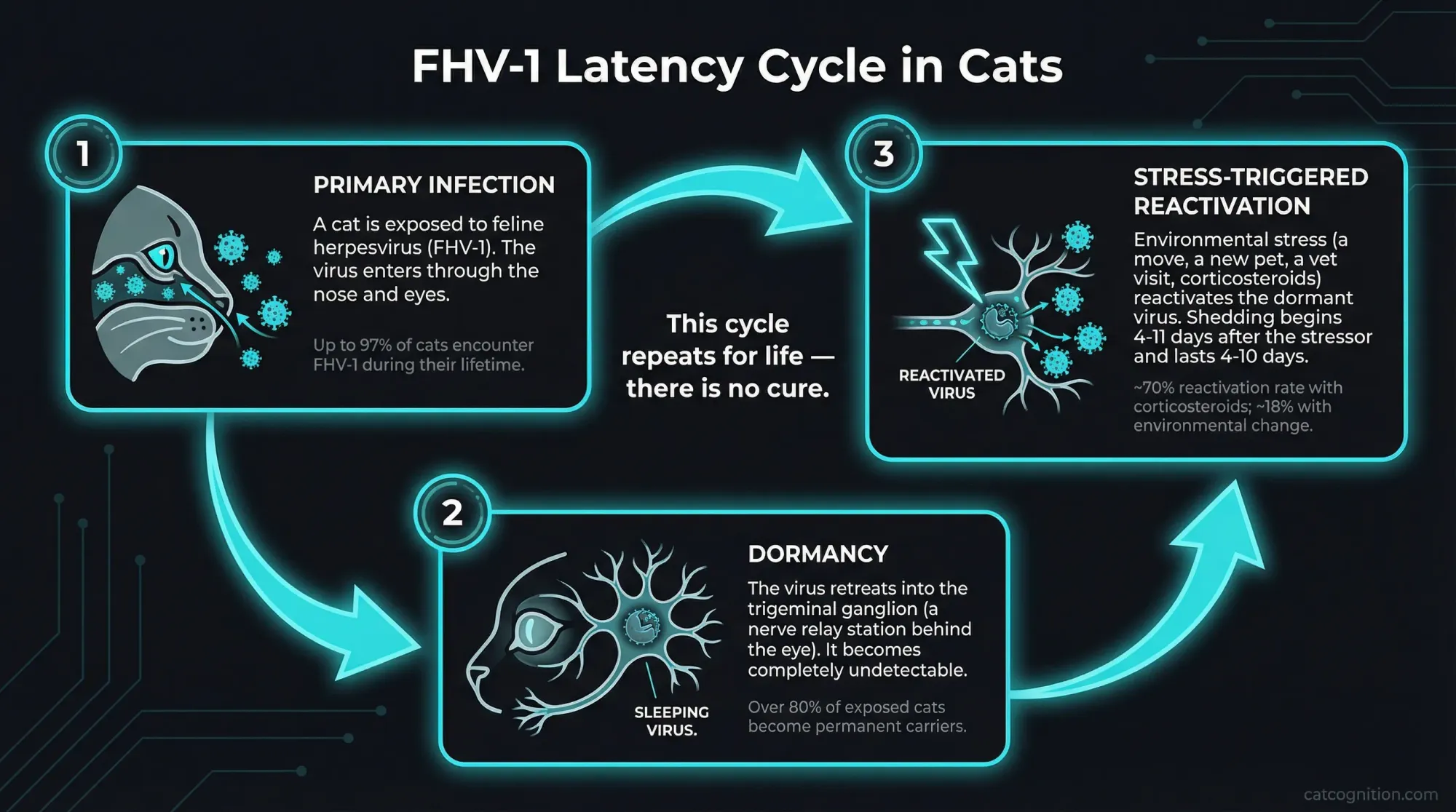
Cats sneeze most often because of feline herpesvirus type 1 (FHV-1) and feline calicivirus (FCV), two pathogens that together cause 80 to 90% of all feline upper respiratory infections. According to the Cornell Feline Health Center at Cornell University College of Veterinary Medicine, up to 97% of cats encounter FHV-1 during a normal lifespan, and over 80% develop lifelong latent infection in the trigeminal ganglion -- a nerve relay station behind the eye.
More than 80% of exposed cats carry a dormant virus for life. Not a resolved infection. Not a memory in the immune system. A living virus embedded in nerve tissue, waiting to reactivate.
Dr. Tony Buffington at Ohio State University's Indoor Pet Initiative has demonstrated that environmental stress triggers measurable physiological changes in cats. Separate virology research confirms that this same stress response reactivates dormant feline herpesvirus. In experimental studies, corticosteroid treatment triggers viral shedding in approximately 70% of carriers. Lactation triggers reactivation in approximately 40%. Even environmental change -- a move, a new pet, a boarding stay -- triggers reactivation in approximately 18%.
This latency-reactivation cycle is the single most important concept for understanding cat sneezing. A cat adopted five years ago can suddenly start sneezing after a stressful event. The virus was dormant the entire time.
📊 The Evidence:
"Over 80% of cats exposed to feline herpesvirus become permanent carriers with the virus dormant in the trigeminal ganglion."
Beyond viruses, cats sneeze from environmental irritants (dust, litter particles, cleaning products), bacterial infections including Chlamydia felis and Mycoplasma felis, dental disease, nasopharyngeal polyps, and rarely nasal tumors. Brachycephalic breeds -- Persians, Himalayans, Exotic Shorthairs -- face additional risk due to compressed nasal anatomy.
But the viral story dominates. Understanding FHV-1 latency explains why cats sneeze unpredictably and why "curing" cat sneezing is often the wrong goal.
What Does It Mean When a Cat Sneezes?
A single cat sneeze means nothing clinically -- cats clear nasal irritants with a sneeze reflex just as humans do, and isolated sneezes without discharge, lethargy, or appetite changes require no intervention. Repeated sneezing accompanied by nasal discharge, eye involvement, or behavioral changes signals an active upper respiratory process, most commonly FHV-1 reactivation or a new FCV exposure, and warrants monitoring or veterinary evaluation depending on severity and duration.
The distinction between sneezing and coughing matters more than most cat owners realize. Research published in Respiratory Physiology and Neurobiology found that a key tongue muscle fires with 16 times greater force during a feline sneeze than during a cough. Sneezing expels irritants from the nasal passages; coughing clears the lower airways. The two reflexes use entirely different neural pathways. If a cat is coughing rather than sneezing, the concern shifts toward asthma, heartworm disease, or lower respiratory infection -- similar to the concerns covered in our guide to why your cat might be breathing fast.
The color of nasal discharge tells the real story. Clear, watery discharge typically indicates early viral infection or mild irritation. Yellow or green mucopurulent discharge suggests secondary bacterial involvement. Bloody discharge, especially from one nostril, raises urgency significantly -- indicating dental disease, a foreign body, or nasal neoplasia.
One-sided versus two-sided discharge is a particularly useful diagnostic clue. Bilateral discharge (both nostrils) usually points to a systemic cause like viral infection. Unilateral discharge (one nostril) suggests a localized problem -- a tooth root abscess, a polyp, or a tumor.
Why Does My Cat Sneeze So Much?
Frequent or persistent sneezing in cats most commonly indicates chronic FHV-1 reactivation, where approximately 45% of latently infected cats shed virus periodically throughout life -- either spontaneously or in response to natural stress episodes. The Cornell Feline Health Center confirms that periodic FHV-1 shedding produces recurring bouts of sneezing that puzzle owners because the episodes appear disconnected from any obvious illness or exposure.
Think of feline herpesvirus like a computer virus in sleep mode. FHV-1 hides in the trigeminal nerve ganglion, completely undetectable, then reactivates when the system is stressed. The virus reactivates 4 to 11 days after the stressor, producing shedding that typically lasts 4 to 10 days, though shedding periods from 1 to 13 days have been documented, before retreating back into dormancy. This cycle repeats indefinitely and cannot be cured -- but understanding the pattern helps cat owners manage episodes rather than chase phantom illnesses.
📊 The Evidence:
"In experimental studies, corticosteroid treatment triggers feline herpesvirus reactivation in approximately 70% of latently infected cats."
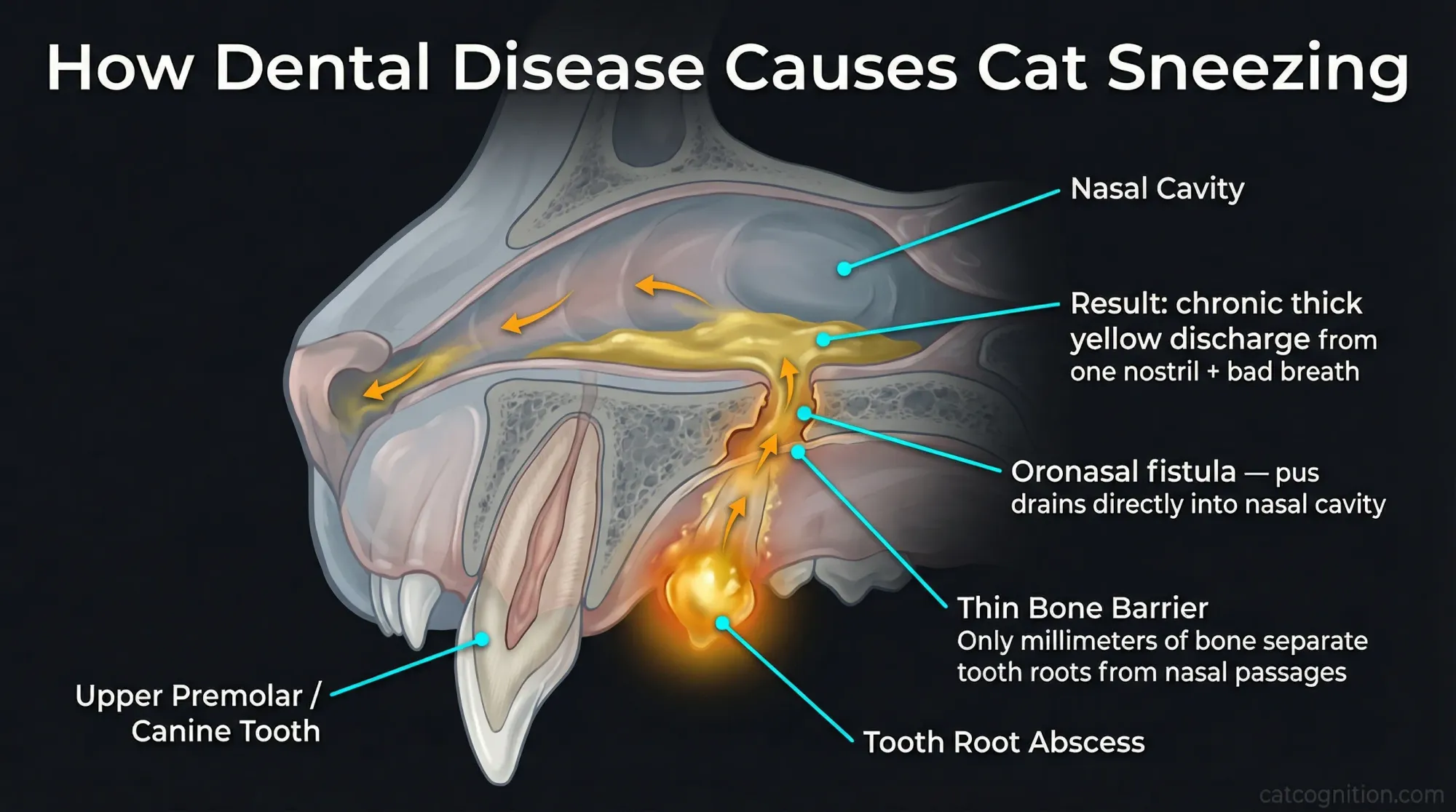
For cats sneezing without the classic viral flare-up pattern, dental disease is an underrecognized culprit. The roots of feline upper premolars and canines sit millimeters from the nasal passages, and a tooth root abscess can create an oronasal fistula that drains pus directly into the nasal cavity. The hallmark: chronic thick yellow discharge from one nostril with bad breath. Another symptom that often accompanies dental issues is excessive drooling.
Kittens and senior cats face different risk profiles. Kittens can progress from simple sneezing to severe illness rapidly -- maternal antibodies protect for a maximum of 10 weeks, and approximately 25% of kittens lose that protection by 6 weeks. Senior cats over 10 with persistent sneezing, weight loss, or bloody nasal discharge need prompt evaluation to rule out nasal lymphoma. Understanding how your cat's health needs change across life stages helps you know when sneezing warrants extra concern.
Environmental irritants also drive persistent sneezing in indoor cats. Dusty clay-based litter, plug-in air fresheners, scented candles, and aggressive cleaning products can irritate nasal passages chronically. Switching to low-dust litter and removing synthetic fragrances resolves some cases entirely.
The CatCog Sneeze Decoder
The CatCog Sneeze Decoder classifies cat sneezing into eight pattern categories based on discharge type, laterality, accompanying symptoms, and timeline, then matches each pattern to an evidence-based action protocol. Categories range from benign single sneezes requiring no intervention to chronic bloody unilateral discharge warranting urgent veterinary evaluation, giving cat owners a structured decision framework.
| Pattern | Accompanying Signs | Timeline | Most Likely Cause | Action |
|---|---|---|---|---|
| Occasional sneeze, no discharge | None | Isolated event | Environmental irritant (dust, perfume, cleaning product) | No action needed; remove potential irritant |
| Sneezing fits + clear nasal discharge + watery eyes | Lethargy, reduced appetite | Acute onset (2-6 days after exposure or stress) | FHV-1 flare-up (viral URI) | Monitor; supportive care; vet if discharge turns yellow/green or persists beyond 7 days |
| Sneezing + oral ulcers on tongue or gums + possible limping (kittens) | Drooling, reluctance to eat | Acute onset | Feline calicivirus (FCV) | Veterinary evaluation recommended |
| Sneezing + eye involvement (squinting, conjunctivitis, corneal clouding) | Eye discharge, third eyelid prominence | Acute or recurring | FHV-1 with ocular involvement | Veterinary evaluation required |
| Chronic sneezing + thick yellow/green discharge from one nostril + bad breath | Facial swelling, pawing at mouth | Gradual onset | Dental disease (oronasal fistula from tooth root abscess) | Veterinary dental evaluation required |
| Chronic sneezing + noisy breathing + head shaking | Nasal discharge, reverse sneezing | Gradual in young cats (typically 8 months to 1 year) | Nasopharyngeal polyp | Veterinary evaluation required |
| Chronic sneezing + bloody nasal discharge from one nostril + facial deformity | Weight loss, appetite loss | Gradual in older cats (10+ years) | Nasal tumor (lymphoma most common) | Urgent veterinary evaluation |
| Dramatic honking or snorting with forceful inhalation | Usually none; self-resolving in seconds | Episodic | Reverse sneezing (pharyngeal gag reflex) | Usually benign; vet if frequent or prolonged |
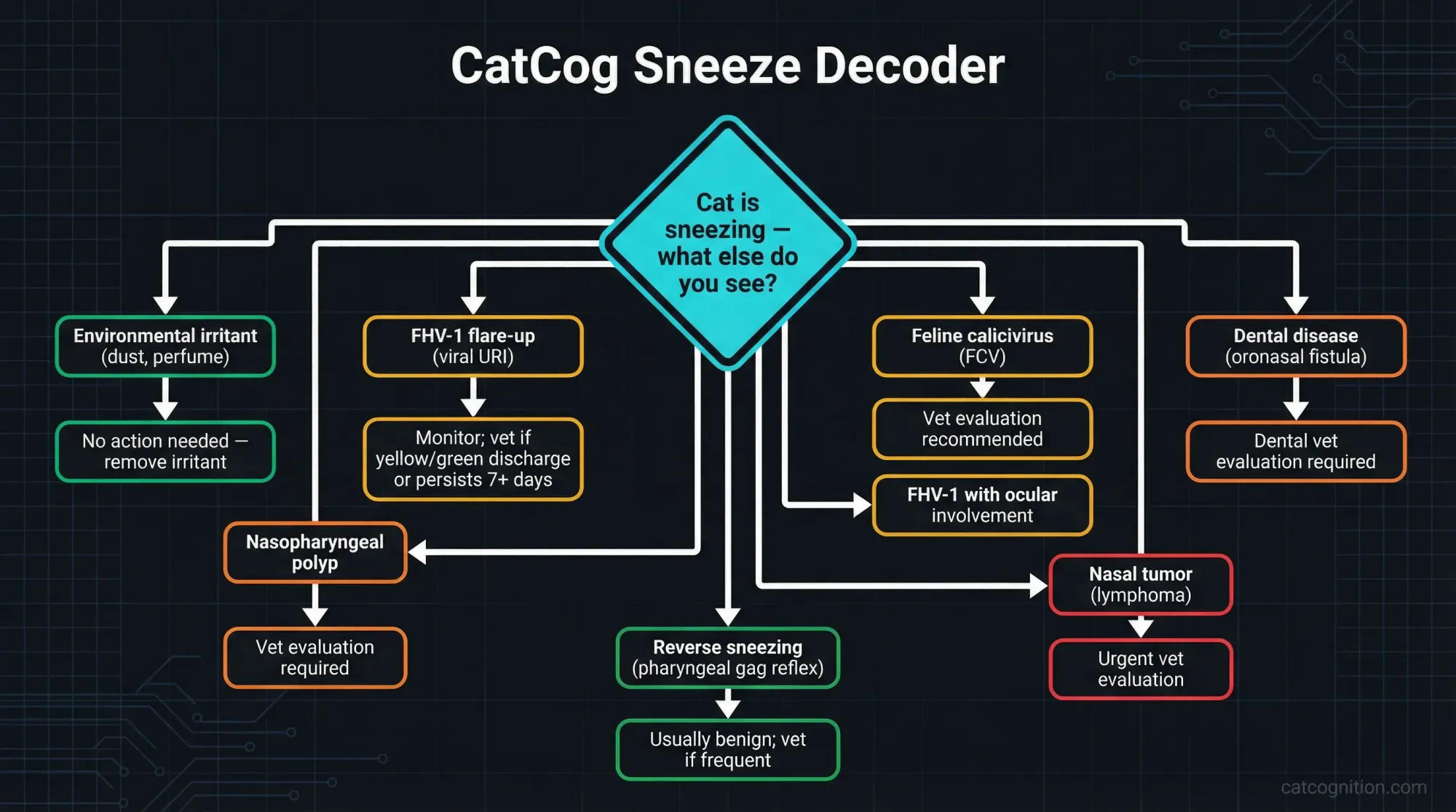
Age matters. Kittens under 8 weeks need veterinary attention sooner for any respiratory signs. Senior cats over 10 with chronic unilateral sneezing should be evaluated to rule out nasal neoplasia.
Breed matters. Brachycephalic cats (Persians, Himalayans, Exotic Shorthairs) sneeze more frequently due to compressed nasal anatomy. Chronic mild sneezing in these breeds is often structural rather than infectious.
What Is Cat Flu?
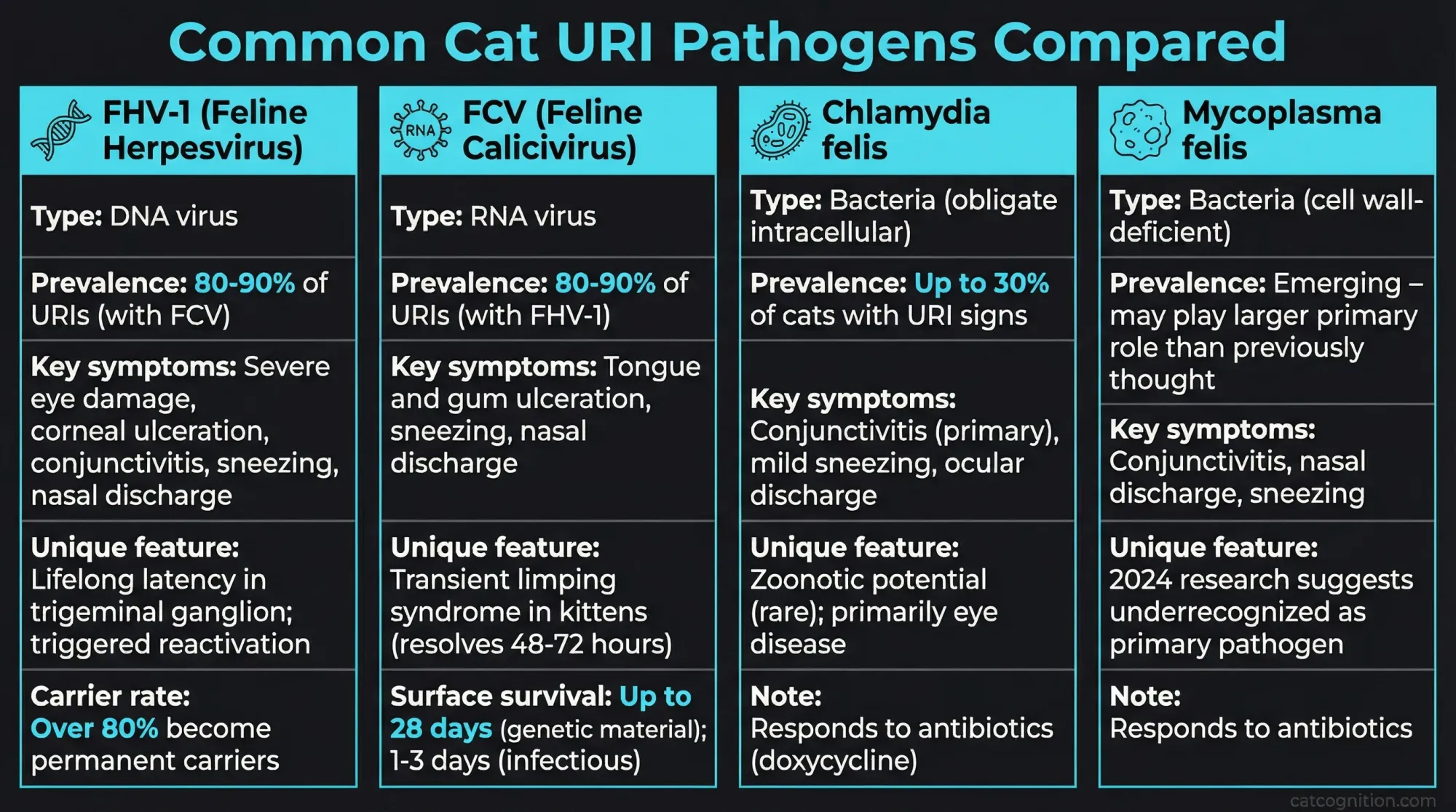
Cat flu is the common name for feline upper respiratory infection caused primarily by feline herpesvirus type 1 (FHV-1) and feline calicivirus (FCV), with additional contributions from bacterial pathogens including Chlamydia felis, Bordetella bronchiseptica, and Mycoplasma felis. International Cat Care, the world's leading feline welfare organization, confirms that FHV-1 and FCV together account for 80 to 90% of upper respiratory infections in cats, though emerging 2024 research suggests Mycoplasma felis may play a larger primary role than previously recognized.
Cat flu is not the same as human influenza -- feline respiratory viruses cannot infect humans. The two main viruses produce distinguishable patterns. FHV-1 tends to cause more severe eye damage, including corneal ulceration and conjunctivitis. FCV more commonly causes tongue and gum ulceration and, in kittens, a transient limping syndrome that resolves within 48 to 72 hours.
📊 The Evidence:
"Feline herpesvirus and feline calicivirus together cause 80 to 90% of all upper respiratory infections in cats."
Vaccination dramatically reduces the risk of severe cat flu but does not prevent infection entirely. A vaccinated cat can still contract and carry FHV-1 -- the vaccine limits disease severity, not exposure.
Housing density is the single biggest risk factor. Feline calicivirus prevalence ranges from 2.5% in small households to 50-90% in shelters. FCV genetic material can persist on surfaces for up to 28 days under laboratory conditions, though infectious virus on real-world surfaces typically survives for 1 to 3 days. In shelters, 4% of incoming cats are actively shedding FHV-1 -- after one week, that figure climbs to 50%.
What Is Reverse Sneezing in Cats?
Reverse sneezing in cats is a pharyngeal gag reflex where air is forcefully pulled inward through the nose rather than expelled outward, producing a dramatic honking or snorting sound that often alarms cat owners. Reverse sneezing is mechanistically distinct from regular sneezing -- irritation of the soft palate causes spasms that narrow the trachea and force rapid inhalation, whereas regular sneezing expels irritants outward at high velocity through the nasal passages.
The clinical significance is the key difference: reverse sneezing is almost always benign and self-limiting. The cat extends its neck, stands still, and makes rapid inhalation sounds that mimic choking. The episode passes within seconds. Gently stroking the throat or briefly covering the nostrils (forcing the cat to swallow, which resets the soft palate) can shorten an episode. Common triggers include nasal mites, airborne allergens, excitement, and eating too quickly. Brachycephalic breeds experience reverse sneezing more frequently due to elongated soft palates.
Veterinary evaluation is warranted only when episodes become frequent (multiple times daily), last longer than a minute, or are accompanied by nasal discharge or labored breathing -- which could indicate nasopharyngeal polyps, foreign bodies, or a mass.
When Should You See a Vet for Cat Sneezing?
Cat sneezing requires veterinary evaluation when accompanied by mucopurulent discharge (yellow or green), bloody discharge, unilateral discharge, eye involvement, appetite loss beyond 24 hours, labored breathing, or facial deformity. The European Advisory Board on Cat Diseases notes that fewer than 10% of healthy household cats actively shed FHV-1, meaning most mild sneezing in otherwise well cats resolves without intervention.
Red flags that elevate urgency:
Go to the vet within 24 hours if:
- Nasal discharge has turned thick, yellow, or green
- The cat has stopped eating for more than 24 hours (hepatic lipidosis risk)
- Eye involvement: squinting, cloudy cornea, prominent third eyelid
- Kitten under 8 weeks with any respiratory signs
- Sneezing persisting beyond 7 to 10 days without improvement
Seek urgent or emergency veterinary care if:
- Bloody nasal discharge, especially from one nostril
- Open-mouth breathing or visible respiratory distress
- Any facial swelling or deformity
- Complete refusal of food and water
Schedule a routine vet visit if:
- Chronic sneezing lasting more than 4 weeks with no other symptoms
- Recurring sneezing episodes in a cat over 10 years old with weight loss
- Persistent bad breath with one-sided nasal discharge (rule out dental disease)
- A cat currently on corticosteroids develops sneezing (approximately 70% FHV-1 reactivation risk in experimental studies)
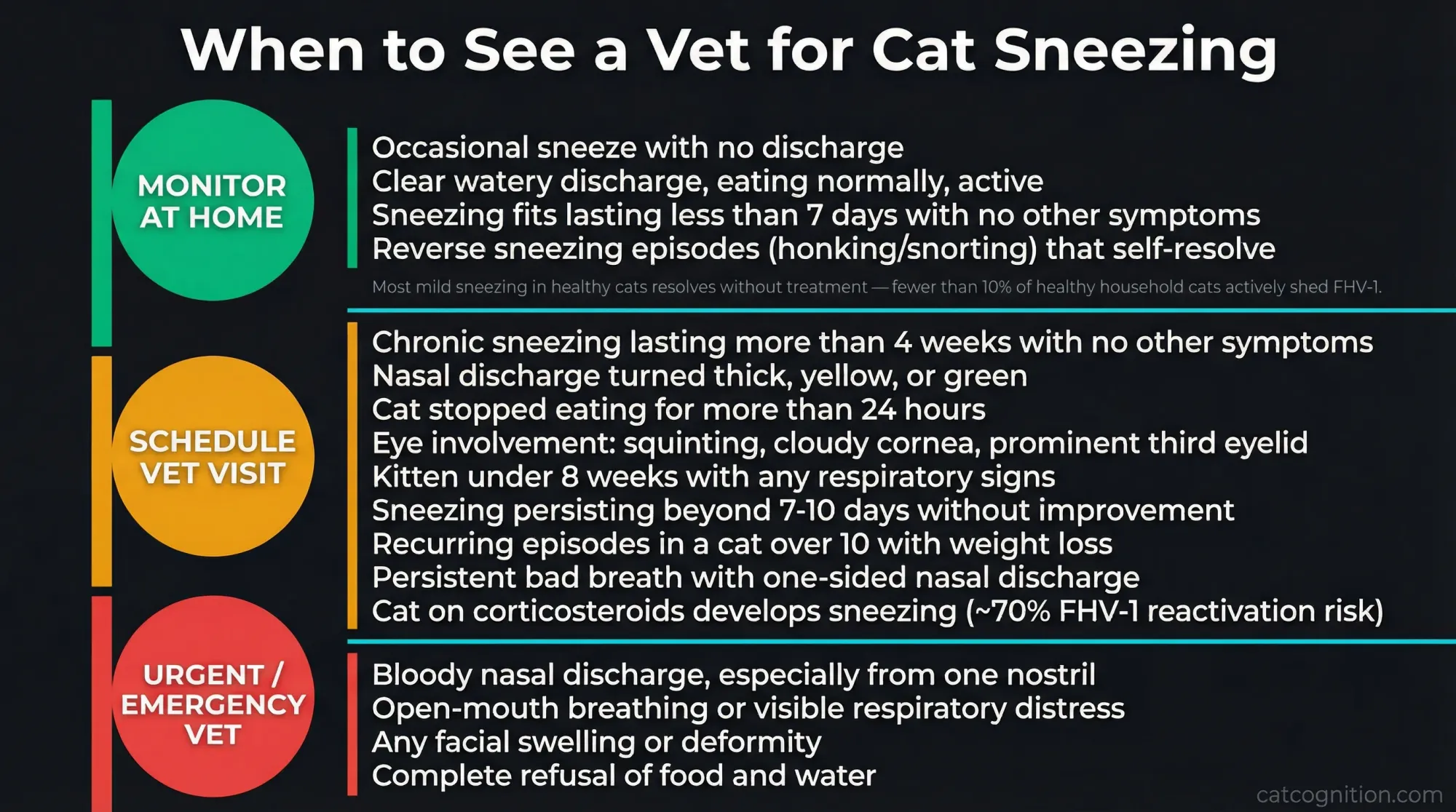
Cat sneezing is common and usually resolves on its own. But bloody nasal discharge, facial swelling, persistent one-sided discharge, breathing difficulty, or any sneezing in a young kitten or elderly cat with weight loss -- these are not wait-and-see situations. This article provides a framework for understanding causes, but it does not replace veterinary diagnosis. When in doubt, call your vet.
What to Do If Your Cat Is Sneezing
When a cat develops sneezing from a suspected viral upper respiratory infection, supportive care is the cornerstone of treatment -- most cats recover within 7 to 10 days with appropriate home management. The priorities are warmth, hydration, and nutrition.
Supportive care for viral URI (home management):
- Steam therapy: Sit with the cat in a steamy bathroom (hot shower running) for 10 to 15 minutes to moisten airways and make sneezing more productive.
- Gently clean nasal and eye discharge with a warm, damp cloth several times daily.
- Offer warmed wet food or tuna juice to encourage eating through congestion -- congested cats lose their sense of smell.
- Isolate sick cats from housemates. FHV-1 survives on surfaces for up to 2 days; FCV for up to 10 days. Disinfect shared surfaces with dilute bleach.
📊 The Evidence:
"L-lysine supplementation shows no evidence of benefit for feline herpesvirus and may worsen disease severity."
One critical myth to address: L-lysine supplements are still widely recommended for FHV-1 by pet stores and online forums. The evidence does not support this practice. A systematic review in BMC Veterinary Research concluded that lysine supplementation is not effective for FHV-1, and recent controlled studies indicate supplementation may actually increase disease severity. Both the 2024 MDPI Veterinary Sciences review and the JFMS "Snots and Snuffles" review confirm L-lysine should not be used.
Prescription treatments (veterinarian only):
- Famciclovir is the recommended systemic antiviral for severe FHV-1 cases. This requires a veterinary prescription.
- Antibiotics may be prescribed for secondary bacterial infections but do not address the underlying virus. Signs often recur once antibiotics stop.
- For chronic rhinitis, the clinical literature is direct: a cat with chronic rhinosinusitis cannot be cured, but with ongoing management -- nebulization, periodic antibiotics, humidity control -- quality of life can be meaningfully improved.
Prevention and long-term management:
- Keep vaccinations current. Core vaccines against FHV-1 and FCV reduce disease severity.
- Minimize stress triggers. FHV-1 reactivation is directly tied to stress -- maintain routine, introduce changes gradually, and consider feline pheromone diffusers during known stressful periods. For a full breakdown of what your cat needs to thrive, reducing environmental stress is one of the most impactful things you can do.
- Avoid corticosteroids when possible. In experimental studies, corticosteroid administration triggers FHV-1 reactivation in approximately 70% of carrier cats. Discuss alternatives with a veterinarian before steroid treatment in a cat with respiratory disease history.
- In multi-cat households, reduce density stress with separate food bowls, adequate litter boxes, and vertical space.
📊 The Evidence:
"FCV genetic material can persist on surfaces for up to 28 days under laboratory conditions, though infectious virus on real-world surfaces typically survives for 1 to 3 days."
Key Terms Used
Feline Herpesvirus (FHV-1): A DNA virus causing upper respiratory and ocular disease in cats. Establishes permanent latency in the trigeminal ganglion, with over 80% of exposed cats becoming lifelong carriers. Stress triggers periodic reactivation.
Feline Calicivirus (FCV): An RNA virus causing upper respiratory infection and oral ulceration in cats. FCV genetic material can persist on surfaces for up to 28 days under laboratory conditions, though infectious virus typically survives 1 to 3 days on real-world surfaces.
Reverse Sneezing: A pharyngeal gag reflex where air is forcefully inhaled through the nose rather than expelled, caused by soft palate irritation. Almost always benign and self-limiting.
Trigeminal Ganglion: A nerve relay station behind the eye serving the face and nasal passages. The primary site where FHV-1 establishes dormant latency between reactivation episodes.
Oronasal Fistula: An abnormal communication between the oral and nasal cavities, typically caused by an upper tooth root abscess breaching the bone separating tooth from nasal passage. Produces one-sided nasal discharge with bad breath.
Frequently Asked Questions
Is cat sneezing contagious to humans?
Feline herpesvirus (FHV-1) and feline calicivirus (FCV) cannot infect humans -- these are species-specific pathogens. The one exception is Chlamydia felis, detected in up to 30% of cats with upper respiratory signs, which has documented zoonotic potential. Transmission to humans is rare, and standard hand hygiene after handling a sick cat provides adequate protection.
Can I give my cat anything for sneezing at home?
Steam therapy (10 to 15 minutes in a steamy bathroom), gentle cleaning of nasal discharge, and warm strong-smelling food are the primary home interventions for viral URI. Do not give L-lysine supplements -- controlled studies show no benefit and possible harm. Do not give human cold medications to cats, as many common ingredients (acetaminophen, pseudoephedrine) are toxic to cats.
Why does my cat sneeze every day but seem fine otherwise?
Daily sneezing without other symptoms most commonly indicates low-level FHV-1 reactivation (45% of carrier cats shed virus periodically, either spontaneously or stress-triggered), chronic environmental irritation from dusty litter or household fragrances, or early chronic rhinitis. If daily sneezing persists beyond two weeks, a veterinary check is warranted to rule out dental disease, polyps, or early neoplasia.
How long does a cat cold last?
Most uncomplicated viral upper respiratory infections resolve within 7 to 10 days with supportive care. Discharge that is initially clear often becomes mucopurulent around day 5 to 7 before clearing. If symptoms persist beyond 10 days or include eye involvement, veterinary evaluation is recommended. Recovery from acute symptoms does not mean the virus is gone -- over 80% of cats become permanent FHV-1 carriers.
What does it mean when your cat keeps sneezing?
Recurrent sneezing episodes -- quiet periods followed by flare-ups -- are the hallmark of FHV-1 latency and reactivation. If a cat sneezes in recurring bouts tied to identifiable stressors (vet visits, household changes, new pets), the pattern is consistent with chronic carrier status. Environmental stress reduction is the primary management strategy.
What does it mean if my cat keeps sneezing and has watery eyes?
Sneezing combined with watery eyes strongly suggests active FHV-1 infection, as feline herpesvirus has affinity for both nasal and ocular tissues. Monitor for corneal cloudiness, squinting, or prominent third eyelid -- these indicate ocular involvement that benefits from veterinary treatment.
Do indoor cats get cat flu?
Indoor cats can contract cat flu when owners carry viral particles on clothing, when new cats introduced to the household are asymptomatic carriers, or -- most commonly -- when indoor cats that are already latent FHV-1 carriers experience stress-triggered reactivation without any new viral exposure. The virus is already inside them. Stress-triggered excessive vocalization can sometimes accompany the same episodes that trigger sneezing flare-ups, since both can be driven by environmental disruption.
Key Takeaways
Over 80% of cats exposed to feline herpesvirus become permanent carriers with the virus dormant in the trigeminal ganglion. Stress -- not new exposure -- triggers most sneezing episodes in adult cats.
The CatCog Sneeze Decoder identifies eight distinct sneezing patterns based on discharge type, laterality, symptoms, and timeline, matching each to the most likely cause and action level.
L-lysine supplementation does not work for feline herpesvirus and may worsen disease. Controlled studies and systematic reviews confirm no benefit despite its widespread recommendation.
Dental disease is an underrecognized cause of chronic cat sneezing -- upper tooth root abscesses can create oronasal fistulas that drain directly into the nasal cavity, producing characteristic one-sided discharge with bad breath.
Reverse sneezing is not regular sneezing and is almost always benign. Air moves inward during reverse sneezing (pharyngeal gag reflex) rather than outward, and episodes resolve on their own within seconds. Senior cats showing respiratory changes should also be evaluated for other issues -- nighttime vocalization changes like caterwauling can sometimes indicate overlapping health concerns in older cats.
Sources
- Feline Respiratory Infections - Cornell Feline Health Center, Cornell University College of Veterinary Medicine (Link)
- Felid Herpesvirus Type 1 Infection in Cats: A Natural Host Model for Alphaherpesvirus Pathogenesis - Maes R., Michigan State University (Link)
- Feline Herpesvirus-1: Ocular Manifestations, Diagnosis and Treatment Options - 2024 review, Veterinary Sciences / MDPI (Link)
- Cat Flu - Upper Respiratory Infection - International Cat Care (Link)
- Feline Herpesvirus (FHV) - International Cat Care (Link)
- Calicivirus Infection in Cats - 2022 review, Viruses / PMC (Link)
- Snots and Snuffles: Rational Approach to Chronic Feline Upper Respiratory Syndromes - Journal of Feline Medicine and Surgery / PMC (Link)
- Feline Rhinitis and Upper Respiratory Disease - Today's Veterinary Practice (Link)
- ABCD Guideline for Feline Herpesvirus Infection - European Advisory Board on Cat Diseases (Link)
- Nasopharyngeal Polyps - Cornell Feline Health Center (Link)
- Chlamydia Infection in Cats - International Cat Care (Link)
- Reverse Sneezing in Cats: What Causes It and When to Worry - PetMD (Link)
- Interactions of Mechanically Induced Coughing and Sneezing in Cat - Respiratory Physiology and Neurobiology, PubMed (Link)
- Survival Analysis of 97 Cats with Nasal Lymphoma - Haney et al., Journal of Veterinary Internal Medicine (Link)
- Nasopharyngeal Disease in Cats: Specific Conditions and Their Management - 2024, Journal of Feline Medicine and Surgery / PMC (Link)