Why Do Cats Pee on Clothes? The Vet-Backed Reasons and How to Stop It
Cats pee on clothes because owner-worn clothing carries the highest concentration of human scent. Learn the medical causes, the stress-scent mechanism, and the 6-step MEMO protocol backed by 16 peer-reviewed sources.

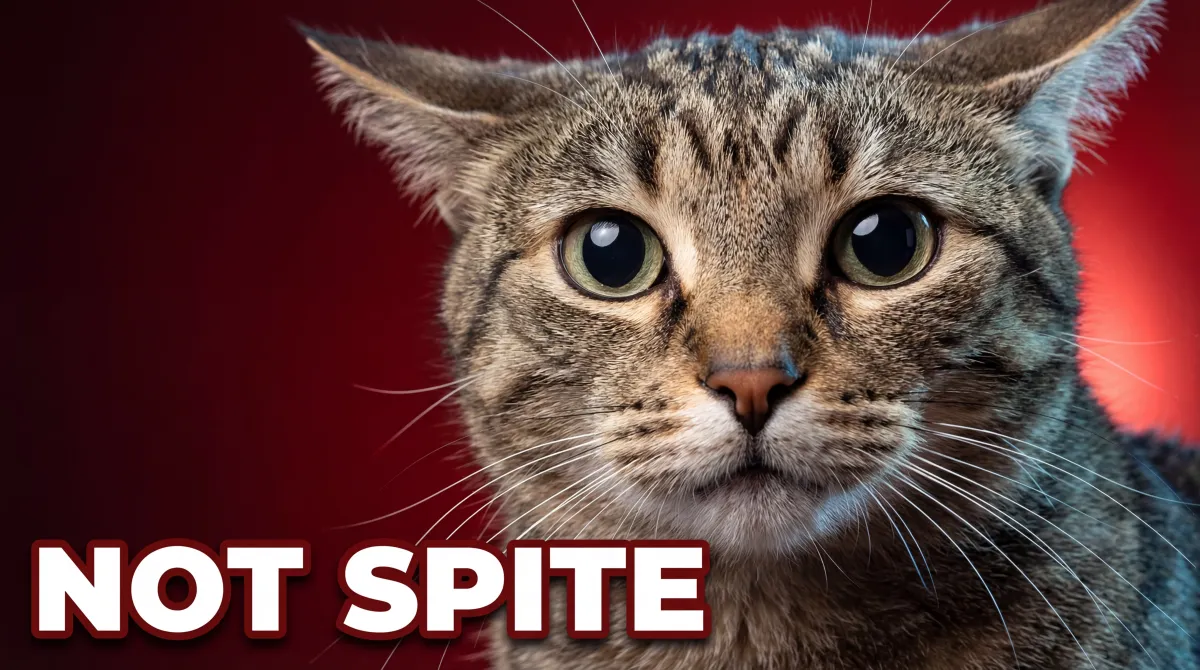
Cats pee on clothes because owner-worn clothing carries the highest concentration of human scent in the home, and stressed, anxious, or medically compromised cats are drawn to scent-saturated soft surfaces for elimination. The behavior is never spite. Feline idiopathic cystitis (FIC) accounts for approximately 55 to 69% of all feline lower urinary tract disease cases across studies, and the 2014 AAFP/ISFM professional guidelines confirm that house-soiling occurs because "the cat's physical, social, or medical needs are not being met." Clothes on the floor combine three properties cats seek when distressed: absorbent texture, accessible location, and the strongest available concentration of their owner's scent.
Table of Contents
- Why Do Cats Pee on Clothes Specifically?
- What Medical Conditions Cause Cats to Pee on Clothes?
- Can Stress Make a Cat Pee on Clothes?
- Why Do Cats Pee on the Bed?
- Is My Cat Spraying or Peeing Inappropriately?
- The CatCog Elimination Location Decoder
- How to Stop a Cat from Peeing on Clothes
- When to See the Vet
- Key Terms
- Frequently Asked Questions
- Key Takeaways
- Sources
Finding cat urine on your favourite jumper is one of those experiences that instantly shifts the owner-cat relationship. The frustration is real. The smell is real. And the temptation to assume your cat is acting out of spite is almost irresistible.
But research by Dr. Tony Buffington at Ohio State's Indoor Pet Initiative demonstrates that this behavior is rooted in stress physiology and environmental triggers, not revenge. Buffington's work on Pandora syndrome, published in the Journal of Feline Medicine and Surgery, identifies inappropriate elimination as one manifestation of a broader central stress-response disorder where the cat's sensitized nervous system drives multi-system symptoms. A 2018 study from the Mills laboratory at the University of Lincoln found that social environment is of particular importance as a general risk factor for cats urinating outside the box, more so than physical litter box factors (Barcelos et al. 2018).
What every competitor article misses is the scent-targeting question. Why clothes? Why not the tile floor or the kitchen counter? The answer lies in an intersection of olfactory biology, substrate preference, and stress behavior that no commercial pet site covers because it requires reading the actual research. A 2021 study by Behnke, Vitale, and Udell at Oregon State University found that owner scent on objects does not produce the Secure Base Effect in cats, meaning cats are not urinating on clothes because the scent comforts them. The real mechanism is more complex, and more useful for solving the problem.
This article covers the full science of why cats pee on clothes: the medical conditions that must be ruled out first, the stress-behavior pathway that explains why soft, scented surfaces are targeted, a diagnostic framework based on elimination location, and the evidence-based protocol for stopping the behavior. For a deeper look at the chemical communication side of feline urine marking, see the complete guide to why cats spray. For broader context on understanding cat behavior through science and ethology, the pillar guide covers the full landscape.
A cat straining to urinate, making frequent unproductive visits to the litter box, or crying out while attempting urination may have a urethral obstruction. This is a veterinary emergency, particularly in male cats, and can become fatal within 24 to 48 hours without treatment. Do not wait to see if the behavior improves. Seek immediate veterinary evaluation for: straining to urinate with little or no output, blood in urine, vocalizing during urination attempts, lethargy or hiding combined with elimination changes, or complete loss of appetite lasting more than 24 hours. The 2025 iCatCare consensus guidelines, co-authored by Dr. Tony Buffington and Dr. Mikel Delgado, identify urethral obstruction as requiring immediate intervention (Taylor et al. 2025).

Why Do Cats Pee on Clothes Specifically?
Cats target owner-worn clothing because clothing combines three factors driving elimination site selection in stressed cats: absorbent texture, ground-level accessibility, and high concentration of human scent. A stressed cat may urinate on owner-worn garments to create what Maddie's Fund (2017) describes as "a cocoon of [the cat's] own personal smell," though no controlled study has confirmed the scent-cocoon mechanism.
The scent factor. Worn clothes carry a dense concentration of human scent from sebaceous glands, sweat, and skin cells. Cats deposit scent through scratching, rubbing, and urine marking to establish territorial security. When a cat is stressed, it intensifies scent-related behaviors, and items saturated with familiar scent become focal points. A 2022 review in Frontiers in Veterinary Science by Zhang, Bian, Liu, and Deng found that olfactory disruption and the removal of familiar scent cues can increase stress-related behaviors in cats (Zhang et al. 2022). Owner-worn clothing is often the most scent-saturated alternative surface available. This scent-targeting mechanism is closely related to the scent-marking behaviors cats use when rubbing against you --- both are driven by the same olfactory territorial system.
The substrate factor. Cornell Feline Health Center identifies a diagnostic distinction in surface selection: cats that choose soft surfaces (carpets, beds, clothing) demonstrate a different motivational pattern than cats selecting hard surfaces (tile, bathtubs). Soft-surface preference typically indicates litter substrate dissatisfaction, medical discomfort during elimination, or anxiety-driven scent-targeting. Clothing on a floor offers a soft, absorbent surface that may feel more comfortable than litter for a cat experiencing urinary pain.
What the scent does NOT do. A critical finding from the Behnke, Vitale, and Udell study (2021) at Oregon State's Human-Animal Interaction Laboratory: items carrying the owner's scent did not produce the Secure Base Effect in cats. Owner scent on an object was not a substitute for the owner's physical presence in reducing stress. Cats peeing on clothes are not seeking comfort from the scent itself. The scent draws the cat to that location, but the urination is driven by stress, medical discomfort, or substrate preference, not by a calming effect of the owner's smell.
📊 The Evidence:
"The understandable next step -- changing the bedding to remove all traces of urine and feces -- may make the problem worse, not better, by removing the very scents the cat was trying to use to reduce his or her anxiety." (Maddie's Fund 2017, "Through a Cat's Nose")
What Medical Conditions Cause Cats to Pee on Clothes?
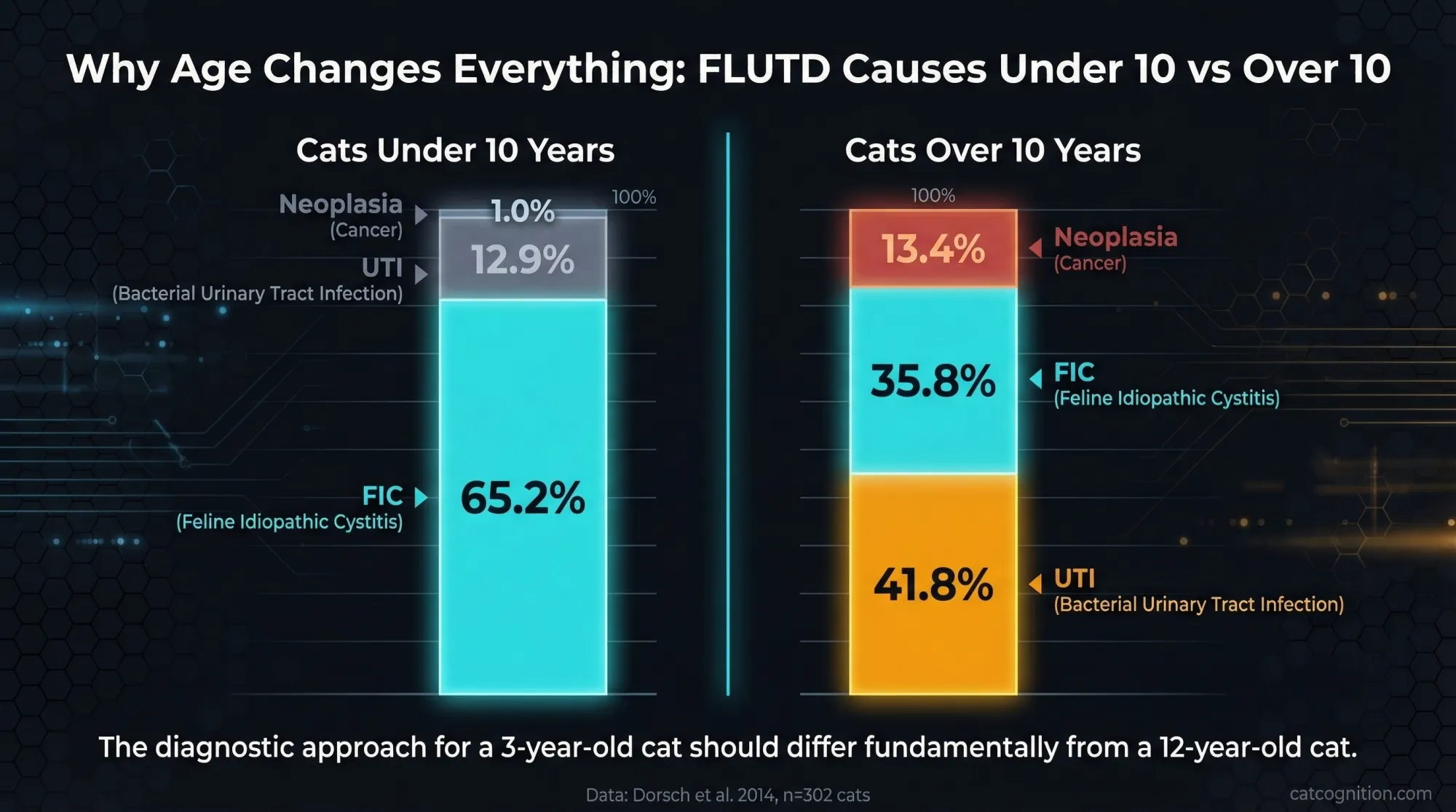
Feline idiopathic cystitis (FIC) accounts for 65.2% of lower urinary tract disease in cats under 10 years, making stress-related bladder inflammation the most likely medical cause when a young cat starts peeing on clothes (Dorsch et al. 2014). Medical causes must be ruled out first because the relationship is bidirectional: stress causes disease, and disease changes elimination patterns.
Age changes everything. A retrospective study of 302 cats with lower urinary tract disease found that the underlying cause shifts dramatically with age (Dorsch et al. 2014). In cats under 10 years, FIC dominated at 65.2% of cases, while bacterial urinary tract infection accounted for only 12.9%. In cats over 10 years, UTI surged to 41.8% and FIC dropped to 35.8%. Neoplasia (cancer) also increased from 1.0% to 13.4% in the older group. This age-stratified data means the diagnostic approach for a 3-year-old cat peeing on clothes should differ fundamentally from the approach for a 12-year-old cat.
| Condition | Prevalence | Age Pattern | Key Signs |
|---|---|---|---|
| Feline idiopathic cystitis (FIC) | 55-69% of FLUTD (65.2% in cats under 10) | Peaks in cats under 10 | Frequent urination, straining, blood in urine, episodes linked to stress |
| Urinary tract infection (UTI) | 12.9% under 10, 41.8% over 10 | Increases sharply with age | Frequent urination, foul-smelling urine, straining |
| Urolithiasis (bladder stones) | 7-15% of FLUTD | Any age | Blood in urine, straining, possible obstruction |
| Diabetes mellitus | Separate from FLUTD | Middle-aged to senior | Increased urination volume, increased thirst, weight loss |
| Chronic kidney disease | Separate from FLUTD | Common in senior cats | Increased urination volume, weight loss, decreased appetite |
| Hyperthyroidism | Separate from FLUTD | Cats over 10 | Increased urination, weight loss despite good appetite, hyperactivity |
Why FIC drives elimination changes. FIC is not a simple bladder infection. The bladder wall becomes inflamed without any identifiable bacterial cause. Affected cats experience pain during urination, urgency, and unpredictable flare-ups triggered by environmental stressors. A cat with FIC may associate the litter box with pain and begin avoiding it, choosing alternative surfaces (including clothes on the floor) for elimination. Buffington's Pandora syndrome framework identifies FIC as one component of a broader central stress-response disorder where the cat's stress system is chronically sensitized, producing symptoms across multiple organ systems simultaneously (Buffington 2014). This same stress-response pathway explains why cats throw up under environmental disruption --- vomiting and inappropriate elimination are both manifestations of the same central sensitization.
📊 The Evidence:
"FIC accounts for 65.2% of lower urinary tract disease in cats under 10 years, while UTI accounts for only 12.9%. In cats over 10 years, UTI surges to 41.8% and FIC drops to 35.8%. The underlying cause of elimination changes shifts dramatically with age." (Dorsch et al. 2014, Tierarztliche Praxis)
Can Stress Make a Cat Pee on Clothes?
Routine disruption produces a 3.2-fold increase in sickness behaviors in all cats, including previously healthy cats (Stella, Lord, Buffington 2011). Separately, during normal routine (control) weeks, three sickness behaviors -- upper gastrointestinal signs, out-of-box elimination, and decreased food intake -- accounted for 88% of all sickness behaviors observed in healthy cats. The Ohio State University research proves that any cat, healthy or not, can start peeing outside the box when the cat's environment changes.
Pandora syndrome. Dr. Buffington's Pandora syndrome framework explains why some cats respond to stress with bladder inflammation, others with vomiting, and others with elimination changes. Cats with Pandora syndrome have a sensitized central stress-response system: small adrenal glands, abnormal catecholamine responses, and chronically elevated physiological vigilance. Environmental stress does not just cause "behavioral" problems in these cats. Stress causes measurable physical disease. The bladder wall inflames. The gut lining breaks down. The immune system shifts. Spraying, peeing on clothes, over-grooming, and vomiting can all stem from the same underlying neurological dysregulation (Buffington 2014).
Social environment matters more than the litter box. A 2018 study from the Mills laboratory at the University of Lincoln systematically tested common assumptions about why cats urinate outside the box. Barcelos et al. found that social environment, specifically the presence of other cats in the household, the quality of the cat-owner bond, and personality-related factors, was a more important general risk factor for periuria than physical litter box factors like type, location, or cleanliness. This challenges the standard advice of "just clean the litter box," which dominates every competitor article on this topic. Litter box management matters in specific cases, but the broader triggers are social and emotional.
Common stress triggers that cause cats to pee on clothes:
| Trigger Category | Specific Examples |
|---|---|
| Household change | New baby, new partner, renovation, moving house |
| Schedule disruption | Owner travel, shift work changes, changed feeding times |
| Multi-cat conflict | New cat introduction, social maturity (ages 2-4), passive aggression |
| Loss or separation | Death of a companion animal, owner away for extended periods |
| Environmental threat | Outdoor cats visible through windows, neighbourhood construction |
| Litter box aversion | Pain during urination (learned avoidance), dirty box, scented litter, wrong substrate |
The 88% finding. In the Stella et al. (2011) study, during normal routine (control) weeks, 88% of all sickness behaviors observed in healthy cats fell into just three categories: upper gastrointestinal signs, out-of-box elimination, and decreased food intake. When routines were disrupted, sickness behaviors increased 3.2-fold, and when routines returned to normal, sickness behaviors dropped back to baseline, even without veterinary intervention. The environment was the treatment. Understanding how your cat communicates stress through body language signals can help you detect environmental problems before they escalate to elimination changes.
📊 The Evidence:
"Three SB [sickness behaviors] (ie, upper gastrointestinal signs, urination outside the litter box, and decreased food intake) accounted for 88% and 78% of all SB in healthy cats and cats with FIC, respectively, during control weeks." Separately, routine disruption was "associated with a 3.2-fold increase in risk for SB." (Stella, Lord, Buffington 2011, JAVMA)
Why Do Cats Pee on the Bed?
Cats pee on beds for the same reasons cats pee on clothes: beds combine absorbent texture, accessibility, and the highest sustained owner-scent concentration in the home. A person spends 7 to 9 hours per night depositing skin cells and sweat into bedding, making the bed the most scent-saturated surface in the household.
This scent concentration is also why many cats choose to sleep with their owners. The diagnostic framework applies identically. Soft-surface preference (beds, clothes, carpets) suggests a different motivational pattern than hard-surface preference (tile, bathtubs), according to Cornell Feline Health Center. A cat choosing the bed over the litter box may be experiencing pain during elimination (and associating the box with discomfort), responding to social or environmental stress, or demonstrating substrate preference for a softer surface.
The aggressive-cleaning paradox. Maddie's Fund (2017) describes a counterintuitive pattern: when owners discover urine on the bed and respond by thoroughly cleaning the area with standard household products, they strip away the cat's deposited scent. This can increase the cat's anxiety rather than reduce it, because the cat's familiar scent markers have been removed from a core territory zone. The cat may then re-mark the bed or shift to the next most scent-saturated surface: clothing. Enzymatic cleaners that destroy uric acid crystals without leaving masking chemical scents are the evidence-based alternative. Preserving some of the cat's own scent in the environment (through unwashed blankets, scratching posts, or facial-pheromone-marked furniture) is a recommended component of stress reduction.
Is My Cat Spraying or Peeing Inappropriately?
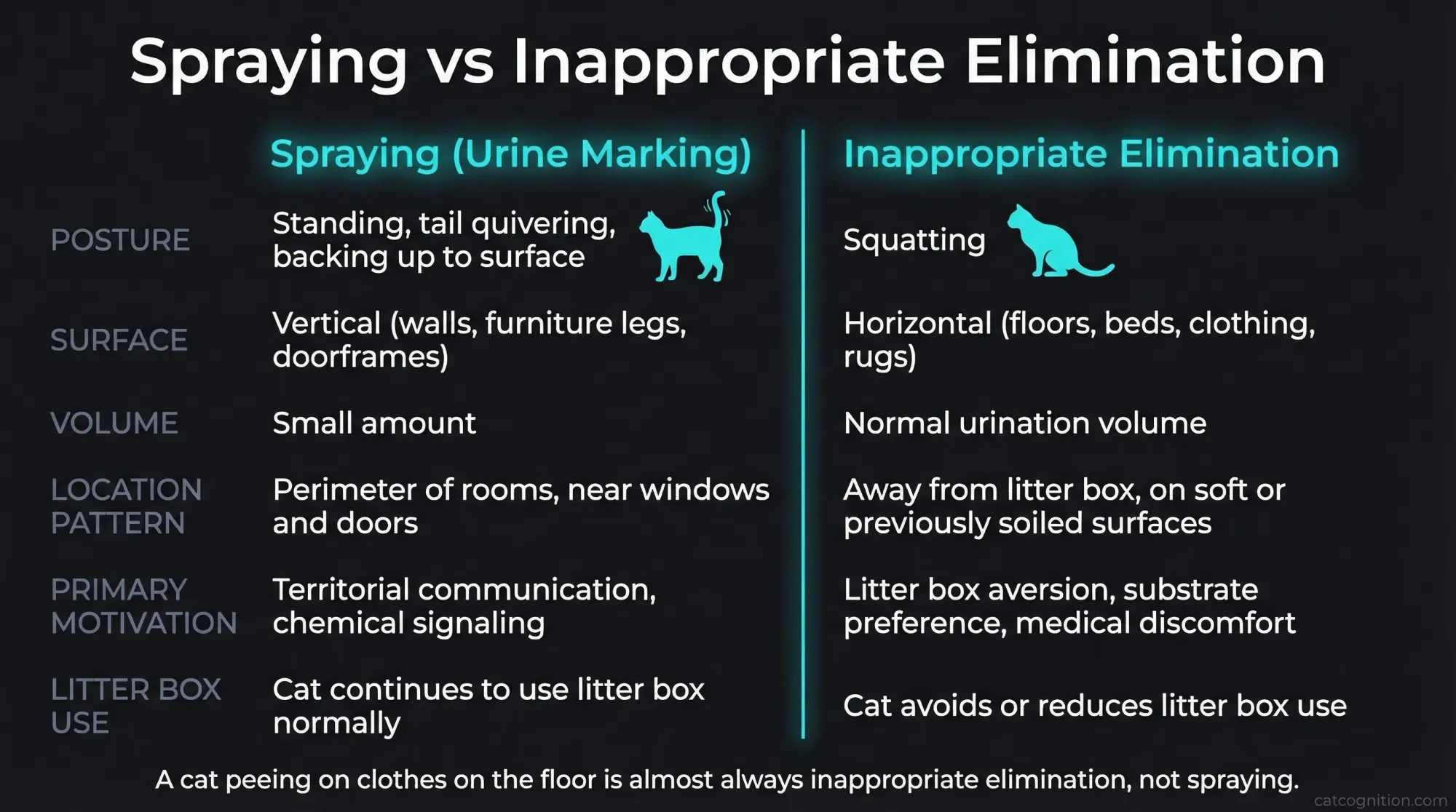
Spraying and inappropriate elimination are fundamentally different behaviors with different postures, motivations, and treatment protocols, and the distinction determines which intervention works. Dr. Sarah Heath's 2019 review establishes four diagnostic categories for house-soiling: medical aetiology, FIC/Pandora syndrome, marking behavior, and elimination related to social or environmental factors (Heath 2019).
| Feature | Spraying (Urine Marking) | Inappropriate Elimination |
|---|---|---|
| Posture | Standing, tail quivering, backing up to surface | Squatting |
| Surface | Vertical (walls, furniture legs, doorframes) | Horizontal (floors, beds, clothing, rugs) |
| Volume | Small amount | Normal urination volume |
| Location pattern | Perimeter of rooms, near windows/doors, socially significant spots | Away from litter box, on soft or previously soiled surfaces |
| Primary motivation | Territorial communication, stress-related chemical signaling | Litter box aversion, substrate preference, medical discomfort |
| Litter box usage | Cat continues to use litter box normally | Cat avoids or reduces litter box use |
Why the distinction matters for clothes. A cat peeing on clothes on the floor is almost always performing inappropriate elimination, not spraying. Clothes are horizontal surfaces, and cats urinate on them in a squatting posture with full-volume output. Spraying targets vertical surfaces with small volumes. The treatment protocols differ: spraying treatment focuses on territorial security and pheromone therapy, while inappropriate elimination treatment addresses litter box optimization, medical screening, and environmental stress reduction.
Both sexes, both statuses. Dr. Debra Horwitz's 2019 JFMS review confirms that both intact and neutered cats of both sexes can spray. Cornell Feline Health Center reports that approximately 10% of neutered males and 5% of neutered females continue to spray. Inappropriate elimination occurs across all demographics equally. For a comprehensive look at the biochemistry and treatment of spraying specifically, see the guide to why cats spray.
The CatCog Elimination Location Decoder
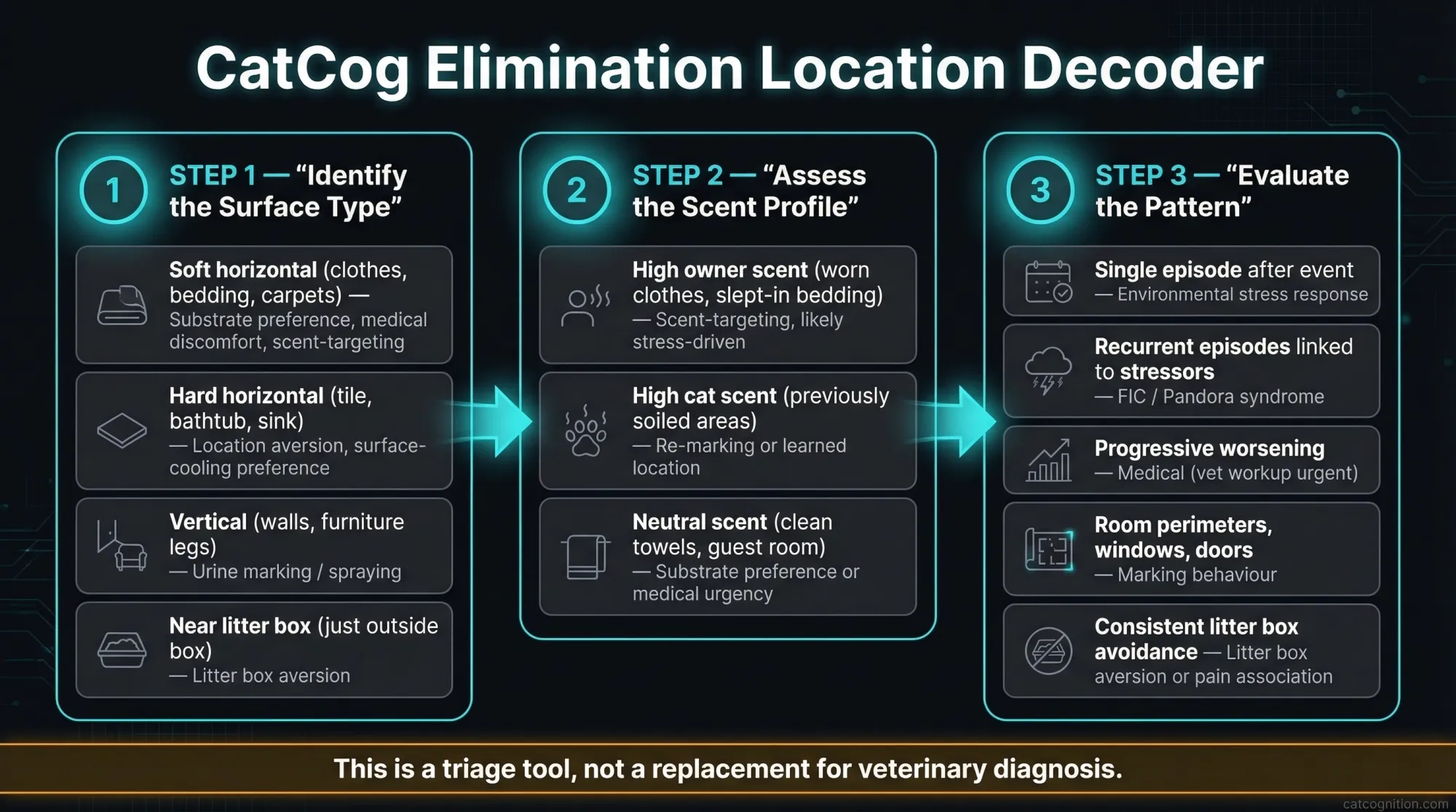
Where a cat eliminates outside the box reveals more about the underlying cause than almost any other diagnostic sign. The CatCog Elimination Location Decoder combines Heath's four-category diagnostic framework (2019) with the Barcelos et al. (2018) risk-factor research and Cornell Feline Health Center's soft-vs-hard surface distinction into a location-based diagnostic tool.
Step 1: Identify the surface type.
| Surface Type | Examples | Primary Suspicion |
|---|---|---|
| Soft horizontal | Clothes, bedding, carpets, towels, rugs | Substrate preference, medical discomfort, scent-targeting |
| Hard horizontal | Tile, bathtub, sink, hardwood | Litter box location aversion, surface-cooling preference (may indicate fever or UTI discomfort) |
| Vertical | Walls, furniture legs, doorframes | Urine marking/spraying (different behaviour entirely) |
| Near litter box | Just outside or adjacent to box | Litter box aversion (substrate, cleanliness, hood, location) |
Step 2: Assess the scent profile of the target.
| Scent Level | Examples | Interpretation |
|---|---|---|
| High owner scent | Worn clothes, slept-in bedding, used towels | Scent-targeting behaviour, likely stress-driven |
| High cat scent | Previously soiled areas, cat's own bedding | Re-marking or learned location preference |
| Neutral scent | Clean towels, guest room, new furniture | Substrate preference or medical urgency (cat could not reach box) |
Step 3: Evaluate the pattern.
| Pattern | Likely Category (Heath 2019) |
|---|---|
| Single episode after a specific event | Environmental stress response |
| Recurrent episodes linked to stressors | FIC/Pandora syndrome or behavioural |
| Progressive worsening regardless of environment | Medical aetiology (veterinary workup urgent) |
| Deposits at room perimeters, windows, doors | Marking behaviour |
| Consistent avoidance of litter box | Litter box aversion or learned pain association |
The Elimination Location Decoder is a triage tool, not a replacement for veterinary diagnosis. Any cat with elimination changes should be examined by a veterinarian to rule out medical causes before behavioral interventions begin.
How to Stop a Cat from Peeing on Clothes
Environmental modification is the primary evidence-based treatment for inappropriate elimination in cats. The 2025 Macleod systematic review found that Multimodal Environmental Modification (MEMO) and therapeutic urinary diets together have the strongest evidence of any management approach for feline idiopathic cystitis, and the 2025 iCatCare consensus guidelines reinforce environmental modification as first-line treatment (Taylor et al. 2025).
The CatCog Elimination Resolution Protocol (6 Steps):
Step 1: Veterinary examination (mandatory, non-negotiable). Schedule a full veterinary workup including urinalysis, urine culture, and blood chemistry before assuming the cause is behavioral. The Learn & Horwitz 2024 review confirms that medical problems must be treated or ruled out before attention shifts to behavioral options. Young cats (under 10) should be evaluated primarily for FIC and urolithiasis. Cats over 10 should be screened for UTI, kidney disease, diabetes, and hyperthyroidism.
Step 2: Remove access to target items. Pick up clothes from the floor. Close bedroom doors or use laundry baskets with lids. This is not a permanent solution. This is immediate damage control while the underlying cause is identified and treated. The behaviour cannot self-reinforce if the target surface is unavailable.
Step 3: Litter box optimization. Apply the AAFP/ISFM guidelines: one litter box per cat plus one extra, placed in separate locations. Use uncovered boxes at least 1.5 times the cat's body length. Fill with unscented clumping litter. Scoop daily, full change weekly. Place boxes in quiet, accessible locations away from food, water, and high-traffic areas.
Step 4: Enzymatic cleaning of all soiled surfaces. Standard household cleaners leave residual uric acid crystals detectable to the cat, triggering re-marking. Enzymatic cleaners containing bacterial enzymes break down uric acid at the molecular level. Clean all previously soiled clothing, bedding, and carpeting thoroughly. Never use ammonia-based cleaners, which contain compounds similar to those in urine and encourage re-marking.
Step 5: MEMO protocol implementation. Dr. Buffington's Multimodal Environmental Modification approach addresses the root cause of stress-driven elimination:
| MEMO Component | Practical Action |
|---|---|
| Predictable routine | Fixed feeding times, consistent play schedule, stable household patterns |
| Resource multiplication | n+1 rule for all resources (litter boxes, food, water, scratching, resting) |
| Environmental enrichment | Vertical space, food puzzles, window perches, interactive play |
| Social stress reduction | Identify and resolve multi-cat conflict, provide separate resources per cat |
| Owner behaviour | No punishment for elimination accidents. Punishment increases stress and worsens the behaviour (AAFP/ISFM 2014). No yelling, no chasing, no rubbing the cat's nose in urine. |
Punishment is one of the most common mistakes cat owners make --- and it is explicitly contraindicated by every clinical guideline on feline elimination behaviour.
Step 6: Scent preservation strategy. Based on the Zhang et al. (2022) and Maddie's Fund (2017) findings, preserve some of the cat's own scent markers in the environment. Do not wash all bedding and clean all surfaces simultaneously. Leave the cat's unwashed blanket, untreated scratching posts, and facial-pheromone-rubbed furniture intact. Stripping all familiar scent from the home can increase anxiety and trigger re-marking on the remaining scent-rich surfaces, including owner clothing.
If the behaviour persists after 2 to 4 weeks: Return to the veterinarian. Some cats diagnosed with "behavioral" elimination problems actually have unrecognized FIC. Consider a referral to a board-certified veterinary behaviourist (DACVB). Pharmacological options (SSRIs like fluoxetine, pheromone therapy like Feliway) are supplements to environmental modification, not replacements.
📊 The Evidence:
"Multimodal environmental modification to reduce stress/conflict and therapeutic urinary foods...currently have the strongest evidence to support their use in managing FIC, and should, together, be considered the primary treatment approach." The review also notes the overall lack of high-quality studies supporting most FIC management techniques. (Macleod et al. 2025, New Zealand Veterinary Journal)
When to See the Vet
Every cat that starts peeing outside the litter box should receive a veterinary examination, regardless of whether the cause appears behavioural. The 2025 iCatCare consensus guidelines recommend a diagnostic approach beginning with detailed history and physical examination, followed by urinalysis, imaging, and further workup as indicated (Taylor et al. 2025). The following signs require urgent or emergency action.
Emergency (immediate veterinary visit, do not wait):
| Sign | Why It Is Urgent |
|---|---|
| Straining to urinate with little or no output | Potential urethral obstruction, life-threatening in male cats within 24-48 hours |
| Blood in urine (hematuria) | Indicates bladder wall damage, infection, or obstruction |
| Vocalizing or crying during urination attempts | Pain signal suggesting obstruction or severe inflammation |
| Complete appetite loss lasting more than 24 hours | Risk of hepatic lipidosis and systemic deterioration |
| Lethargy, hiding, or collapse alongside elimination changes | Indicates systemic illness beyond localized urinary disease |
Urgent (veterinary appointment within 1-2 days):
| Sign | Why It Needs Attention |
|---|---|
| Sudden onset of elimination changes in a cat with no prior history | New behaviour suggests acute medical or environmental trigger |
| Increased water consumption combined with increased urination volume | Possible diabetes, kidney disease, or hyperthyroidism |
| Elimination changes in a cat over 10 years old | UTI risk increases from 12.9% to 41.8% in this age group |
| Elimination changes following a household stressor that persist beyond 48 hours | Stress-driven episodes typically resolve within 48 hours; persistence suggests medical involvement |
| Any cat that has stopped eating or significantly reduced food intake | Appetite loss compounds urinary disease risk and indicates systemic stress |
Important: Never restrict water access to reduce urine output. Water restriction risks dehydration and worsens urinary conditions. Never punish a cat for elimination outside the box. The AAFP/ISFM guidelines explicitly state that house-soiling is "not due to spite or anger toward the caregiver" and that punishment damages the cat-owner relationship, increases stress, and worsens the behaviour (AAFP/ISFM 2014).
📊 The Evidence:
"This unwanted behavior is not due to spite or anger towards the owner, but because the cat's physical, social or medical needs are not being met." (AAFP/ISFM Guidelines for Diagnosing and Solving House-Soiling Behavior in Cats, 2014)
Moon has never peed outside his litter box, and I used to assume that was because he is just a well-behaved cat. Writing this article dismantled that assumption. Reviewing the Stella et al. study, where even healthy cats showed a 3.2-fold increase in elimination problems during routine disruption, I realized Moon's "good behaviour" is more likely a reflection of his environment than his character. He lives in a single-cat home with a predictable feeding schedule, multiple resting spots, and no outdoor cats visible from the windows. Looking at the AAFP/ISFM environmental guidelines, our household happens to satisfy nearly every checklist item, not through deliberate planning, but through luck. The real surprise was the Behnke, Vitale, and Udell finding. I had always assumed cats gravitated to worn clothing because the owner's smell was comforting. That assumption turns out to be wrong. Owner scent on an object does not produce a measurable calming effect. The scent draws the cat to the item, but the urination is driven by something else entirely: stress, pain, or substrate preference. That distinction changes how you solve the problem. You do not just leave scented items around as comfort objects. You address the underlying stressor.
Key Terms
- Feline idiopathic cystitis (FIC): Inflammation of the bladder wall without an identifiable infectious cause, accounting for approximately 55 to 69% of all feline lower urinary tract disease cases across studies. Episodes are triggered by stress and resolve with environmental modification. Previously called "feline urological syndrome" (FUS) and later "feline lower urinary tract disease" (FLUTD), which is now used as the broader umbrella term.
- Pandora syndrome: A clinical framework proposed by Dr. Tony Buffington describing a central stress-response disorder in cats where a sensitized nervous system produces symptoms across multiple organ systems, including the bladder (FIC), gastrointestinal tract, skin, and immune system. Named for the "opening of a box" of multi-system problems triggered by environmental stress.
- Periuria: The clinical term for urination outside the litter box on horizontal surfaces. Distinguished from urine marking (spraying), which targets vertical surfaces in a standing posture.
- MEMO protocol: Multimodal Environmental Modification, Dr. Buffington's systematic approach to reducing feline stress through environmental enrichment, resource management, predictable routines, and elimination of punishment. The 2025 Macleod systematic review identifies MEMO and therapeutic urinary diets together as having the strongest evidence base of any FIC management approach.
- Inappropriate elimination: The broad term for urination or defecation in locations unacceptable from a human perspective. Encompasses multiple distinct causes including medical disease, stress-related periuria, substrate preference, and litter box aversion.
- Substrate preference: A cat's preference for a particular surface texture for elimination. Cats with soft-substrate preference (clothing, carpet, bedding) may be responding to litter dissatisfaction, pain during elimination, or a learned preference for absorbent surfaces.
- FLUTD (feline lower urinary tract disease): The umbrella term for any disorder affecting the bladder or urethra in cats, including FIC, bacterial UTI, urolithiasis, urethral plugs, and neoplasia. The specific underlying cause determines treatment.
Frequently Asked Questions
Why does my cat only pee on my clothes and not anyone else's?
Cats target the clothing of the person whose scent is most familiar and most concentrated. In most households, the primary caregiver's worn clothing carries the densest scent signature. The cat is not singling out one person for punishment. The cat is drawn to the strongest available concentration of familiar human scent. If one household member's clothes are consistently on the floor while others' are in closed hampers, access also plays a role.
Is my cat peeing on my clothes out of spite?
No. The AAFP/ISFM professional guidelines explicitly state that house-soiling "is not due to spite or anger toward the caregiver, but because the cat's physical, social, or medical needs are not being met" (AAFP/ISFM 2014). Cats lack the cognitive framework for vindictive action. Peeing on clothes is a stress response, a medical symptom, or a substrate preference, never a calculated act of revenge.
Why do female cats pee on things?
Female cats pee outside the litter box for the same medical and behavioural reasons as male cats: FIC, UTI, stress, litter box aversion, and environmental change. While spraying (urine marking on vertical surfaces) occurs at lower rates in females (approximately 5% of neutered females vs. 10% of neutered males, per Cornell Feline Health Center), inappropriate elimination on horizontal surfaces like clothes and beds occurs across both sexes at similar rates. The misconception that elimination problems are a "male cat issue" delays diagnosis in females.
Will a new litter box stop my cat from peeing on clothes?
Litter box optimization is one component of the solution, but the 2018 Barcelos et al. study found that social environment is a more important general risk factor for cats urinating outside the box than litter box factors alone. A new litter box will not resolve FIC, multi-cat conflict, or separation anxiety. The most effective approach combines litter box optimization with veterinary screening, environmental modification, and stress reduction.
How do I get cat urine smell out of clothes?
Standard laundry detergent does not break down uric acid crystals, which means residual odour can return when clothing gets damp. Enzymatic cleaners containing bacterial enzymes specifically designed for pet urine break down uric acid at the molecular level. Pre-soak clothing in enzymatic cleaner for 15 to 30 minutes before washing. Avoid hot water on the first wash, which can set protein-based stains. Never use bleach or ammonia-based products, which contain compounds similar to urine and can trigger re-marking if the cat encounters the treated item.
Can stress alone make a healthy cat pee outside the litter box?
Yes. The Stella, Lord, and Buffington (2011) study at Ohio State University demonstrated that even healthy cats with no history of urinary disease showed a 3.2-fold increase in sickness behaviors during routine disruptions, with out-of-box elimination among the three most common responses. Stress does not just cause "behavioral" changes. Stress causes measurable physiological changes including bladder wall inflammation (FIC) that resolve when the environment stabilises.
Why does my cat pee on clothes left on the floor but not in the laundry basket?
Access and scent concentration. Clothes on the floor are immediately accessible at ground level, matching the cat's natural elimination posture. Clothes in a closed hamper are physically inaccessible and emit less scent. This is also why the simplest immediate intervention is picking up clothes and using a closed laundry basket while the underlying cause is identified and treated.
Should I punish my cat for peeing on my clothes?
Never. Punishment is explicitly contraindicated by the AAFP/ISFM guidelines, Dr. Horwitz's clinical review, and every authoritative source on feline elimination behaviour. Punishment increases the cat's stress, which worsens the very behaviour the owner is trying to stop. Punishment also damages the cat-owner relationship, which Barcelos et al. (2018) identified as a risk factor for elimination problems. The evidence-based response is veterinary screening followed by environmental modification.
Key Takeaways
Cats pee on clothes because of scent, texture, and stress, never spite. Owner-worn clothing combines three properties that attract stressed cats: the highest concentration of familiar human scent, an absorbent soft surface, and ground-level accessibility. The AAFP/ISFM professional guidelines confirm that house-soiling occurs because the cat's needs are not being met.
Medical screening is the mandatory first step, and age determines the most likely cause. Feline idiopathic cystitis accounts for 65% of lower urinary tract disease in cats under 10 years. In cats over 10, bacterial UTI surges to 42% of cases. A veterinary workup including urinalysis must come before any behavioural intervention.
Social environment matters more than litter box setup. The Barcelos et al. (2018) study found that the presence of other cats, the cat-owner bond quality, and personality-related factors are more important general risk factors for inappropriate elimination than litter box type, location, or cleanliness.
Environmental modification is the strongest evidence-based treatment. The MEMO protocol (Multimodal Environmental Modification) and therapeutic urinary diets together have the strongest evidence of any management approach for FIC, confirmed by the 2025 Macleod systematic review. Predictable routines, resource multiplication, enrichment, and elimination of punishment form the treatment foundation.
Aggressive cleaning can make the problem worse. Stripping all familiar scent from the home increases feline anxiety and can trigger re-marking on the remaining scent-rich surfaces. Use enzymatic cleaners that destroy uric acid without leaving masking chemicals, and preserve some of the cat's own scent markers in the environment.
Sources
- Cat inappropriate elimination and its interaction with physical disease — Learn, A. & Horwitz, D., 2024, Veterinary Clinics of North America: Small Animal Practice (PubMed)
- From FUS to Pandora syndrome: where are we, how did we get here, and where to now? — Buffington, C.A.T., Westropp, J.L., Chew, D.J., 2014, Journal of Feline Medicine and Surgery (SAGE)
- Clinical evaluation of multimodal environmental modification (MEMO) in the management of cats with idiopathic cystitis — Buffington, C.A.T. et al., 2006, Journal of Feline Medicine and Surgery (PubMed)
- Common feline problem behaviours: Unacceptable indoor elimination — Heath, S., 2019, Journal of Feline Medicine and Surgery (PubMed)
- Common risk factors for urinary house soiling (periuria) in cats and its differentiation — Barcelos, A.M., McPeake, K., Affenzeller, N., Mills, D.S., 2018, Frontiers in Veterinary Science (PubMed)
- Sickness behaviors in response to unusual external events in healthy cats and cats with feline interstitial cystitis — Stella, J.L., Lord, L.K., Buffington, C.A.T., 2011, JAVMA (PubMed)
- AAFP and ISFM guidelines for diagnosing and solving house-soiling behavior in cats — Carney, H.C., Sadek, T.P., Curtis, T.M. et al., 2014, Journal of Feline Medicine and Surgery (SAGE)
- Advances in understanding and treatment of feline inappropriate elimination — Herron, M.E., 2010, Topics in Companion Animal Medicine (PubMed)
- Common feline problem behaviors: Urine spraying — Horwitz, D.F., 2019, Journal of Feline Medicine and Surgery (PubMed)
- Feline lower urinary tract disease in a German cat population — Dorsch, R. et al., 2014, Tierarztliche Praxis Ausgabe K Kleintiere Heimtiere (PubMed)
- 2025 iCatCare consensus guidelines on the diagnosis and management of lower urinary tract diseases in cats — Taylor, S., Buffington, C.A.T., Delgado, M.M. et al., 2025, Journal of Feline Medicine and Surgery (PubMed)
- The effect of owner presence and scent on stress resilience in cats — Behnke, A.C., Vitale, K.R., Udell, M.A.R., 2021, Applied Animal Behaviour Science (ScienceDirect)
- Dealing with stress in cats: What is new about the olfactory strategy? — Zhang, L., Bian, Z., Liu, Q., Deng, B., 2022, Frontiers in Veterinary Science (PMC)
- Through a cat's nose: How understanding smell can keep cats in homes — Maddie's Fund, 2017 (Maddie's Fund)
- Feline behavior problems: House soiling — Cornell Feline Health Center, Cornell University College of Veterinary Medicine (Cornell)
- Feline lower urinary tract disease — Cornell Feline Health Center, Cornell University College of Veterinary Medicine (Cornell)