Why Do Cats Throw Up? Causes, Myths, and When to Worry
Cat vomiting triggers from four distinct brainstem pathways — and frequent vomiting is never normal. Learn what causes it, when to worry, and how to help your cat.


Table of Contents
- Is It Normal for Cats to Throw Up?
- What Actually Happens When a Cat Vomits
- Common Causes of Cat Vomiting
- Vomiting vs. Regurgitation: Why the Difference Matters
- What Vomit Color and Appearance Tell You
- How Stress Makes Cats Vomit
- The Hairball Myth: When "Normal" Is Actually a Warning Sign
- When Cat Vomiting Is an Emergency
- The CatCog Vomiting Response Scale (VRS)
- How to Reduce Cat Vomiting
- Key Terms
- Frequently Asked Questions
- Key Takeaways
- Sources
Cats vomit because their brainstem receives alarm signals from four distinct pathways: direct gut irritation, blood-borne toxins, stress responses, and motion sickness. The vomiting reflex is coordinated by distributed brainstem structures with the nucleus of the solitary tract serving as a final common pathway, according to a 13-specialist review published in the Journal of Feline Medicine and Surgery. Occasional vomiting in an otherwise healthy cat is usually not dangerous, but vomiting more than once per week signals an underlying condition requiring veterinary investigation. For more on keeping your cat healthy, see our complete guide to cat care.

Is It Normal for Cats to Throw Up?
Veterinary evidence does not support routine vomiting as normal feline behavior. A Banfield Pet Hospital study of over one million cats found approximately 2% had chronic vomiting or diarrhea (with vomiting specifically affecting about 1.4%), likely an underestimate due to widespread underreporting. Research by Dr. Tony Buffington, Emeritus Professor at Ohio State University's College of Veterinary Medicine, has further demonstrated that chronic vomiting in cats often reflects systemic stress responses rather than simple stomach upset. Occasional vomiting in a cat with normal appetite and energy differs fundamentally from frequent episodes, which signal treatable underlying conditions.
As Dr. Lori Teller of Texas A&M College of Veterinary Medicine explains, vomiting more than a couple of times per month warrants veterinary attention. The threshold that should prompt diagnostic workup is any cat vomiting more than once per week. This distinction matters because chronic vomiting in cats often signals treatable conditions that worsen without intervention, from inflammatory bowel disease to kidney disease to gastrointestinal lymphoma.
"Chronic vomiting or diarrhea affects approximately 2% of cats based on a study of over one million veterinary records at Banfield Pet Hospital, with vomiting specifically affecting about 1.4%, though the true prevalence is likely higher due to widespread underreporting."
The cultural normalization of cat vomiting creates a dangerous blind spot. Owners who dismiss weekly vomiting as "normal" may miss the early stages of progressive diseases that respond best to early treatment. A cat that throws up hairballs weekly is not a healthy cat with a minor inconvenience. That cat likely has an underlying condition driving excessive fur ingestion or altered gastrointestinal motility.
What Actually Happens When a Cat Vomits
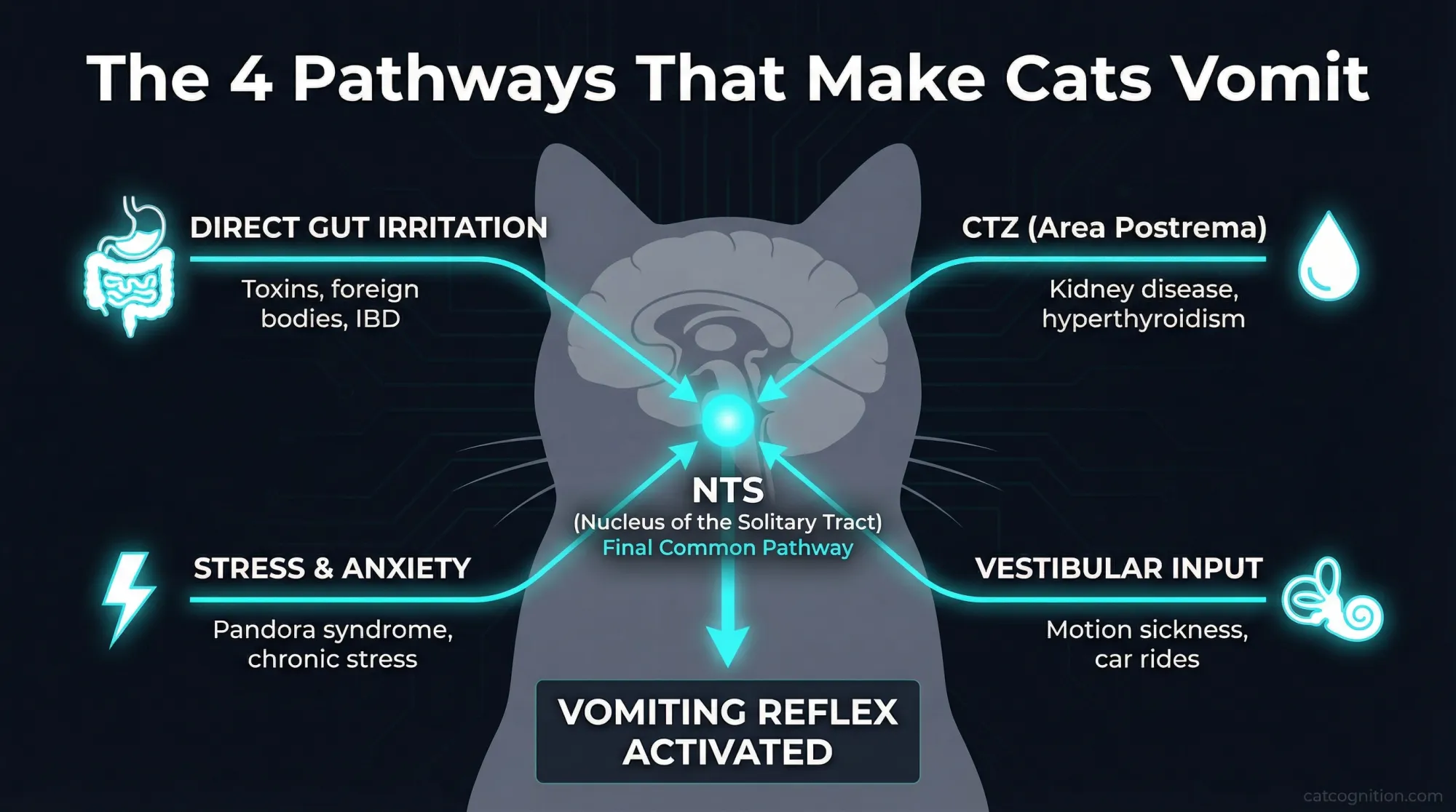
Cat vomiting is a reflex coordinated by distributed brainstem structures, not a single "vomiting center," with the nucleus of the solitary tract (NTS) acting as a final common pathway integrating alarm signals from four distinct pathways. A 13-specialist review in the Journal of Feline Medicine and Surgery established the four-pathway brainstem model as scientific consensus.
Think of the cat's vomiting reflex like a smoke detector with four separate sensor types. Each sensor detects a different kind of threat, but all four trigger the same alarm: the cat throws up.
Pathway 1: Direct gut irritation. Toxins, foreign bodies, or inflammation in the stomach and intestines stimulate vagal afferent nerves that signal the brainstem directly. This pathway handles bad food, swallowed objects, and inflammatory conditions like IBD.
Pathway 2: Blood-borne toxins. The chemoreceptor trigger zone (CTZ) in the area postrema detects toxins circulating in the blood from organ dysfunction. When the kidneys fail to filter waste products, or when the thyroid produces excess hormones, this sensor trips the alarm. The cat vomits not because something is wrong with the stomach, but because something is wrong elsewhere in the body.
Pathway 3: Stress and anxiety. The central nervous system's threat response, when chronically activated, hypersensitizes the entire gastrointestinal tract through the autonomic nervous system. Research by Dr. Tony Buffington, Emeritus Professor at Ohio State University's College of Veterinary Medicine, identified this stress-gut axis as a clinical framework he termed Pandora syndrome.
Pathway 4: Vestibular input. Motion sickness activates the vomiting reflex through inner ear signals, explaining why many cats vomit during car rides.
The critical diagnostic challenge: all four pathways produce the same visible result. The cat heaves, retches, and expels stomach contents. The fix depends entirely on which sensor triggered the alarm.
Common Causes of Cat Vomiting
Cat vomiting causes range from benign dietary issues to life-threatening medical conditions, with the underlying cause determining whether the cat needs a slow feeder bowl or emergency surgery. Sorting cat vomiting causes into diagnostic categories helps cat owners move from panic to productive assessment.
Dietary and Mechanical Causes:
Eating too fast remains one of the most common triggers for what appears to be vomiting but is often regurgitation. Cats that gulp food and immediately bring it back up, typically within minutes and in a tubular shape, are experiencing esophageal regurgitation rather than true vomiting. Slow feeder bowls and splitting meals into 3-4 smaller portions per day usually resolve this pattern.
Abrupt diet changes trigger vomiting because the feline digestive system adapts slowly to new food compositions. Transitioning between foods over 7-10 days, gradually shifting the ratio of old to new food, prevents this common and entirely avoidable cause. Understanding common cat owner mistakes like abrupt food switches can prevent unnecessary episodes.
Inflammatory and Immune-Mediated Causes:
Inflammatory bowel disease (IBD) is one of the most common causes of chronic vomiting in cats and one of the most underdiagnosed. Vomiting occurs in approximately 71% of cats with small bowel IBD, based on a small case series of 14 cats (Dennis et al., 1992, as reviewed by Jergens, 2012), though the true rate requires larger studies to confirm. IBD involves chronic inflammation of the gastrointestinal lining driven by complex interactions between the immune system, gut bacteria, and dietary factors.
Feline triaditis, the concurrent presence of pancreatitis, cholangitis (bile duct inflammation), and IBD, affects 17-39% of ill cats in referral hospital populations according to a review published in JFMS (Cerna, Kilpatrick & Gunn-Moore, 2020). The cat's unique anatomy explains why these three organs so often inflame together: cats possess a shared pancreatic and bile duct opening into the duodenum, meaning inflammation in one organ easily cascades to the other two.
"Feline triaditis -- concurrent pancreatitis, cholangitis, and IBD -- affects 17-39% of ill cats in referral hospital populations, driven by the cat's unique shared pancreatic-bile duct anatomy."
Systemic Disease:
Chronic kidney disease (CKD) affects an estimated 20-50% of cats over age 10, depending on the study and age cutoff, with toxin buildup from impaired kidney filtration causing nausea and vomiting. Cats lose roughly two-thirds of kidney function before clinical signs become noticeable, which is why vomiting from kidney disease often appears to come out of nowhere in senior cats. Vomiting was reported in 27% of cats with acute-on-chronic CKD in a study published in the Journal of Veterinary Internal Medicine (2020).
Hyperthyroidism, the most common endocrine disorder in cats, causes vomiting through excess thyroid hormone stimulating gastrointestinal motility. Hyperthyroidism typically affects cats over age 10 and presents alongside weight loss despite increased appetite, increased thirst, and restlessness.
Senior cats experiencing new symptoms should be evaluated promptly — our guide to cat life stages explains how health needs shift with age.
Parasites and Toxins:
Parasites, particularly roundworms, remain a common and highly treatable cause of vomiting, especially in kittens and cats with outdoor access. Common household toxins including lilies, antifreeze, onions, and certain medications cause acute vomiting and can be fatal without immediate veterinary treatment.
Vomiting vs. Regurgitation: Why the Difference Matters
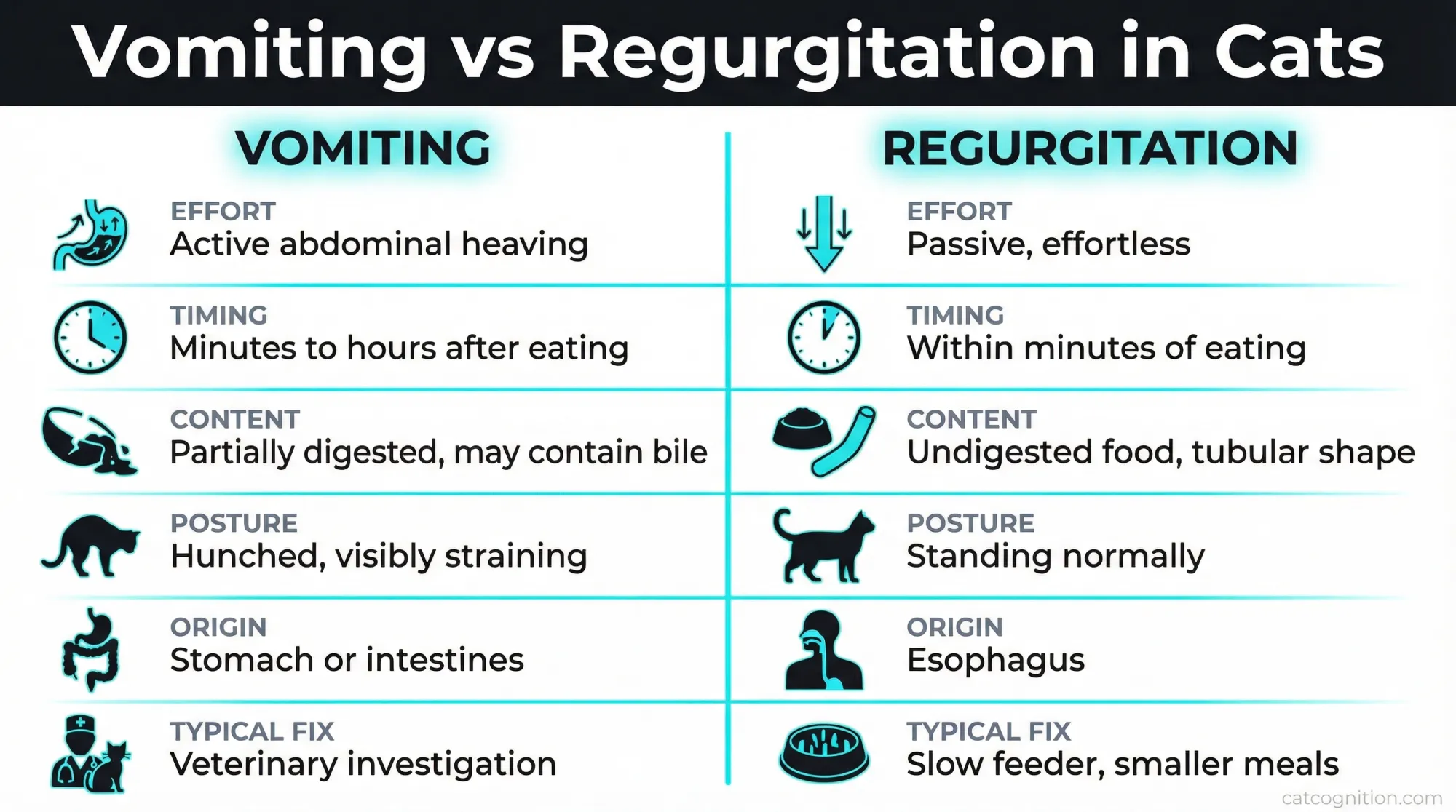
Vomiting and regurgitation produce similar messes but arise from different mechanisms, and distinguishing vomiting from regurgitation changes the diagnostic approach entirely. Vomiting involves active abdominal contractions and partially digested contents; regurgitation is passive, producing undigested food from the esophagus within minutes of eating.
| Feature | Vomiting | Regurgitation |
|---|---|---|
| Effort | Active abdominal heaving, retching | Passive, effortless expulsion |
| Timing | Minutes to hours after eating | Usually within minutes of eating |
| Content | Partially digested, may contain bile | Undigested food, often tubular shape |
| Posture | Hunched, visibly straining | Often mid-walk or standing normally |
| Origin | Stomach or intestines | Esophagus |
| Common Cause | Disease, toxins, inflammation | Eating too fast, esophageal issues |
| Typical Fix | Veterinary investigation | Slow feeder, smaller meals |
This distinction matters because a cat that regurgitates undigested food immediately after eating too fast needs a puzzle feeder, not an endoscopy. Conversely, a cat producing partially digested material with bile after active retching needs diagnostic workup to identify the underlying cause. Filming the episode on your phone gives your veterinarian the most useful diagnostic information you can provide.
What Vomit Color and Appearance Tell You
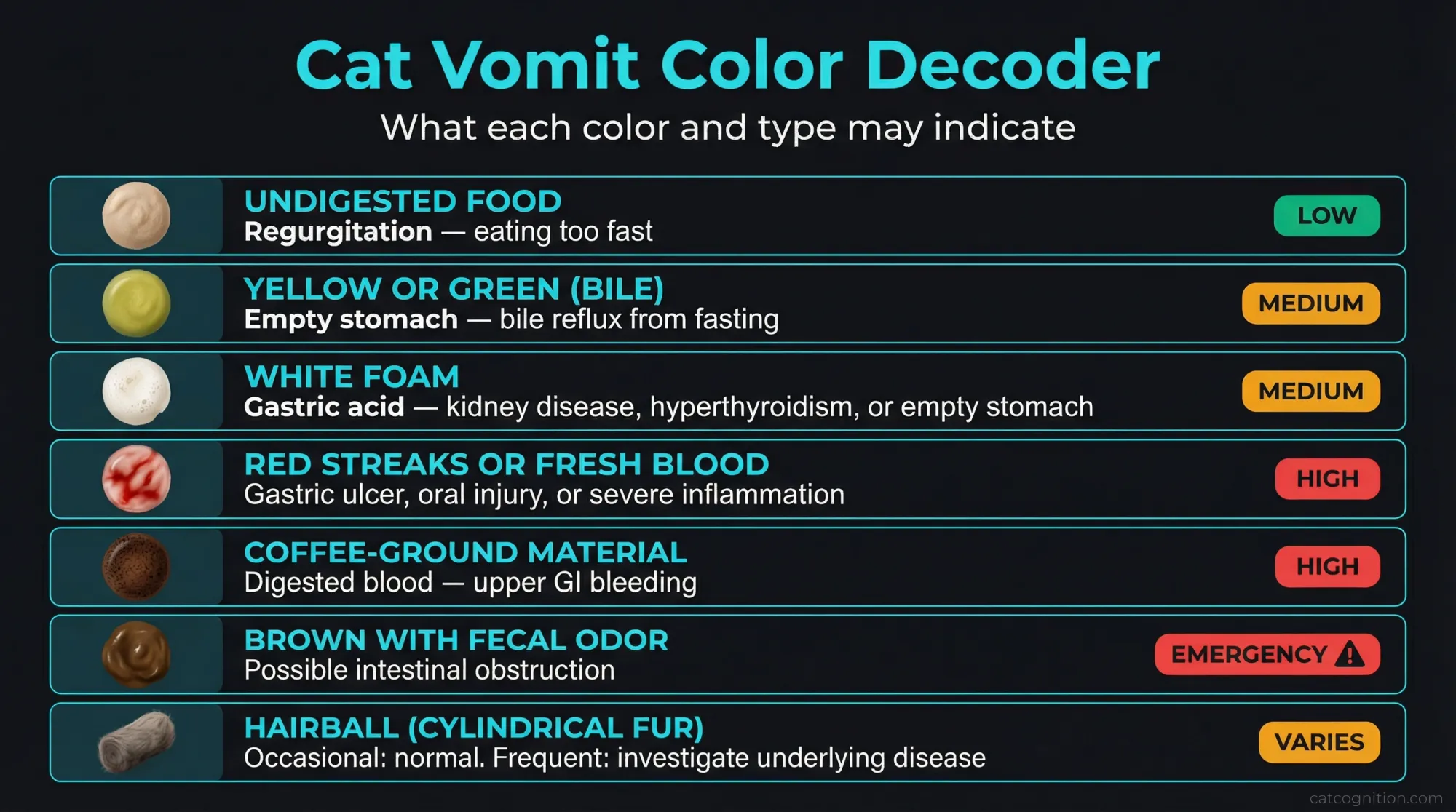
Cat vomit color and consistency provide veterinarians with critical diagnostic clues about the underlying cause, turning an unpleasant mess into a useful assessment tool. No single color is definitively diagnostic on its own, but combining color, texture, and timing patterns helps narrow the range of possible causes significantly.
| Vomit Color/Type | What It Suggests | Urgency |
|---|---|---|
| Undigested food | Regurgitation (eating too fast) or recent meal rejection | Low -- try slow feeder |
| Yellow or green (bile) | Empty stomach; bile reflux from prolonged fasting | Medium -- more frequent meals may help |
| White foam | Gastric acid without food; nausea from kidney disease, hyperthyroidism, or empty stomach | Medium -- vet if recurring |
| Red streaks or fresh blood | Gastric ulcer, oral injury, or severe inflammation | High -- vet within 24 hours |
| Coffee-ground material | Digested blood from upper GI bleeding | High -- vet same day |
| Brown with fecal odor | Possible intestinal obstruction | Emergency -- vet immediately |
| Hairball (cylindrical, matted fur) | Occasional: normal grooming byproduct. Frequent: underlying disease | See hairball section below |
Yellow or green vomit appears when a cat vomits on an empty stomach, expelling bile that has refluxed from the small intestine. Morning vomiting of yellow bile, sometimes called bilious vomiting syndrome, often responds to a simple intervention: a small late-night meal or more frequent feeding schedule that prevents the stomach from remaining empty for extended periods.
Brown vomit with a fecal odor is a veterinary emergency that may indicate intestinal obstruction. Non-productive retching, where a cat heaves repeatedly without producing anything, is equally urgent and may signal a foreign body obstruction requiring surgical intervention.
How Stress Makes Cats Vomit
Chronic stress causes real gastrointestinal disease in cats through a mechanism most articles overlook. Dr. Tony Buffington's Pandora syndrome framework, developed at Ohio State University, describes how chronic anxiety hypersensitizes the central threat response system, triggering endocrine and immune changes that produce physical disease including chronic vomiting, diarrhea, and excessive hairball production.
Pandora syndrome is classified as an "anxiopathy," a disorder resulting from chronic anxiety. The evidence base for Pandora syndrome rests on clinical observations, retrospective case series, and response to environmental modification rather than randomized controlled trials. Veterinary researchers recognize Pandora syndrome as a legitimate and useful clinical framework, though the field acknowledges that further controlled research would strengthen the evidence base.
The practical implication remains well-supported: Multimodal Environmental Modification (MEMO) has shown significant reductions in urinary and behavioral symptoms in chronically stressed cats, with a trend toward reduced gastrointestinal symptoms as well. MEMO involves predictable daily routines, environmental enrichment including vertical space and hiding spots, separated resources in multi-cat homes, and dedicated play sessions. When these environmental changes resolve chronic vomiting that defied dietary interventions, the stress-gut axis becomes the most likely explanation.
Common stressors that may trigger GI symptoms in cats include multi-cat territorial conflict, unpredictable household routines, lack of environmental enrichment, inadequate safe spaces, and sudden changes in the home environment. Cats that overgroom from anxiety ingest excess fur, which then compounds the vomiting problem through hairball formation, creating a cycle where stress simultaneously irritates the gut and increases fur ingestion. Learning to read your cat's body language can help you identify stress signals before they escalate to physical symptoms.
"Dr. Tony Buffington's Pandora syndrome framework demonstrates that chronic stress in cats triggers an anxiopathy causing real physical disease across multiple organ systems, including chronic vomiting."
The Hairball Myth: When "Normal" Is Actually a Warning Sign
Frequent hairball vomiting signals underlying disease, not normal feline behavior. While Cornell Feline Health Center considers one hairball every week or two as unremarkable, progressive veterinary opinion — led by Martha Cannon's 2013 JFMS research — increasingly holds that frequent hairball vomiting warrants investigation for underlying conditions. Some veterinary specialists note that weekly hairball vomiting likely indicates underlying nausea unrelated to hair ingestion.
Cats spend approximately 30-50% of waking hours grooming, and most of the ingested fur passes through the digestive tract without issue. When hairballs form frequently, the underlying cause is typically excessive fur ingestion, altered gastrointestinal motility, or both. Excessive fur ingestion results from stress-grooming, flea infestations, pruritic skin disease, or pain-related overgrooming. Altered GI motility results from inflammatory bowel disease, dietary intolerance, or other chronic gastrointestinal conditions.
Data from the Oxford Cat Clinic, published in JFMS by veterinary specialist Martha Cannon (RCVS Specialist in Feline Medicine), found that approximately 10% of shorthaired cats and 20% of longhaired cats regularly produce hairballs. Cannon concluded that frequent hairball elimination is "often an indication of excessive fur ingestion or of underlying gastrointestinal abnormality." These figures come from a single-clinic survey and represent the only published hairball prevalence data available, highlighting how underresearched this common concern remains.
It is important to note that the veterinary community has not reached full consensus on what constitutes "normal" hairball frequency. Some practitioners consider one hairball every week or two as unremarkable, while progressive veterinary positions hold that healthy cats should produce essentially no hairballs. The honest middle ground, expressed by VCA Hospitals: "At this time, it is not clear what frequency of occasional vomiting of hairballs, if any, may be normal." The trend in veterinary medicine is moving toward investigating frequent hairball vomiting rather than dismissing it.
Moon used to vomit every couple of weeks when he was younger. I realised it was due to hairballs - he is a British Longhair breed with a very thick coat. After switching to dry food that ensures a healthier coat, occassionaly giving gel treats that help eliminate hairballs, and brushing him more often, I'm happy to say Moon throwing up hairballs is a thing of the past.

When Cat Vomiting Is an Emergency
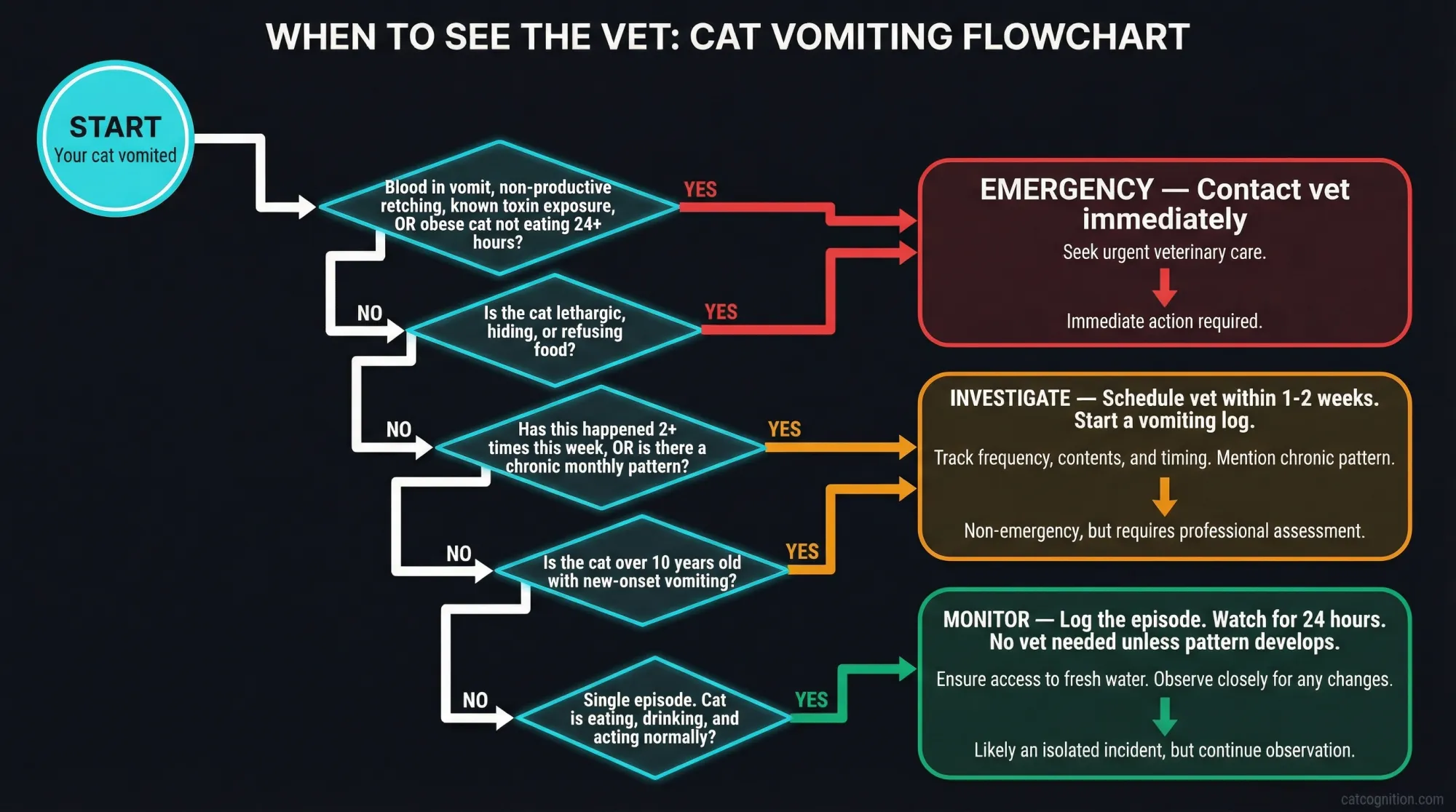
Cat vomiting becomes a veterinary emergency when specific warning signs indicate life-threatening conditions including intestinal obstruction, toxin exposure, severe organ disease, or the risk of hepatic lipidosis in obese cats that stop eating. Knowing these red flags prevents both dangerous delays and unnecessary panic.
Immediate Emergency (Contact Vet Now):
- Blood in vomit, whether fresh red streaks or dark coffee-ground material, indicating upper GI bleeding
- Non-productive retching where a cat heaves repeatedly but produces nothing, suggesting possible obstruction
- Vomiting combined with lethargy, weakness, or hiding behavior
- Known or suspected toxin ingestion, including lily exposure, antifreeze, or human medications
- Vomiting in an obese cat that has stopped eating for 24+ hours, due to the risk of hepatic lipidosis (fatal liver failure from fat mobilization)
The hepatic lipidosis risk deserves special emphasis because it contradicts the common advice to withhold food from a vomiting cat. The 13-specialist JFMS review (Batchelor et al., 2013) explicitly warns that obese cats are at risk of hepatic lipidosis if food is withheld during vomiting episodes. For overweight cats, prolonged fasting can be more dangerous than the vomiting itself. If your cat is on a weight management plan, understanding the risks covered in our article on GLP-1 weight-loss treatments for cats provides important context.
Urgent (Vet Within 24-48 Hours):
- Vomiting more than once per week
- Vomiting accompanied by decreased appetite lasting more than 24 hours
- Increased thirst or changes in urination patterns alongside vomiting
- Weight loss concurrent with vomiting episodes
- Vomiting in any cat over age 10 with no prior history, due to elevated risk of CKD, hyperthyroidism, and GI lymphoma
As Dr. Lori Teller of Texas A&M advises: "A veterinarian would much rather see a vomiting cat and determine it's healthy than have an owner delay care."
This article provides educational information, not veterinary diagnosis. Cat vomiting ranges from harmless to life-threatening, and some dangerous causes like intestinal obstruction and toxin exposure deteriorate rapidly. When in doubt, call your veterinarian. Specifically: any cat vomiting blood, retching without producing anything, or showing lethargy and appetite loss alongside vomiting needs same-day veterinary evaluation. Obese cats that stop eating require urgent attention even if the vomiting seems mild.
The CatCog Vomiting Response Scale (VRS)
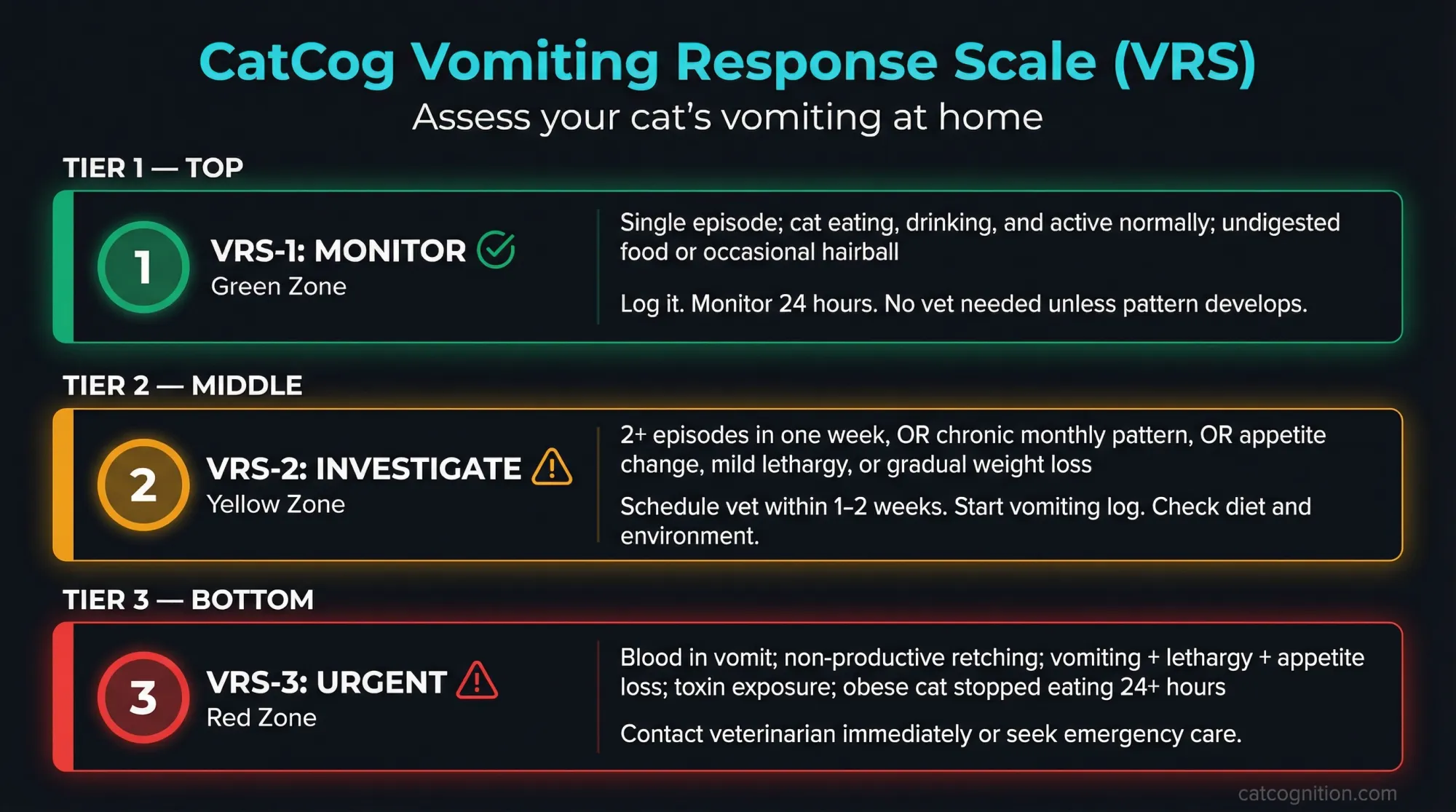
The CatCog Vomiting Response Scale provides a three-tier assessment framework for cat owners to evaluate vomiting episodes at home before deciding whether to call the veterinarian. The VRS maps vomiting episodes to urgency levels based on frequency, content, and accompanying symptoms.
| VRS Level | Name | Criteria | Action |
|---|---|---|---|
| VRS-1: Monitor | Green Zone | Single episode; cat otherwise normal (eating, drinking, active, normal litter box); undigested food or occasional hairball | Log it, monitor for 24 hours; no vet needed unless pattern develops |
| VRS-2: Investigate | Yellow Zone | 2+ episodes in one week, OR chronic pattern (monthly+), OR accompanies appetite change, mild lethargy, or gradual weight loss | Schedule vet appointment within 1-2 weeks; begin vomiting log; check for dietary and environmental triggers |
| VRS-3: Urgent | Red Zone | Blood in vomit; non-productive retching; vomiting + lethargy + appetite loss; vomiting + increased thirst/urination; known toxin exposure; any vomiting in an obese cat that has stopped eating for 24+ hours | Contact veterinarian immediately or seek emergency care |
How to Use the VRS:
Start a vomiting log the first time you notice a pattern. Record the date, time, content description, and any preceding events (diet change, stressor, time since last meal). Pattern recognition is the single most useful diagnostic tool for veterinarians evaluating chronic vomiting. Two weeks of logged data gives a vet more diagnostic information than a verbal description of "throws up sometimes."
"The 13-specialist European review in the Journal of Feline Medicine and Surgery confirms that common dietary recommendations for acute cat vomiting have little scientific basis, challenging widespread advice about fasting and bland diets."

How to Reduce Cat Vomiting
Reducing cat vomiting requires matching the intervention to the underlying cause rather than applying generic solutions, since the 13-specialist JFMS review found that common dietary recommendations for acute vomiting in cats have "little scientific basis" despite being standard advice. The following protocol addresses the most common and modifiable causes.
Step 1: Rule Out Eating Speed
If your cat vomits undigested food within minutes of eating, the problem is likely regurgitation from eating too fast. Switch to a slow feeder bowl or food puzzle. Split daily food into 3-4 smaller meals rather than 1-2 large portions. This single change resolves the problem for a significant number of cats.
Step 2: Stabilize Diet
Never switch cat food abruptly. Transition between foods over 7-10 days, mixing old and new food in gradually shifting ratios. Consistency matters: cats' digestive systems adapt slowly to new protein sources and formulations.

Step 3: Address Grooming and Hairballs
Regular brushing reduces the volume of fur cats ingest during self-grooming. For longhaired cats, daily brushing is not optional if hairballs are a recurring issue. If frequent hairball vomiting persists despite regular brushing, schedule a veterinary appointment to investigate underlying causes including skin disease, GI motility issues, or stress-grooming.
Step 4: Reduce Environmental Stress
Following the environmental enrichment principles from Dr. Buffington's Indoor Pet Initiative: provide predictable daily routines, multiple water stations placed away from food, food puzzles for mental stimulation, vertical space (cat trees, shelves), hiding spots, and in multi-cat households, separate resources (litter boxes, feeding stations, resting areas) for each cat. Environmental stress reduction addresses the root cause of Pandora syndrome-related vomiting.
Step 5: Schedule Appropriate Veterinary Screening
Annual bloodwork for cats aged 7 and older catches CKD, hyperthyroidism, and liver disease before vomiting becomes the presenting symptom. Cats over 10 benefit from twice-yearly screening. For any cat with chronic vomiting (more than once per week for three or more weeks), veterinary diagnostics should include complete blood count, chemistry panel, thyroid levels (T4), fecal analysis, and potentially abdominal imaging. If your cat also shows breathing changes alongside vomiting, mention both symptoms to your vet — they may share underlying causes.
| Likely Cause | Intervention | When to Escalate |
|---|---|---|
| Eating too fast | Slow feeder bowl, 3-4 smaller meals daily | If vomiting continues despite slow feeding |
| Hairballs (occasional) | Regular brushing; fiber-enriched food | If more than 1-2 hairballs per month |
| Diet sensitivity | Elimination diet trial (novel protein, 8-12 weeks, under vet guidance) | If no improvement after 12 weeks |
| Stress-related | MEMO protocol: routine, enrichment, separate resources, play | If no improvement after 4-6 weeks |
| Bilious vomiting (morning bile) | Late-night small meal; more frequent feeding | If pattern persists despite dietary changes |
| Chronic/medical | Vet diagnostics: bloodwork, fecal, imaging, possible biopsy | Any cat vomiting 1+/week for 3+ weeks |
Key Terms
- Nucleus of the Solitary Tract (NTS): The brainstem structure that serves as the "final common pathway" coordinating the vomiting reflex in cats
- Chemoreceptor Trigger Zone (CTZ): A region in the brainstem that detects blood-borne toxins from organ dysfunction and triggers vomiting
- Pandora Syndrome: A clinical framework developed by Dr. Tony Buffington describing multi-system disease arising from chronic anxiety in cats, classified as an anxiopathy
- MEMO (Multimodal Environmental Modification): Dr. Buffington's evidence-based protocol for reducing stress-related disease in cats through environmental enrichment and routine predictability
- Triaditis: The concurrent presence of pancreatitis, cholangitis, and inflammatory bowel disease in cats, enabled by the feline anatomy's shared pancreatic-bile duct
- Regurgitation: Passive expulsion of undigested food from the esophagus, distinct from active vomiting which involves brainstem-coordinated abdominal contractions
- Hepatic Lipidosis: A potentially fatal liver condition that develops when obese cats stop eating and the body mobilizes fat stores faster than the liver can process
- Bilious Vomiting Syndrome: Morning vomiting of yellow or green bile caused by bile reflux into an empty stomach, often managed by more frequent feeding
Frequently Asked Questions
Cat owners frequently ask about vomit color meaning, normal vomiting frequency, stress-related vomiting, hairball concerns, food-change triggers, and emergency warning signs. The following answers draw on the peer-reviewed veterinary evidence cited throughout this article to address the most common questions with specificity rather than vague reassurance.
What does yellow cat vomit mean?
Yellow or green cat vomit contains bile, a digestive fluid produced by the liver and stored in the gallbladder. Bile in vomit indicates the stomach was empty when the vomiting reflex triggered. Morning vomiting of yellow bile often results from prolonged overnight fasting. A small late-night meal or more frequent feeding schedule frequently resolves this pattern without veterinary intervention.
How often is cat vomiting considered normal?
Occasional vomiting in a cat with normal appetite, energy, and litter box habits is generally not alarming, according to Dr. Lori Teller of Texas A&M. However, vomiting more than a couple of times per month warrants a veterinary consultation. Any cat vomiting more than once per week needs diagnostic workup regardless of how the cat appears otherwise.
Can stress really make a cat throw up?
Yes. Dr. Tony Buffington's clinical framework of Pandora syndrome, developed through research at Ohio State University, describes how chronic anxiety hypersensitizes the cat's central threat response system, triggering changes in the endocrine and immune systems that produce real gastrointestinal disease including vomiting, diarrhea, and excessive hairball production. Common stressors include multi-cat territorial conflict, unpredictable routines, and insufficient environmental enrichment.
Should I withhold food from a vomiting cat?
The standard advice to withhold food from a vomiting cat lacks strong scientific evidence. The 13-specialist European review in JFMS (Batchelor et al., 2013) found that dietary recommendations for acute vomiting have "little scientific basis." More importantly, withholding food from obese cats risks triggering hepatic lipidosis, a potentially fatal liver condition. Consult your veterinarian rather than defaulting to fasting, especially if your cat is overweight.
Are frequent hairballs normal for cats?
While Cornell Feline Health Center considers one hairball every week or two as unremarkable, progressive veterinary opinion — led by Martha Cannon's 2013 JFMS research — increasingly holds that frequent hairball vomiting warrants investigation for underlying conditions. What veterinary professionals increasingly agree on: weekly hairball vomiting warrants investigation for underlying conditions including stress-grooming, skin disease, or gastrointestinal motility disorders.
Why does my older cat suddenly keep throwing up?
New-onset vomiting in cats over age 10 warrants prompt veterinary evaluation because the three most common age-related causes are all progressive and treatable: chronic kidney disease (affecting 20-50% of cats over 10), hyperthyroidism (the most common feline endocrine disorder), and gastrointestinal lymphoma — the most common form of the most common cancer in cats. Bloodwork including kidney values and thyroid hormone levels (T4) should be the first diagnostic step for any senior cat with new vomiting.
What is the most dangerous cause of cat vomiting?
Intestinal obstruction from a foreign body is among the most immediately dangerous causes because the condition deteriorates rapidly without surgical intervention. Non-productive retching, where a cat heaves repeatedly but nothing comes up, is the hallmark sign. Toxin ingestion, particularly lily exposure in cats, is equally urgent. Among chronic conditions, gastrointestinal lymphoma is the most serious, accounting for 55% of feline intestinal neoplasms in a study of 1,129 tumors. However, over 90% of cats with the small cell form achieve remission of their clinical signs with treatment, with survival times of 2-4 years, according to Cornell University.
Can changing my cat's food cause vomiting?
Yes. Abrupt food changes are a common and entirely preventable cause of cat vomiting. The feline digestive system adapts slowly to new protein sources and formulations. Always transition between foods over 7-10 days, gradually increasing the proportion of new food while decreasing the old. This simple practice prevents most diet-change-related vomiting episodes.
Key Takeaways
Frequent cat vomiting always warrants veterinary investigation because four distinct brainstem pathways can trigger identical symptoms from very different causes. Matching the correct intervention to the correct pathway determines whether a cat needs a slow feeder, stress reduction, or emergency surgery.
Cat vomiting is not "just a cat thing": Frequent vomiting signals underlying disease requiring investigation, not a normal quirk of feline biology. Any cat vomiting more than once per week needs veterinary diagnostic workup.
Four pathways, one symptom: Cat vomiting is triggered by direct gut irritation, blood-borne toxins from organ disease, chronic stress responses, or motion sickness. All four pathways produce identical visible symptoms, making the underlying cause impossible to determine without veterinary assessment.
Hairball vomiting is overdue for myth-busting: While Cornell Feline Health Center considers one hairball every week or two as unremarkable, Martha Cannon's 2013 JFMS research increasingly supports the view that frequent hairball vomiting warrants investigation for underlying conditions including stress-grooming, skin disease, or gastrointestinal motility problems.
Never fast an obese vomiting cat: Withholding food from overweight cats risks hepatic lipidosis, a potentially fatal liver condition. The 13-specialist JFMS review found that standard dietary advice for acute vomiting lacks scientific basis. Consult your veterinarian before restricting food.
Start a vomiting log today: Recording date, time, content, and surrounding events gives your veterinarian more diagnostic value than any verbal description. Two weeks of logged data transforms a vague concern into actionable clinical information. If your cat also shows symptoms like excessive drooling, note that in the log too — multiple symptoms together help your vet narrow the diagnosis faster.
Sources
Cats vomit through four brainstem-mediated pathways triggered by gut irritation, blood-borne toxins, stress, or motion sickness. Frequent vomiting is never normal feline behavior and signals treatable underlying conditions. This article draws on peer-reviewed veterinary research, specialist consensus reviews, and institutional guidance to separate evidence from cultural myths about cat vomiting.
Mechanisms, causes, investigation and management of vomiting disorders in cats: a literature review - Batchelor DJ, Devauchelle P, Elliott J, et al. Journal of Feline Medicine and Surgery, 2013 (Link)
Hair Balls in Cats: A Normal Nuisance or a Sign that Something is Wrong? - Cannon M. Journal of Feline Medicine and Surgery, 2013 (Link)
Feline comorbidities: What do we really know about feline triaditis? - Cerna P, Kilpatrick S, Gunn-Moore DA. Journal of Feline Medicine and Surgery, 2020 (Link)
Prevalence of chronic gastrointestinal signs in cats - Banfield Pet Hospital data (2008-2012), Royal Canin Vet Focus (Link)
Vomiting - Cornell Feline Health Center (Link)
The Danger of Hairballs - Cornell Feline Health Center (Link)
When To Be Concerned About Feline Vomiting - Dr. Lori Teller, Texas A&M College of Veterinary Medicine (Link)
Feline Idiopathic Inflammatory Bowel Disease - Jergens AE et al. (Link)
Acute on chronic kidney disease in cats - Journal of Veterinary Internal Medicine, 2020 (Link)
Pandora Syndrome in Cats: Diagnosis and Treatment - Today's Veterinary Practice, 2023 (Link) (Note: URL may require direct site navigation)
Lymphoma - Cornell Feline Health Center (Link)
Approach to the Vomiting Cat: Causes, Treatment, and Management - FelineVMA (Link)